 EN
EN

Europe Export Guide: Essential CE & RoHS Standards for Festive Lighting?
A CE logo can look safe. A weak file can still stop a shipment. I have seen buyers lose time fixing simple document gaps.
For festive lighting exported to Europe, I check CE and RoHS by product model, use environment, material scope, labels, packaging, manuals, plug type, voltage, and shipment match. I do not treat compliance as one certificate. I treat it as a buyer risk check before order, production, and delivery.
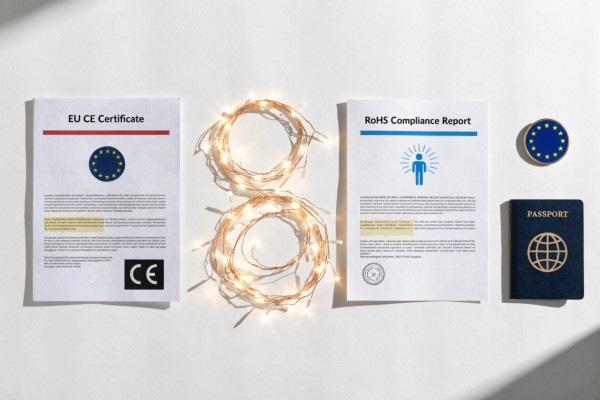
I learned this lesson through many export orders for European customers. A buyer may ask, "Do your lights have CE and RoHS?" I understand the question. It sounds simple. Yet I usually answer with more questions. I ask which model the buyer wants. I ask where the lights will be used. I ask if the product is an indoor string light, an outdoor christmas light, a motif light, a custom public display, or a retail box product. I also ask which country, retailer, or importer will review the files. These small details decide whether the documents are useful or only look useful. This is why I believe a cleaner purchase check can protect both the buyer and the supplier before the shipment moves.
Why Should I Not Treat CE As Only A Certificate?
A CE file can look complete at first sight. A missing model number can still create trouble. I have seen this small gap delay shipment review.
CE is not only a paper certificate in my export work.[^1] I check the Declaration of Conformity, test materials, model references, labels, packaging, manuals, voltage, plug type, and final goods[^2]. I also confirm that the documents match the exact festive lighting product being ordered.
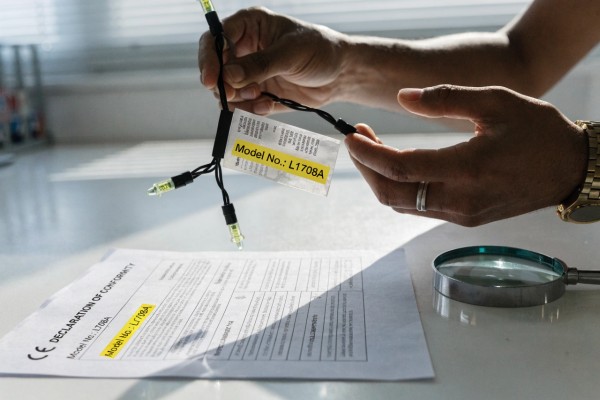
I always explain to buyers that CE marking is tied to the product placed on the market.[^3] I do not treat it as a loose logo that can cover every lamp in a catalog. A string light, a curtain light, and a large motif light may share some design ideas. They still may have different structures, drivers, cables, connectors, IP ratings, and installation methods. These details matter when a buyer prepares a file for an importer, a retailer, or a third-party body.
In my daily work, I first match the product model in the quote with the model in the test materials. I then compare the label artwork, rating information, plug, cable type, carton mark, and manual text. I also ask whether the product will be sold in a retail chain or used in an event project. Retail buyers often ask for cleaner packaging files. Project contractors often ask for installation notes and outdoor use details.
| CE Check Point | What I Usually Verify | Why I Check It |
|---|---|---|
| Product model | I match the model on the report, invoice, and label | I want to avoid a model mismatch |
| Use environment | I confirm indoor or outdoor use | I want the label and manual to match real use |
| Electrical data | I check voltage, wattage, plug, and driver | I want the buyer to avoid wrong-market goods |
| Marking and manual | I review warnings and product rating | I want the product file to support market review |
| Shipment goods | I compare final goods with approved details | I want the delivered product to match the file |
How Should I Read RoHS For Festive Lighting?
RoHS can give buyers comfort. It can also give false comfort. I have seen buyers think RoHS means the whole product is safe.
RoHS mainly concerns restricted substances in materials and parts.[^4] I use it as a material compliance check. I do not use it as a replacement for electrical safety, CE documentation, labeling checks, outdoor suitability, retailer review, or importer review.[^5]
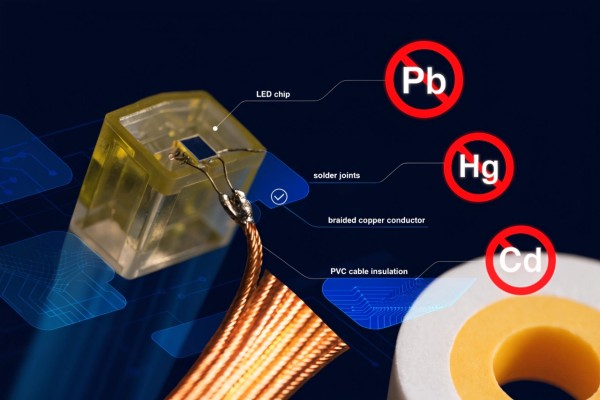
I treat RoHS as one part of a wider product file. Festive lighting uses many materials. A christmas light may include copper wire, PVC cable, LED chips, plug parts, solder, controller housing, heat shrink tube, metal frames, paint, and packaging parts. A large motif light may also use aluminum frames, steel supports, acrylic panels, and outdoor connectors. I cannot check only the finished product name. I need to understand which material scope the RoHS file covers.[^6]
When European buyers ask me for RoHS, I usually prepare the related test materials or supplier material statements that match the requested model and parts. I also tell them to confirm the target-market requirement with their importer, retailer, or testing body. Some retailers ask for more detail than a small wholesaler. Some project buyers care more about outdoor material life and installation safety. RoHS does not answer those points alone.
| RoHS Area | My Practical Question | What Buyers Should Not Assume |
|---|---|---|
| Cable material | I ask which cable and color are used | I do not assume all cable types are covered |
| Solder and LED parts | I check the production version | I do not assume old reports cover new parts |
| Plastic housing | I confirm the controller or plug shell | I do not assume one plastic covers all plastics |
| Paint and coating | I check motif light frames when needed | I do not assume paint is always included |
| Packaging contact | I ask if the retailer requests it | I do not assume RoHS replaces packaging rules |
Which Product Details Change The CE And RoHS Check?
A festive lighting order can look simple in a photo. The risk often hides in the version, cable, plug, waterproof level, and packing style.
I separate festive lighting by product type, use place, electrical design, and sale channel. I do this because indoor string light products, outdoor christmas light products, motif light designs, and custom displays may need different checks.
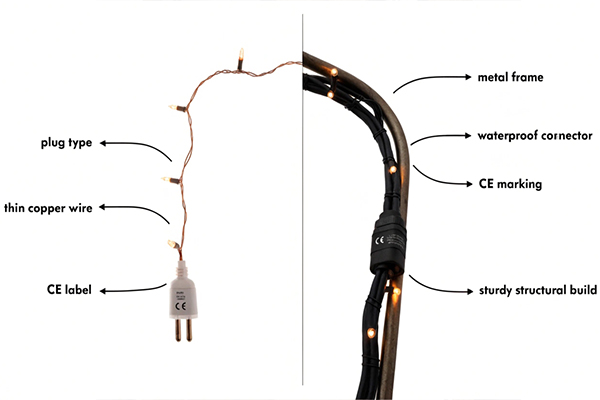
I do not group every festivel light into one compliance box. I know that many buyers use one general name for many items. They may call all products "holiday lights." In production, these items are very different. A battery-operated indoor string light may have a simple structure. An outdoor connectable christmas light set may need a stronger cable, a suitable plug, an IP rating, and clear limits for connection length.[^7] A large motif light for a city square may need drawings, installation notes, frame material details, and packing protection. A retail boxed product may need warning text, barcode position, importer details, language checks, and shelf-ready packing.[^8]
I also pay attention to custom changes. A buyer may ask for a longer lead wire, a different plug, a new LED color, or a special controller. These changes can affect the file. A small change may not always require a full new test. Yet I never assume that. I ask the buyer to confirm with the importer or testing body when the target market is strict.
| Product Type | Common Risk Point | My Buyer Check |
|---|---|---|
| Indoor string light | Low-voltage driver, cable, manual wording | I check model, rating, and indoor marking |
| Outdoor christmas light | IP rating, plug, cable, connector | I check outdoor label and use instructions |
| Motif light | Frame, wiring route, mounting method | I check drawings and installation notes |
| Custom display | Mixed materials and non-standard size | I check whether documents match the final design |
| Retail packaged item | Label, warning, barcode, languages | I check packaging artwork before mass production |
What Documents Do I Usually Prepare Before A European Shipment?
A shipment can be ready in the warehouse. A missing file can still block the buyer's internal release. I prefer to prepare documents before production ends.
I usually prepare a matched document set for the ordered model. This set may include the Declaration of Conformity, related test reports or materials, product specifications, labels, packaging artwork, manuals, plug and voltage details, photos, and packing information.[^9]
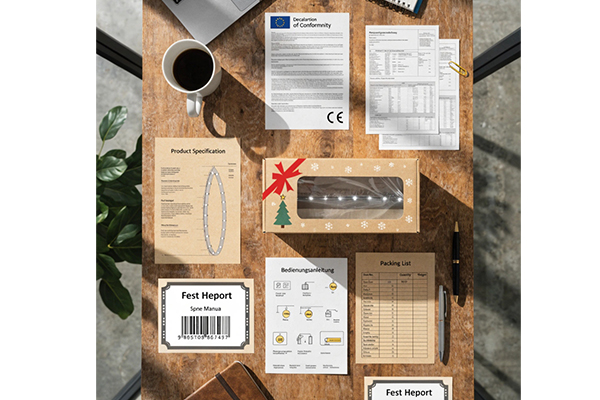
I have handled many questions from European customers during order review. Some buyers ask for documents before they place the order. Some buyers ask after their retailer checks the product. Some buyers ask when the goods are almost ready. I prefer the first way. When I prepare files early, I can catch problems in the quotation stage. I can see if the buyer needs a Schuko plug, a UK plug for a special channel, or another plug type for a mixed market.[^10] I can also see if the label needs a certain importer name or language.
I always try to keep one line of information across the purchase order, product specification, label, carton mark, manual, and invoice. This sounds basic. Yet this is where many export problems start. A product may have one name on the quotation and another name on the label. A model may have one wattage on the manual and another wattage on the carton. These small gaps create doubt during review.
| Document | My Main Check | When I Prefer To Check It |
|---|---|---|
| Declaration of Conformity | I check model and product description | Before order confirmation |
| Test report or test material | I check if it fits the product version | Before mass production |
| Product specification | I check size, LED count, power, cable | During quotation and sampling |
| Label artwork | I check rating, warnings, and marks | Before printing |
| Manual | I check use place and safety notes | Before packaging production |
| Packing list and carton mark | I check model and quantity consistency | Before shipment booking |
How Can Buyers Reduce Shipment Risk Before Placing An Order?
A cheap quote can become expensive when the file is weak. I have seen buyers spend more time fixing gaps than negotiating price.
I reduce shipment risk by checking documents, product details, and target-market needs before order confirmation. I also ask buyers to confirm retailer rules, importer requirements, and testing-body advice before they approve the final festive lighting specification.
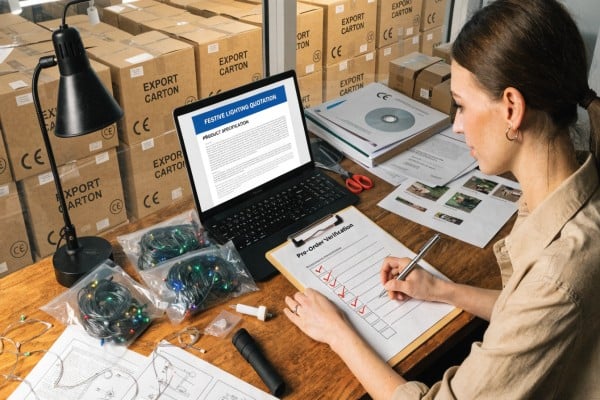
I suggest that buyers start with one clear product list. I need model number, product photo, size, LED quantity, cable color, plug type, voltage, power source, indoor or outdoor use, packaging type, and target country. I also need to know if the goods are for a retail shelf, a wholesaler carton, a mall project, a street decoration project, or an event rental program. The same motif light can have different file needs when it goes to a retailer, a city project, or a private event contractor.
I also encourage buyers to lock the product version before mass production. If the buyer changes cable length, plug type, controller, frame finish, or packing design after file review, the team should check whether the existing documents still fit.[^11] I do not like late changes because they create unclear responsibility. I prefer to solve these questions before material purchasing. This method saves time for the factory and gives the buyer a cleaner shipment.
| Order Stage | My Action | Buyer Benefit |
|---|---|---|
| Inquiry | I ask for target market and use place | The buyer avoids wrong assumptions |
| Quotation | I match the product version to available files | The buyer sees file gaps early |
| Sampling | I check label and manual direction | The buyer can review real details |
| Pre-production | I lock key parts and packaging | The buyer reduces version drift |
| Final inspection | I compare goods with approved documents | The buyer gets a cleaner shipment file |
What Should I Ask A Supplier Before I Trust The Compliance File?
A supplier may answer "yes" too fast. I become careful when a file is not linked to the actual product being shipped.
I ask suppliers to show model-matched documents, explain product scope, confirm indoor or outdoor use, share label and manual details, and prove that the final shipment will follow the same specification as the reviewed file.

I believe the best supplier questions are practical. I do not start by asking only, "Do you have CE and RoHS?" I ask, "Which model does this file cover?" I ask, "Does the report cover this plug, this cable, and this controller?" I ask, "Is the product for indoor use only or outdoor use?" I ask, "Can I see the label before mass production?" I ask, "Will the carton mark and manual use the same model and rating?" These questions are simple. They still reveal whether the supplier controls the file or only forwards old papers.
From the supplier side, I also respect that buyers have different market duties. I do not claim that my factory can replace the role of the importer, retailer, or third-party testing body. I can support the file, production control, labeling, packaging, and shipment consistency. The buyer still needs to confirm final market needs.[^12] This shared check is more honest and safer.
| Supplier Question | What A Strong Answer Should Show | Red Flag I Watch For |
|---|---|---|
| Which model is covered? | The supplier points to exact model references | The supplier sends a random certificate |
| What use place is covered? | The supplier states indoor or outdoor use clearly | The supplier avoids IP or environment details |
| Which plug and voltage are used? | The supplier matches the target market | The supplier says all plugs are the same |
| Can I review labels? | The supplier shares artwork before printing | The supplier refuses label review |
| Will final goods match files? | The supplier has version control | The supplier changes parts without notice |
Conclusion
I treat CE and RoHS as a full shipment-risk check, not a logo check. I verify model, use, files, labels, packaging, and final goods.
[^1]: "EU Legislation and CE Marking - International Trade Administration", https://www.trade.gov/country-commercial-guides/eu-eu-legislation-and-ce-marking. European Commission guidance on CE marking explains that the mark signifies the manufacturer's declaration that a product complies with applicable EU harmonisation legislation, rather than functioning as a general product-quality certificate. Evidence role: definition; source type: government. Supports: CE marking indicates that the manufacturer declares conformity with applicable EU legislation and is not simply a standalone certificate..
[^2]: "EU Legislation and CE Marking - International Trade Administration", https://www.trade.gov/country-commercial-guides/eu-eu-legislation-and-ce-marking. European Commission guidance on CE-marked products identifies the EU declaration of conformity, technical documentation, product identification, markings, and instructions or safety information as elements of the conformity framework, which contextualizes the listed shipment checks. Evidence role: general_support; source type: government. Supports: EU CE compliance normally involves a declaration of conformity, technical documentation, required markings, instructions, and product identification details.. Scope note: The source may not mention festive lighting-specific plug or carton checks directly; it supports the broader compliance-documentation framework.
[^3]: "EU Legislation and CE Marking - International Trade Administration", https://www.trade.gov/country-commercial-guides/eu-eu-legislation-and-ce-marking. The European Commission's Blue Guide describes EU product rules as applying when a specific product is placed on the Union market, supporting the need to connect CE documentation to the actual model supplied. Evidence role: general_support; source type: government. Supports: CE marking and conformity assessment are connected to the specific product placed on the EU market..
[^4]: "RoHS - Wikipedia", https://en.wikipedia.org/wiki/RoHS. Directive 2011/65/EU on RoHS restricts specified hazardous substances in electrical and electronic equipment, supporting the characterization of RoHS as a material- and component-focused compliance requirement. Evidence role: definition; source type: government. Supports: RoHS restricts specified hazardous substances in electrical and electronic equipment, commonly assessed at material or component level..
[^5]: "RoHS - Wikipedia", https://en.wikipedia.org/wiki/RoHS. European Commission materials on RoHS and CE marking show that RoHS is a hazardous-substance directive and that CE-marked electrical products may also be subject to other legislation, such as electrical safety and market-surveillance requirements. Evidence role: expert_consensus; source type: government. Supports: RoHS addresses hazardous substances, while electrical safety, labeling, CE documentation, and importer duties may arise under separate EU product legislation.. Scope note: This supports the separation of legal frameworks; it does not prove the requirements of any individual retailer or project buyer.
[^6]: "What are the Maximum Concentration Values (MCVs) for these ...", https://dtsc.ca.gov/what-are-the-maximum-containment-values-mcvs-for-these-metals-in-products/. EU RoHS rules establish maximum concentration values for restricted substances in homogeneous materials, supporting the need to identify which materials and parts a RoHS file covers. Evidence role: mechanism; source type: government. Supports: RoHS limits are applied to restricted substances in homogeneous materials, making material scope relevant when reviewing a RoHS file..
[^7]: "IEC 60598-2-20:2022 - Lighting chains - iTeh Standards", https://standards.iteh.ai/catalog/standards/iec/0c61d906-a04e-481c-a976-429a7024a8ca/iec-60598-2-20-2022?srsltid=AfmBOoqJld6nxrbCr5XgXjP477CeFNUbJ5VkHcLZawl1o4oCMMW2w0cj. IEC/EN lighting-chain requirements and public product-safety guidance treat outdoor use, ingress protection, connection limits, and electrical connection details as relevant safety considerations for decorative lighting chains. Evidence role: mechanism; source type: institution. Supports: Lighting-chain standards and safety guidance address outdoor suitability, protection against ingress, electrical connection conditions, and user instructions for lighting chains.. Scope note: Standards may need to be consulted for the exact product category and edition; the citation would support the general technical rationale rather than certify any specific light set.
[^8]: "EU - Labeling/Marking Requirements", https://www.trade.gov/country-commercial-guides/eu-labelingmarking-requirements. EU product-safety and market-surveillance rules require consumer products to carry appropriate safety information and economic-operator traceability details, supporting the need to review warnings, importer information, and language on retail packaging. Evidence role: general_support; source type: government. Supports: EU product safety rules require traceability information and safety instructions or warnings in language understandable to consumers, while retail packaging details may be additional commercial requirements.. Scope note: The source would not directly support barcode position or shelf-ready packing, which are typically retailer or logistics requirements rather than general EU legal requirements.
[^9]: "EU - Labeling/Marking Requirements", https://www.trade.gov/country-commercial-guides/eu-labelingmarking-requirements. European Commission CE-marking guidance states that manufacturers must draw up technical documentation and an EU declaration of conformity and provide required markings and instructions, which supports compiling a matched document set before shipment. Evidence role: general_support; source type: government. Supports: EU CE guidance links conformity assessment to declarations, technical documentation, product identification, markings, and instructions, supporting the document-set approach.. Scope note: Packing information and photos are practical evidence-management tools; EU guidance supports the underlying documentation need but may not list those operational items explicitly.
[^10]: "Mains electricity by country - Wikipedia", https://en.wikipedia.org/wiki/Mains_electricity_by_country. The International Electrotechnical Commission's World Plugs reference documents national plug and socket types, including Schuko-type systems in parts of Europe and Type G in the United Kingdom, supporting the need to confirm plug type by market. Evidence role: historical_context; source type: institution. Supports: European countries use different plug and socket systems, including Schuko-type plugs in many continental markets and Type G plugs in the United Kingdom..
[^11]: "EU Legislation and CE Marking - International Trade Administration", https://www.trade.gov/country-commercial-guides/eu-eu-legislation-and-ce-marking. The European Commission's Blue Guide explains that modifications to products can affect conformity obligations and may require reassessment, supporting the practice of reviewing existing files after component, design, or packaging changes. Evidence role: mechanism; source type: government. Supports: Changes to a product can affect conformity status and may require checking whether existing assessment and documentation remain valid.. Scope note: Whether a specific change requires new testing depends on the applicable directive, harmonised standard, and technical judgment for the product.
[^12]: "EU Consumer Goods General Product Safety Regulation (GPSR)", https://www.trade.gov/market-intelligence/eu-consumer-goods-general-product-safety-regulation-gpsr. European Commission guidance on EU product rules describes obligations for importers and distributors, including checks on conformity documentation, markings, and safety information, supporting the statement that buyers must confirm final market requirements when they act as economic operators. Evidence role: expert_consensus; source type: government. Supports: EU product legislation assigns compliance-related duties to importers and distributors, so buyers in those roles must verify applicable market requirements.. Scope note: If the buyer is not the legal importer or distributor, the exact duties may differ; the citation supports the general allocation of market-responsibility roles.

Table of Contents
- Europe Export Guide: Essential CE & RoHS Standards for Festive Lighting?
- Why Should I Not Treat CE As Only A Certificate?
- How Should I Read RoHS For Festive Lighting?
- Which Product Details Change The CE And RoHS Check?
- What Documents Do I Usually Prepare Before A European Shipment?
- How Can Buyers Reduce Shipment Risk Before Placing An Order?
- What Should I Ask A Supplier Before I Trust The Compliance File?
- Conclusion