 EN
EN

How to Light a World Cup Viewing Venue | Festival Lighting Guide
I see many venues buy lights too late, lose options, and accept weak results when the crowd is ready to spend.
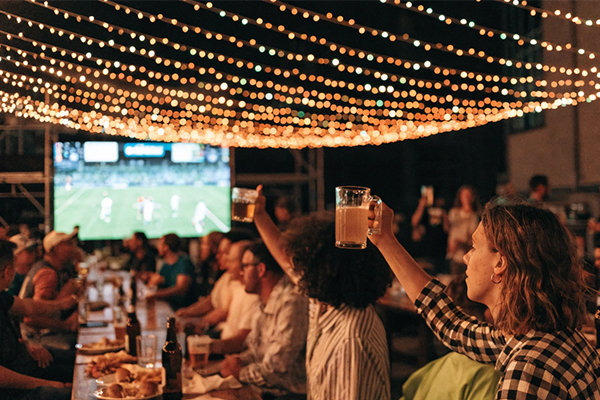
I light a World Cup viewing venue by planning time, zones, safety checks, and commercial goals before I choose products. I treat outdoor lighting as a revenue tool, not simple decoration, because good lighting keeps guests seated, ordering, and comfortable until the final whistle[^1].
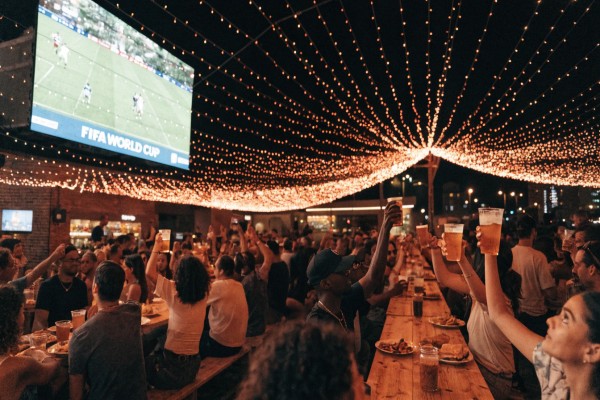
I often tell B2B buyers that the screen gets the booking, but the lighting keeps the table. A World Cup match can fill a beer garden, rooftop terrace, hotel courtyard, mall plaza, or bar patio. Yet the real question is not only how many people enter the venue. The real question is how long they stay, how safely they move, and how much they buy while they watch[^2].
I write this guide from my supplier-side experience in festival decorative lighting. I talk with importers, contractors, event buyers, retail groups, and public-space decoration companies about projects that need stable products, clear timing, and practical installation support. I do not speak as a stadium engineer or an official World Cup lighting designer. I speak as a manufacturer and trading supplier that helps buyers prepare LED string light, christmas light style decorations, custom motifs, and festivel light solutions for public and commercial spaces.
Why should I start with timing before choosing product style?
I see late orders create pressure, reduce design choices, and make every small issue feel like a project crisis.
I start with timing because World Cup lighting needs design confirmation, sampling, production, packing, shipping, and installation preparation. If I wait until the match schedule is close, I lose custom options and reduce my safety margin.
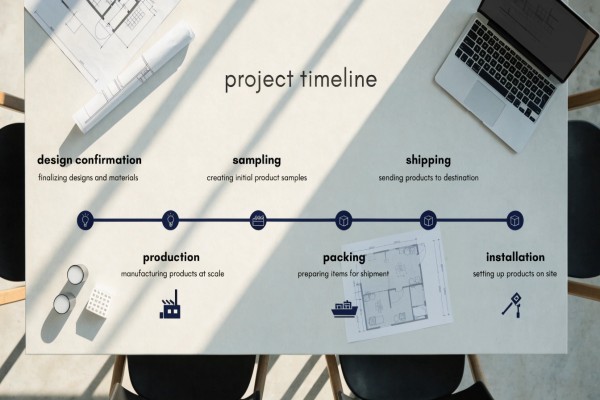
I do not begin a serious project by asking, "Which light looks best?" I begin by asking, "When must the venue open?" This simple question changes the whole plan. A buyer may want football motifs, national flag colors, custom city shapes, sponsor areas, and branded photo spots. Each item needs time.[^3] Even a normal string light order needs production planning, carton marks, plug confirmation, and shipment booking. A custom decorative football frame needs drawing approval, sample review, structure confirmation, and safe packing.
I also need to know the installation date, not only the event date. A contractor may need one week to fix cables, test circuits, hang motifs, and adjust angles.[^4] A municipal buyer may need more time for access permits. A retail chain may need store-level delivery plans. If I ignore these steps, I may deliver products on time but still fail the project.
| Project stage | What I confirm | Why I confirm it early |
|---|---|---|
| Venue opening date | I confirm the first match night or soft opening date. | I need the real deadline, not a general month. |
| Design approval | I confirm colors, motifs, layout, and brand rules. | I avoid changes after production starts. |
| Sample or photo approval | I confirm if the buyer needs a physical sample or only factory photos. | I protect the schedule from slow decisions. |
| Production | I confirm quantity, voltage, plug, IP rating, and packaging. | I reduce mistakes before materials are prepared. |
| Shipping | I confirm sea, air, or truck plan with the buyer. | I match cost with urgency. |
| Installation | I confirm the handover date for local teams. | I leave time for testing and adjustment. |
I prefer early planning because it gives me more ways to solve problems. I can offer standard products when time is short. I can support custom football and city themes when time is enough. I can also prepare spare parts, extra bulbs, and clear labeling before the goods leave the factory. This is how I protect both the final visual effect and the buyer's risk control.
How should I turn match-day lighting into revenue?
I see many buyers treat lighting as decoration, but I see it as extra trading hours and better guest behavior.
I turn match-day lighting into revenue by keeping outdoor seats usable after sunset. Bright, warm, and safe spaces help guests stay through 90 minutes, order more drinks, and continue through extra time.[^5]
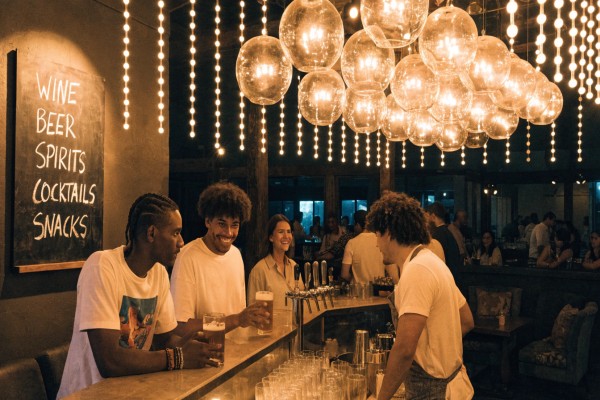
I believe a viewing venue sells time before it sells products. A dark patio closes itself, even when the kitchen and bar are still open.[^6] A comfortable patio keeps people in their seats. The difference is simple. If guests feel warm, safe, and part of the crowd, they order another round. If they cannot read the menu or see the path to the toilet, they leave after the first half.
For B2B buyers, this point matters because lighting can open capacity. A hotel courtyard becomes an event zone. A mall plaza becomes a fan area. A rooftop becomes a premium viewing space. A supermarket entrance area becomes a seasonal sales stage. A beer garden becomes a night venue, not only an afternoon place.
| Revenue point | What I light | What I expect the lighting to support |
|---|---|---|
| Longer stay | I light tables, edges, and overhead areas with warm string light. | I help guests feel comfortable until the match ends. |
| More orders | I light bar counters, menu points, and service lanes. | I help staff work and guests decide faster. |
| More seats | I light terraces, rooftops, and side gardens. | I help the operator use space after dark. |
| More photos | I light football motifs and team-color backgrounds. | I help the venue gain social media exposure. |
| More brand value | I light sponsor boards and entrance features. | I help the buyer show a planned event, not a temporary setup. |
I do not tell buyers that lighting alone can guarantee sales. I know the offer, location, menu, and match popularity also matter. Yet I also know that darkness kills confidence. When guests see a bright terrace from the street, they read it as open, safe, and lively. When they see weak lighting, they read it as closing soon. This small feeling can change the full night.
Which venue zones should I light first?
I see poor layouts when buyers hang lights everywhere, but I see better results when I divide the venue into clear zones.
I light the screen area, entrance, walkways, bar zone, photo spot, sponsor area, and seating routes first. Each zone needs a different lighting role, so I avoid one product for every place.
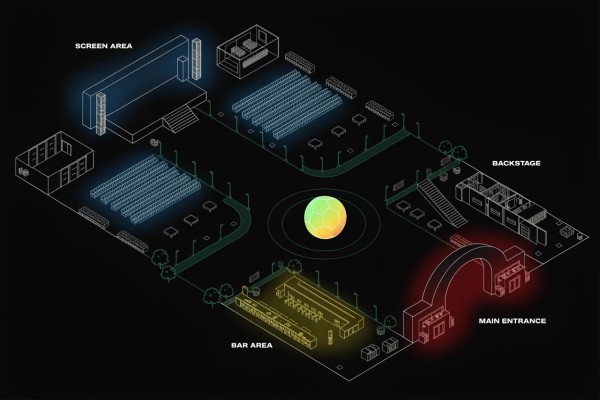
I treat a World Cup venue like a small city. People enter, look for seats, buy drinks, move to toilets, take photos, watch the screen, and leave in crowds. Each movement needs support. If I only hang lights across the whole space, I may create atmosphere, but I may miss safety, service, and commercial value.
The viewing screen area should not fight with the screen.[^7] I usually suggest softer light at the seating edge, side frames, or upper background. I avoid strong glare near the screen surface. The bar and food area can be brighter because staff need visibility and guests need to read menus. The entrance should look festive from far away because it works like a billboard. Walkways and steps need clear lighting because crowd movement is a safety issue.[^8] Local qualified professionals should verify electrical load, fixing safety, and local rules.
| Venue zone | My lighting role | My common product direction |
|---|---|---|
| Screen area | I create atmosphere without glare. | I use warm overhead string light or side decorative lines. |
| Entrance | I attract traffic from outside. | I use arches, curtain lights, motifs, or flag-color lighting. |
| Walkways | I guide movement and reduce confusion. | I use pathway lights, low-level LEDs, or linear decoration. |
| Bar and food area | I support service and ordering. | I use denser canopy lights or stronger decorative lines. |
| Photo spot | I create shareable moments. | I use football motifs, city names, team colors, or custom frames. |
| Sponsor area | I support brand exposure. | I use controlled background light and clean framing. |
| Retail area | I make merchandise visible. | I use clear, warm, and stable lighting around shelves or displays. |
I once discussed a project-style inquiry where the buyer first asked for only a low price on lights. I asked for venue photos instead. After I saw the space, I understood that the entrance was hidden, the bar was too dark, and the photo corner had no clear background. The buyer still bought decorative lighting, but the list changed. The lighting became a layout tool, not only a product purchase.
What should I confirm before I ask for a quotation?
I see unclear quotations waste days, create wrong samples, and make suppliers guess details that buyers already know.
I confirm venue type, area, indoor or outdoor use, voltage, plug type, waterproof rating, certification needs, fixing method, budget range, and deadline before I quote. These details protect price accuracy and production safety.
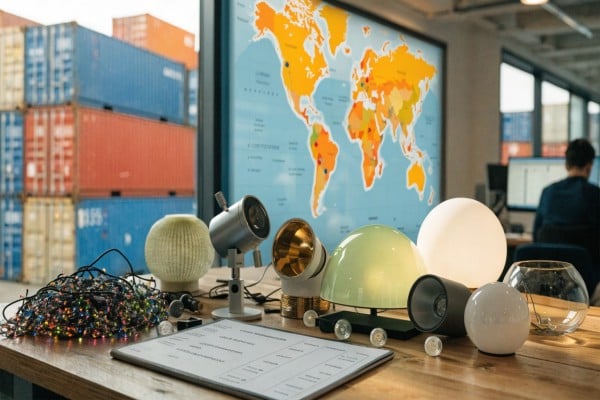
I do not like blind quotations because they look fast but often create slow projects. A buyer may send one photo and ask, "How much?" I understand the pressure, but I also know that one price cannot answer all project needs. A rooftop bar in Dubai, a winter plaza in Europe, a hotel garden in South Africa, and a retail fan zone in Australia may need different voltage, plug, cable, IP rating, packaging, and certification support[^9].
I also need to know whether the buyer wants a commercial-grade product or a short-term seasonal decoration. A home-use christmas light style product may look attractive, but it may not be right for six weeks of outdoor nightly operation.[^10] A public venue has more foot traffic, more exposure, and more risk. I must help the buyer check practical items before production starts.
| Check item | What I ask the buyer | Why it matters |
|---|---|---|
| Venue type | I ask if it is a bar, hotel, plaza, mall, park, or retail area. | I match the product to the use case. |
| Outdoor condition | I ask about rain, wind, dust, heat, and sun exposure. | I choose a suitable waterproof and material level. |
| Voltage and plug | I ask for market standard and local plug type. | I avoid unusable goods on arrival. |
| Certification | I ask if CE, UKCA, SAA, SASO, or other needs apply. | I support customs, retail, and project checks. |
| Fixing method | I ask if the buyer will use poles, walls, truss, trees, or cables. | I support safe and clean installation. |
| Usage period | I ask if the venue runs daily for weeks or only for selected nights. | I match durability and spare parts. |
| Budget range | I ask for a real target range. | I offer workable choices instead of random options. |
| Installation deadline | I ask when the local team needs goods in hand. | I plan production and shipping in a real way. |
I also remind buyers that local electricians and qualified installers must confirm electrical load, mounting structure, and regulation details. I can support product information, certificates, wiring drawings where available, and installation-ready packing. I should not replace local compliance checks. This honest line protects both sides.
How should I choose outdoor lighting products for long event use?
I see low-cost lights fail when rain, crowds, and daily use turn a festive idea into a service problem.
I choose outdoor lighting by checking IP rating, cable strength, connectable design, replaceable parts, LED life, power plan, and maintenance needs. I focus on stable use, not only first-night appearance.
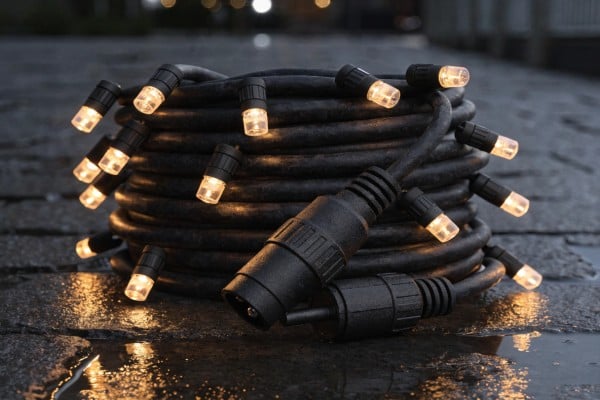
I know atmosphere sells the first impression. I also know reliability protects the weekend. A World Cup viewing venue may operate every night for several weeks. The lights may face rain, wind, heat, dust, cleaning work, and heavy crowds. A cheap product can look fine in a catalog photo, but it may not handle repeated outdoor use.
For many commercial venues, I like string light because it creates a warm canopy and makes a terrace feel complete. I also use curtain lights, motif lights, pathway lights, neon-style signs, and custom football graphics when the venue needs stronger visual identity. I do not use every product everywhere. I choose based on function.
| Product type | Where I use it | What I check before supply |
|---|---|---|
| Outdoor string light | I use it above seats, bars, and social areas. | I check cable, bulb type, connection length, and IP rating. |
| Curtain light | I use it at entrances, walls, and photo zones. | I check fixing points, width, height, and controller needs. |
| Motif light | I use it for footballs, trophies, flags, and city icons. | I check frame size, material, packing, and custom artwork. |
| Pathway light | I use it for steps, exits, and crowd routes. | I check visibility, fixing, and power source. |
| Solar light | I use it in remote corners with no easy power access. | I check sunlight condition, battery time, and brightness needs. |
| Festivel light package | I use it for mixed seasonal and sports themes. | I check if the whole look matches the event story. |
I pay close attention to waterproof rating. For many outdoor projects, buyers ask about IP65 or higher, but the final choice should match the real exposure and local rules.[^11] I also look at connectable design. Long terraces and beer gardens need clean installation, fewer visible cables, and planned power points. I prefer products with clear manuals, labels, and spare parts because maintenance during a tournament is expensive. Nobody wants to climb a ladder during a full match night.
How can I use lighting to guide crowd flow and customer behavior?
I see crowd problems when guests do not know where to enter, queue, sit, order, take photos, or exit.
I use lighting to show direction, define social areas, highlight order points, and separate busy paths from seating areas. Good lighting makes guests move naturally and helps staff serve faster.
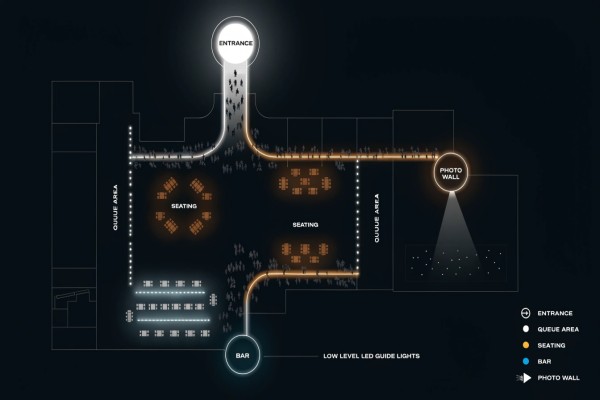
I believe lighting is one of the quietest tools in crowd control. A sign tells people what to do. A lighted path makes people do it without thinking too much.[^12] When I review a venue plan, I ask where guests will arrive, where they will slow down, where they will queue, and where they may block staff. I then match lighting to each movement.
A bright entrance pulls people in. A warm seating canopy tells people where to settle. A brighter bar counter tells people where to buy. A lighted photo wall attracts social sharing without blocking the screen. A clear exit path helps the team manage the rush after a penalty shootout. I do not claim lighting replaces crowd management, security, or local safety planning. I only say that lighting supports those plans in a very visible way.
| Behavior goal | How I use lighting | What the venue gains |
|---|---|---|
| I want people to enter. | I light arches, signs, and front boundaries. | The venue looks open and active. |
| I want people to sit. | I light seating zones with warm overhead lines. | Guests feel comfortable for longer. |
| I want people to order. | I light counters, menus, and service points. | Staff can serve faster and guests can choose easier. |
| I want people to take photos. | I light one clear photo feature away from the main path. | The venue gets social content without blocking flow. |
| I want people to exit safely. | I light walkways, steps, and door areas. | Guests move with less confusion. |
I also think about brightness balance. If every area is equally bright, guests cannot read the space. If the bar is slightly brighter, people understand its importance. If the screen area is softer, people focus on the match. If the photo spot has a clear theme, people gather there instead of standing in random paths. This is why I plan by behavior, not only by product length.
How can I plan customization, delivery, and installation without last-minute risk?
I see custom ideas become stressful when buyers approve them late and expect factory, freight, and installers to fix time.
I plan customization by confirming artwork, size, material, certificates, samples, packing, shipping, and installation needs early. I leave extra time for review, testing, and local installer preparation.
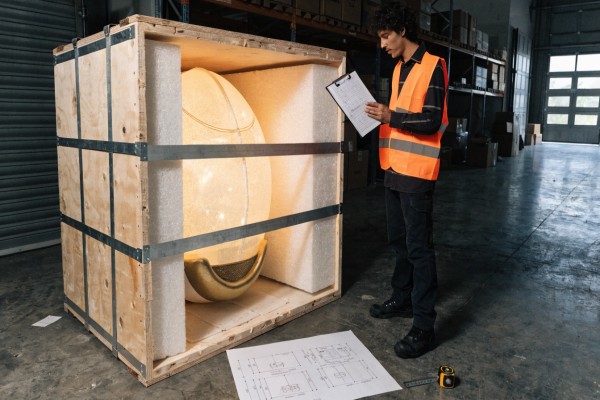
I enjoy custom projects because they make a venue memorable. A normal terrace can become a national team fan zone. A shopping mall can create a football gate. A hotel can build a premium viewing garden with flag colors and sponsor lighting. Yet customization is also where timing matters most.
If a buyer wants football shapes, national colors, city names, sponsor logos, or special packaging, I need clear files and decisions. I need to know whether the logo can be used legally by the buyer. I need size limits because a huge motif may look strong in a drawing but may be difficult to pack, ship, and install. I need local installation information because mounting on a truss is not the same as mounting on a wall, tree, or temporary frame.
| Custom item | What I need from the buyer | What I prepare as supplier |
|---|---|---|
| Football motif | I need size, color, and fixing direction. | I prepare drawing, structure, light source, and packing plan. |
| National theme | I need color reference and market sensitivity. | I prepare matching LED colors and safe layout options. |
| City or venue name | I need artwork and spelling approval. | I prepare production drawing and photo confirmation. |
| Sponsor area | I need brand rules and display limits. | I prepare lighting support without making false claims. |
| Retail packaging | I need barcode, carton mark, and language needs. | I prepare export packing and labeling support. |
| Installation support | I need site photos and fixing points. | I prepare product dimensions, cable details, and basic instructions. |
I also plan the delivery path with the buyer. Sea freight may be cost-friendly but needs more time. Air freight may solve urgency but can hurt budget. Truck or regional delivery may work in some markets. I do not overpromise fast delivery because fast promises create weak projects. I prefer a real schedule with clear responsibilities.
Before shipment, I like to confirm product photos, carton marks, spare parts, and test records where needed. After arrival, I suggest the buyer ask local qualified installers to inspect power plans, fixing points, and local safety rules. This step may feel slow, but it prevents bigger trouble during the match period.
Conclusion
I light a World Cup viewing venue by planning early, zoning the space, checking specifications, and using outdoor lighting to turn match traffic into revenue.
[^1]: "Converging Worlds of Retail and Hospitality - EHL Insights", https://insights.ehl.edu/retail-and-hospitality. Research on servicescapes and retail atmospherics identifies lighting as an environmental cue that can affect customer comfort, approach behavior, and time spent in commercial settings. Evidence role: mechanism; source type: paper. Supports: Ambient lighting is one component of the physical servicescape that can influence comfort, approach behavior, time spent, and purchasing-related decisions.. Scope note: The source would support the behavioral mechanism generally, not prove that a specific World Cup venue will increase orders.
[^2]: "Event Crowd Management | Environment, Health and Safety", https://ehs.cornell.edu/campus-health-safety/event-management/event-crowd-management. Event-management and hospitality research treats attendee circulation, dwell time, and on-site consumption as separate factors affecting venue operation and commercial performance. Evidence role: general_support; source type: research. Supports: Event and hospitality planning commonly considers attendee dwell time, circulation safety, and purchasing opportunities as distinct operational concerns.. Scope note: The evidence would frame the planning variables as relevant; it would not quantify their impact for this particular article's lighting projects.
[^3]: "Why Focusing on Lead Time—Not Just Efficiency—Drives Success", https://interpro.wisc.edu/lead-time-drives-manufacturing-success/. Manufacturing and operations-management literature describes product customization as a source of added coordination and production-planning complexity, often affecting lead time. Evidence role: mechanism; source type: paper. Supports: Customization commonly adds coordination steps such as design approval, material planning, production setup, and quality checks, which can extend lead times.. Scope note: The source would support the general production mechanism rather than the exact schedule for decorative lighting orders.
[^4]: "[PDF] Electrical installation event Safety Guidance", https://www.gov.gg/CHttpHandler.ashx?id=157795&p=0. Public safety guidance for temporary event electrical installations emphasizes that cabling, mounting, inspection, and testing should be completed before the site opens to attendees. Evidence role: general_support; source type: government. Supports: Temporary event electrical installations typically require planning, installation, inspection, and testing before public use.. Scope note: The source would support the need for pre-event installation and testing, but not necessarily the specific duration of one week.
[^5]: "Analysis of factors affecting visual comfort in hotel lobby - PMC - NIH", https://pmc.ncbi.nlm.nih.gov/articles/PMC9851505/. Studies of restaurant and retail atmospherics report that ambient conditions, including lighting, can shape customer comfort, satisfaction, and purchase-related behavior. Evidence role: mechanism; source type: paper. Supports: Lighting and other ambient conditions can influence perceived comfort, satisfaction, dwell time, and purchase-related behavior in service environments.. Scope note: The evidence would support the general relationship between atmosphere and behavior, not establish that lighting alone causes higher drink sales.
[^6]: "Ambient lighting, use of outdoor spaces and perceptions of public ...", https://pmc.ncbi.nlm.nih.gov/articles/PMC8038535/. Research on night-time public environments finds that lighting conditions influence perceived safety and the apparent usability of outdoor spaces. Evidence role: mechanism; source type: paper. Supports: Night-time lighting affects how people perceive safety, activity, and usability of outdoor spaces.. Scope note: The source would support perception effects in general, not the specific phrase that a dark patio 'closes itself.'
[^7]: "Lighting and Reflections - Video Displays, Work, and Vision - NCBI", https://www.ncbi.nlm.nih.gov/books/NBK216496/. Lighting-design and visual-display research shows that uncontrolled ambient light and glare can reduce screen contrast and impair visual comfort. Evidence role: mechanism; source type: research. Supports: Excessive ambient light or glare near a screen can reduce contrast, visual comfort, and viewing quality.. Scope note: The source would support the optical principle, not prescribe a complete lighting design for every outdoor viewing venue.
[^8]: "[PDF] The Event Safety Guide - Montana Department of Commerce", https://commerce.mt.gov/_shared/brand/Tourism-Grants/Docs/The_Event_Safety_Guide.pdf. Event-safety and building-code guidance identifies illuminated circulation routes, stairs, and exits as important controls for safe public movement and emergency egress. Evidence role: expert_consensus; source type: government. Supports: Event safety guidance and building codes require or recommend adequate illumination for circulation routes, stairs, exits, and emergency egress.. Scope note: The source would establish the safety principle; applicable illumination levels and legal requirements vary by jurisdiction.
[^9]: "AC power plugs and sockets - Wikipedia", https://en.wikipedia.org/wiki/AC_power_plugs_and_sockets. International electrical standards and conformity-assessment guidance define market-specific requirements for supply voltage, plug configuration, ingress protection, and product safety certification. Evidence role: definition; source type: institution. Supports: Electrical products are governed by standardized voltage, plug, ingress-protection, and conformity-assessment requirements that vary across markets.. Scope note: The source would support the need to check specifications; the exact requirements must still be verified for the buyer's destination market.
[^10]: "Seasonal Lighting (Holiday Lights and Decorative Outfits) | CPSC.gov", https://www.cpsc.gov/Business--Manufacturing/Business-Education/Business-Guidance/Household-Electrical-Products/Seasonal-and-Decorative-Lighting-Products. Electrical-safety guidance for decorative lighting stresses that products should be used only in the environments and conditions for which they are rated, particularly for outdoor exposure. Evidence role: expert_consensus; source type: government. Supports: Decorative lighting should be used according to its rated environment and instructions, and products not rated for outdoor or prolonged use can create safety and reliability risks.. Scope note: The source would support the safety principle, not evaluate any specific product model mentioned by the supplier.
[^11]: "IP code - Wikipedia", https://en.wikipedia.org/wiki/IP_code. The IEC IP Code classifies enclosure protection against solids and water ingress, providing a basis for matching outdoor electrical equipment to expected exposure conditions. Evidence role: definition; source type: institution. Supports: IP ratings classify degrees of protection against solid objects and water, so rating selection should correspond to environmental exposure and compliance needs.. Scope note: The source would define and contextualize IP ratings; it would not determine the legally required rating for a particular site.
[^12]: "A Scoping Review of the Impact of Environmental Design on ... - PMC", https://pmc.ncbi.nlm.nih.gov/articles/PMC12988013/. Wayfinding and environmental-psychology studies describe lighting as a visual cue that can support orientation, route recognition, and pedestrian movement through built environments. Evidence role: mechanism; source type: paper. Supports: Lighting and visual cues can influence pedestrian orientation, route choice, and wayfinding behavior in built environments.. Scope note: The source would support lighting as a wayfinding aid generally, not replace crowd-control planning or security measures.
Table of Contents
- How to Light a World Cup Viewing Venue | Festival Lighting Guide
- Why should I start with timing before choosing product style?
- How should I turn match-day lighting into revenue?
- Which venue zones should I light first?
- What should I confirm before I ask for a quotation?
- How should I choose outdoor lighting products for long event use?
- How can I use lighting to guide crowd flow and customer behavior?
- How can I plan customization, delivery, and installation without last-minute risk?
- Conclusion