 EN
How to Choose Street Christmas Decorations for Municipal and Urban Lighting Projects
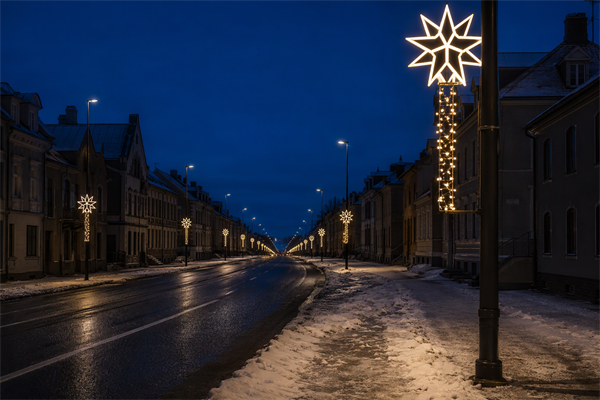
Selecting street Christmas decorations for municipal and urban lighting projects feels like a festive task at first glance, but it is often complex and fraught with challenges. A decoration that looks gorgeous in a catalog may fail under real-world conditions if it’s not suitable for street scale, outdoor durability, wind exposure, or installation requirements.
Choosing street Christmas decorations for urban lighting projects hinges on practical compatibility with the site, durability under extreme weather, and reducing maintenance risks while achieving festive visibility. Unlike residential lighting, municipal-level decorations demand structural, waterproof, and installation suitability verified in collaboration with suppliers and local engineers.[^1]
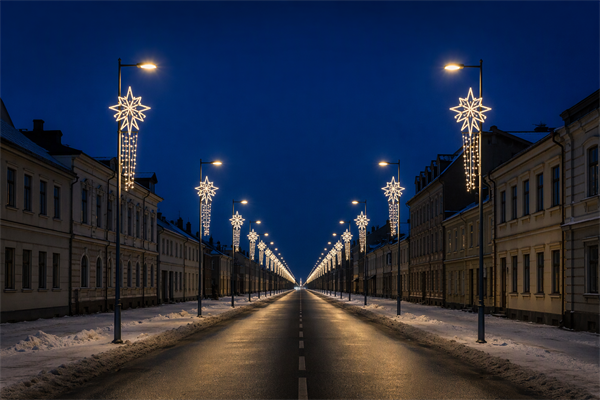
While aesthetics matter, they should not be the sole focus. The real priority lies in reducing project risk—whether in installation compatibility, outdoor performance, or festive reliability. Below, I'll break down the key considerations for municipal contractors and urban planners.
Why is street scale critical for Christmas decoration design?
Urban street decorations must align with the physical dimensions of their installation sites: wide roads, tall poles, and open spaces require proportional decorations that ensure visibility and aesthetic harmony.
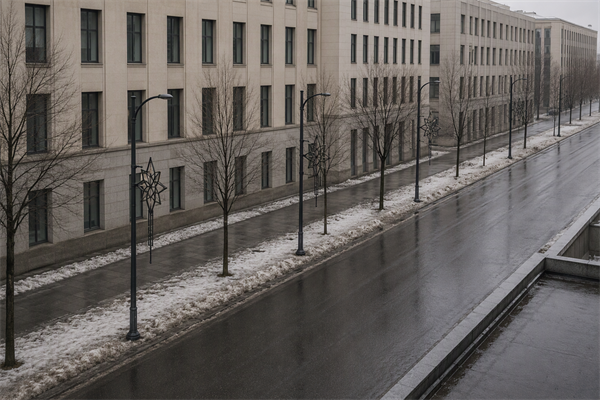
Designing street Christmas decorations starts with understanding the site parameters: road width, pole spacing, mounting heights, and exposure to weather[^2]. Oversized or undersized decorations create aesthetic imbalance and can pose visibility or safety concerns.[^3]
The importance of real site mapping
Unlike interior lighting, street Christmas decorations operate in high-exposure environments dictated by variables such as:
- Road width: Wider avenues demand larger-scale motif lights and string lights for visibility.
- Pole spacing and mounting points: Measurements ensure decorations stay evenly spaced and structurally mounted without gaps or misalignments.
- Height: Decorations intended for light poles or overhead street crossings must account for pedestrian or vehicular clearance.[^4]
- Weather exposure: Durability against rain, wind loads, and UV sunlight must meet local conditions.
Municipal contractors should involve suppliers early for consultation on matching designs to their site. Custom pre-checks help reduce installation issues, prevent gaps in coverage, and provide product designs styled and scaled for public spaces.
How durable are outdoor Christmas lights and motifs under real-world conditions?
Outdoor durability is a defining factor when purchasing street Christmas decorations, often more important than aesthetic detail itself. Municipal projects face harsh weather conditions, including rain, wind, snow, freezing and thawing cycles, and coastal humidity.[^5]
Durability demands waterproofing, robust materials, and structural integrity. Choosing correctly sealed, weather-resistant Christmas lights and motifs avoids frequent maintenance and damages under exposure risks.
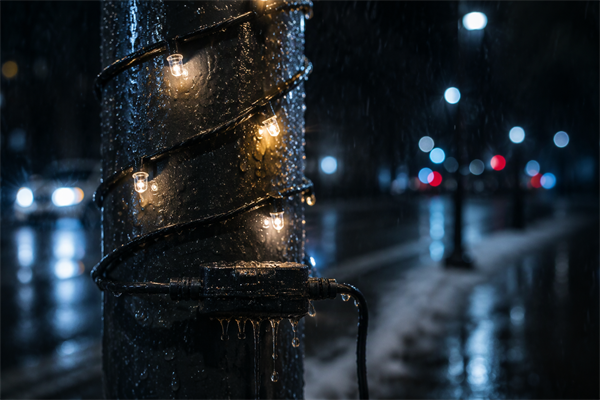
Critical durability features for municipal lighting
Assure long service life with the following specifications:
- IP ratings: Products meant for open-air use should typically be IP65+ rated for waterproofing.[^6]
- Material strength: Structural frames of motif lights should be made with corrosion-resistant metals or coated alloys capable of standing up to wind loads.[^7]
- UV resistance: Materials exposed daily to sunlight must resist fading, cracking, or brittleness over time.[^8]
- Cable sealing: Electrical cables and connectors must be protected by weatherproof housings to avoid short circuits during rain.
Skipping these durability precautions could result in dark patches during festivities or increased on-site troubleshooting for municipal crews.
Should structural and wind-load verification be included?
Street-level installations face additional challenges: wind exposure and structural stress. High installation heights often amplify the impact of gusts, which can rock or damage fixtures that lack proper integrity.[^9]
For safe installations, structural verification against wind loads and mounting stability should complement decoration design. Suppliers can advise on wind-resistant frames, brackets, and locking mechanisms. Local structural professionals verify load assessments.
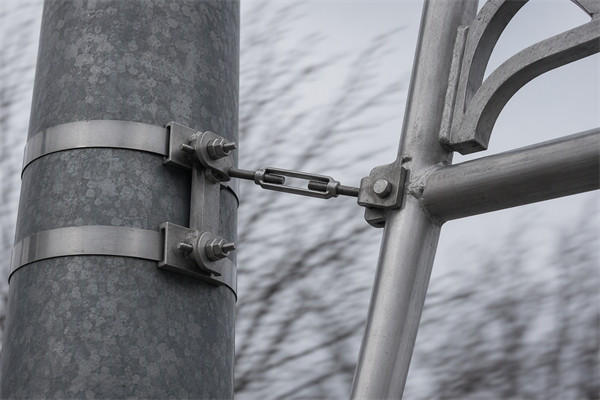
Design tips for windy cities
In high-wind environments or exposed areas:
- Reinforce motif frames: Opt for aluminum or steel brackets for rigidity and lightweight durability.
- Anchored mounting points: Ensure decoration fixing methods secure firmly to poles or bridge spans using clamps, hooks, or locking tensioners.
- Data-backed assessments: Consult wind-load design standards based on elevation or regional gust speeds.[^10] A decoration failing under wind stresses could harm pedestrians or vehicles.
We’ve observed cities requiring wind certifications to clear decoration designs before approval. Municipal contractors should collaborate early with suppliers and local engineers to pass safety checks.
How to manage power setup with minimal disruption?
Urban lighting projects deal with elevated power demands and unique street setups. Beyond standard wiring plans, municipal contractors must address power source accessibility, connection reliability, and energy conservation goals.
Efficient power setups integrate reliable connections to pole transformers or grid points while maximizing energy savings with LED lighting. Breaker load calculations and seasonal modifications often require coordination with electrical engineers.
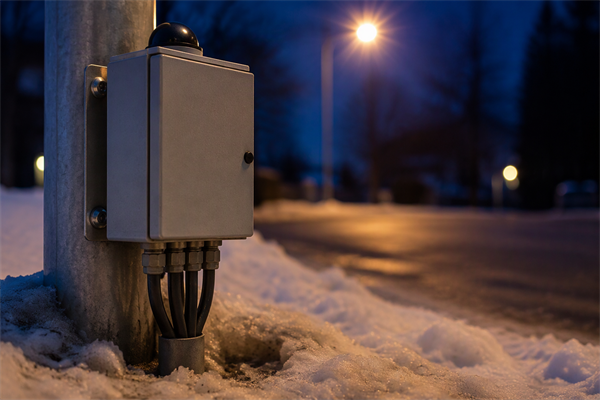
Core energy considerations for festive lighting
Succeeding in low-energy municipal Christmas decorations involves:
- LED adoption: Modern LED string lights and motif lights consume far less energy versus incandescent or fluorescent designs.[^11]
- Accessible connections: Decorations should connect to existing outdoor transformers or accessible underground circuits near poles or bridges.
- Voltage compatibility: Match decoration voltage range and current capacity with supply standards.
Additionally, municipalities often request timers or photocells to activate lighting only during evening hours, preserving energy.[^12] Suppliers can assist in recommending compatible hardware.
Should custom consultation precede bulk orders?
Custom consultation is invaluable for municipal contractors designing large-scale lighting projects. Unlike product catalogs, consultations allow suppliers to analyze site-specific needs and offer tailored recommendations.
Custom consultation is a risk-management tool. It aligns design ideas with physical, electrical, weather-related, and scale-bound limitations to avoid compatibility issues post-delivery.
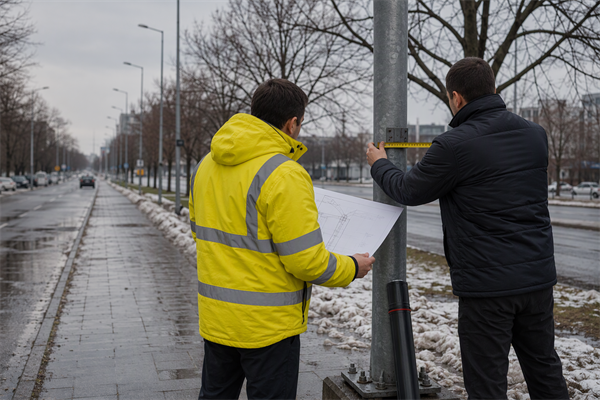
Benefits of involving suppliers early
- Risk reduction: Confirm dimension accuracy, mounting points, and cable lengths for error-free installation.
- Design adaptation: Keep visual designs beautiful yet functional for site conditions.
- Compliance checks: Suppliers can identify product adjustments necessary for municipal codes or certifications.
Many municipal contractors I’ve worked with have expressed regret when bypassing early-stage design checks—resulting in costly modifications, last-minute delays, and maintenance headaches.
Frequently Asked Questions
Can string lights be used for street lighting by themselves?
String lights are flexible for wrapping poles, trees, or light strings between road spans, but they rarely fulfill the visual scale expected for municipal lighting alone. We suggest pairing string lights with motif lights for balanced and festive displays.
What’s the lifespan of motif lights for outdoor use?
Durable LED motif lights can last for 30,000+ operating hours, while frames withstand exposure for multiple years if properly maintained. Cleaning and replacing small components (like cables) prolong their usability significantly.
Should all outdoor lights be certified waterproof?
Yes, outdoor Christmas lights require at least IP65 waterproof certification for municipal applications. Non-waterproof products risk short circuits and hazardous downtime.
How early should project designs be finalized?
Ideally, municipal holiday lighting projects should finalize designs and supplier consultations six months before installation dates, allowing ample lead time for production, logistics, and site checks.
Are LED modules better than traditional lighting?
LED modules deliver higher energy efficiency, longer lifespans, and superior waterproofing compared to traditional incandescent designs, making them ideal for municipal budgets and reliability demands.
Conclusion
Choosing street Christmas decorations for municipal lighting projects requires balancing festive appeal with practical compatibility. Structural integrity, outdoor durability, installation ease, and energy efficiency matter far more than a catalog price. Early custom consultations help safeguard against risks like poor mounting, dark patches, or weather damage.
If you're planning urban street Christmas lighting and want design ideas that reduce project risk, reach out now. Together, we can find solutions tailored to your city’s setup while ensuring reliability and holiday magic!

[^1]: "Roadway Lighting Resources | FHWA", https://highways.dot.gov/safety/other/visibility/roadway-lighting-resources. Public-lighting and outdoor electrical installation guidance treats environmental protection, secure mounting, and electrical safety as core requirements for equipment installed in public rights-of-way. Evidence role: general_support; source type: institution. Supports: Outdoor public lighting installations are subject to environmental protection, electrical safety, and structural mounting considerations.. Scope note: This would support the general municipal-installation rationale rather than prove the requirements for every type of Christmas decoration.
[^2]: "7 Lighting Application | FHWA - Department of Transportation", https://highways.dot.gov/safety/other/visibility/fhwa-lighting-handbook-august-2012/7-lighting-application. Roadway-lighting design guidance identifies roadway geometry, pole spacing, mounting height, and site conditions as factors that influence outdoor lighting performance and installation planning. Evidence role: mechanism; source type: government. Supports: Roadway lighting design depends on roadway geometry, luminaire placement, mounting height, and environmental exposure.. Scope note: The source would contextualize lighting infrastructure generally, not specifically decorative holiday motifs.
[^3]: "Clear Zones | FHWA - Department of Transportation", https://highways.dot.gov/safety/rwd/provide-safe-recovery/clear-zones/clear-zones. Roadway-safety guidance notes that objects placed near travel ways can affect visibility, clearances, and roadside safety, supporting the need to scale and locate street decorations carefully. Evidence role: general_support; source type: government. Supports: Objects placed in or near roadways can affect driver visibility, clearances, and roadside safety.. Scope note: This would support the safety principle for roadside objects, not establish a decoration-specific size threshold.
[^4]: "4.8 Vertical Alignment", https://www.txdot.gov/manuals/des/rdw/chapter-4--basic-design-criteria/4-8-vertical-alignment.html. Transportation and accessibility standards establish clearance requirements for overhead or protruding objects in public rights-of-way, which is relevant to decorations mounted over sidewalks or roadways. Evidence role: definition; source type: government. Supports: Public rights-of-way and roadways use minimum clearance rules for overhead and protruding objects to protect pedestrians and vehicles.. Scope note: The cited standards would define clearance principles; local codes may set the exact dimensions for a given project.
[^5]: "WEATHERING OF BUILDING INFRASTRUCTURE AND ...", https://courses.washington.edu/cee518/Auldetal2007.pdf. Research on outdoor material weathering identifies moisture, freeze-thaw cycling, wind exposure, ultraviolet radiation, and coastal salt humidity as environmental stressors for exterior equipment. Evidence role: general_support; source type: research. Supports: Outdoor infrastructure materials are commonly degraded or stressed by moisture, wind, freeze-thaw cycling, and coastal corrosion conditions.. Scope note: This supports the environmental-risk context rather than measuring failure rates for Christmas decorations specifically.
[^6]: "IP code", https://en.wikipedia.org/wiki/IP_code. The IEC ingress-protection classification defines IP65 as dust-tight and protected against water jets, making it a relevant benchmark for outdoor electrical equipment exposed to rain and spray. Evidence role: definition; source type: institution. Supports: IP65 denotes dust-tight protection and protection against water jets under IEC ingress-protection classifications.. Scope note: IP65 indicates a defined level of ingress protection but does not by itself certify suitability for all weather, immersion, or installation conditions.
[^7]: "Wind Load Effects on Signs, Luminaires and Traffic Signal ...", https://www.depts.ttu.edu/techmrtweb/documents/reports/complete_reports/1303-1F-TechMRT.pdf. Structural and materials guidance for outdoor installations treats corrosion protection and wind loading as necessary design considerations for exposed metal frames and supports. Evidence role: mechanism; source type: institution. Supports: Outdoor metal structures require corrosion protection and must be designed for environmental loads such as wind.. Scope note: The source would support the engineering principle; frame specifications still depend on the decoration geometry and local wind criteria.
[^8]: "Effects of UV radiation on natural and synthetic materials - PMC", https://pmc.ncbi.nlm.nih.gov/articles/PMC10088630/. Materials-weathering research shows that ultraviolet exposure can degrade polymers and coatings, causing discoloration, cracking, and embrittlement during outdoor service. Evidence role: mechanism; source type: research. Supports: Ultraviolet radiation contributes to color fading, cracking, and embrittlement in many outdoor materials.. Scope note: The degree of degradation varies by material formulation, additives, coating, and climate.
[^9]: "Appendix A Example 1: Wind Loads", https://dot.ca.gov/-/media/dot-media/programs/engineering/documents/structureconstruction/temp-str/temp-str-app-a1-a11y.pdf. Wind-load standards account for installation height, exposure category, and gust effects when estimating loads on elevated structures and attached equipment. Evidence role: mechanism; source type: institution. Supports: Wind-load calculations account for height and exposure because wind pressure and gust effects can increase structural demand on elevated objects.. Scope note: This supports the wind-loading mechanism; the actual load must be calculated for the specific fixture, bracket, and site.
[^10]: "Wind Load Factors - Construction and Inspections", https://www.seattle.gov/construction-and-inspections/resources/wind-load-factors. Recognized wind-action standards determine design loads using mapped regional wind speeds together with height, terrain, and exposure factors. Evidence role: expert_consensus; source type: institution. Supports: Recognized structural codes use mapped wind speeds, height, terrain, and exposure factors to determine design wind loads.. Scope note: The relevant standard depends on jurisdiction, and the standard does not replace project-specific engineering review.
[^11]: "Consumer Guide to Energy-Efficient Lighting", https://www.energy.gov/sites/default/files/2021-08/ES-EE%20Lighting_080921.pdf. Government energy-efficiency guidance reports that LED lighting uses substantially less electricity than incandescent lighting and offers higher efficacy than many legacy lighting technologies. Evidence role: statistic; source type: government. Supports: LED lighting is substantially more energy efficient than incandescent lighting and generally more efficient than older lighting technologies.. Scope note: Exact savings vary by product wattage, lumen output, controls, and operating schedule.
[^12]: "Purchasing Energy-Efficient Exterior Lighting", https://www.energy.gov/cmei/femp/purchasing-energy-efficient-exterior-lighting. Energy-efficiency guidance explains that timers and photosensors reduce lighting energy use by limiting operation to scheduled periods or low-ambient-light conditions. Evidence role: mechanism; source type: government. Supports: Lighting controls such as timers and photocells reduce unnecessary operating hours and can lower energy consumption.. Scope note: Energy savings depend on baseline operating hours, control settings, and whether lights were previously left on unnecessarily.
Table of Contents
- How to Choose Street Christmas Decorations for Municipal and Urban Lighting Projects
- Why is street scale critical for Christmas decoration design?
- How durable are outdoor Christmas lights and motifs under real-world conditions?
- Should structural and wind-load verification be included?
- How to manage power setup with minimal disruption?
- Should custom consultation precede bulk orders?
- Frequently Asked Questions
- Conclusion