 EN
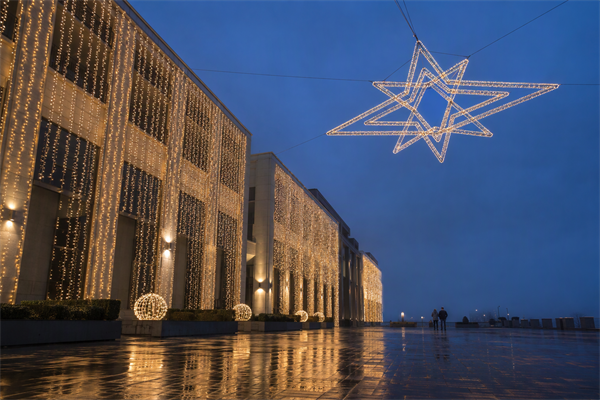
How to Plan a Commercial Christmas Lighting Project from Design to Installation
A commercial Christmas lighting project often fails not because of creativity, but because design, manufacturing, shipping, and installation are not aligned early. The problem is time. Delays compound across sampling, production, and logistics. The solution is a risk-controlled plan that links concept to specifications, lead times, and installation feasibility from day one.
A commercial Christmas lighting project should be planned backwards from the installation deadline, translating the concept into manufacturable specifications, engaging suppliers early, and locking timelines for sampling, production, quality control, packing, and shipping. This reduces rework, avoids late-season stockouts, and ensures the delivered package matches what installers can safely and quickly deploy.
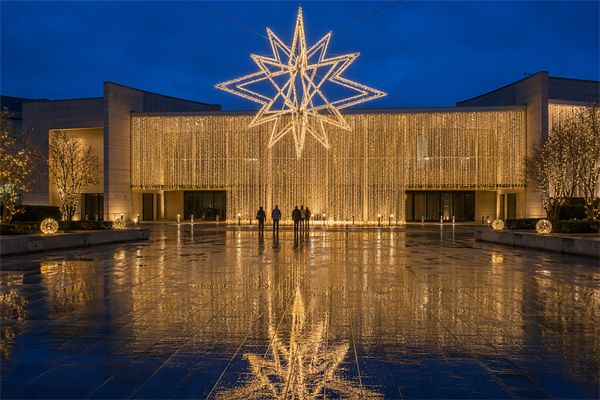
You now have the short answer. The next step is to pressure-test your assumptions and turn a pretty rendering into a buildable, shippable, installation-ready package. I will walk through what I ask in pre-sales calls, how I structure quotes, and the timeline buffers I recommend based on projects across Europe, Africa, Australia, and the Middle East.
Why start a commercial Christmas lighting project by the installation deadline?
You have a date. The city switch-on, the mall opening, the parade night. The risk is pretending time is elastic. If you do not anchor the plan to the installation deadline, every small delay—sampling, approvals, shipping—becomes a crisis. The fix is to work backwards and make trade-offs visible early.
A commercial Christmas lighting project must begin with the installation deadline and backward-planned milestones across design freeze, sampling, production, quality checks, packing, export, and last-mile delivery. Using buffers at each stage protects the switch-on date[^1] and informs realistic choices on customization, transport mode, and installation readiness.
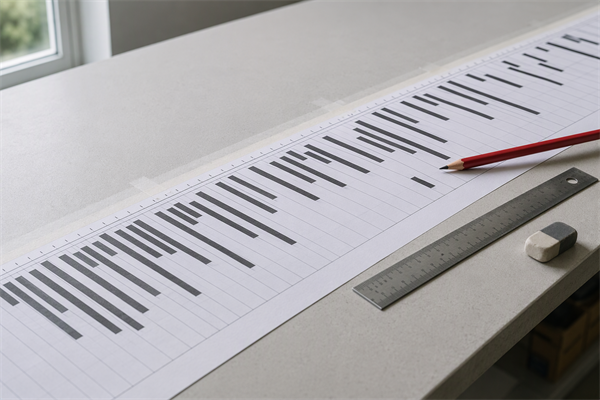
Build a backward timeline that survives reality
I like to sketch a “red-line” Gantt in the first call. Not a perfect plan—just reality on one page. It forces decisions before the clock runs out.
- Event switch-on: 0 days
- Site access handover: -3 to -10 days
- Local pre-assembly/staging: -7 to -14 days
- Inland transport from port to site: -3 to -7 days
- Customs clearance: -3 to -10 days (varies by country and documentation)
- Ocean freight: -18 to -45 days (Middle East: ~18–30; Europe: ~25–40; Australia: ~20–30; South Africa: ~30–45)
- Export booking + port dwell: -3 to -7 days
- Final QA + packing + palletization: -3 to -5 days
- Production run: -15 to -35 days (custom motifs are usually longer than standard strings)
- Pre-production sample approval: -7 to -10 days (including courier transit)
- Design freeze + BOM sign-off: -3 to -5 days
Key principle:
- Lock the installation date first.
- Allocate buffers for customs, weather, and carrier rollovers.
- Decide early if air freight is an acceptable contingency and price it now, not in panic later.
I once watched a project save itself by switching one oversized motif from welded aluminum to modular segments to meet an air-freight size limit. That decision came from a backward plan, not from luck. When you see time in reverse, trade-offs become actionable.
How do you translate a commercial Christmas lighting project design into manufacturable specifications?
Beautiful renders mislead teams into thinking the “work” is done. The risk lies in vague specs that let assumptions creep in: sizes, lumen output, color temperatures, connector types, mounting points. The fix is a structured spec pack that every stakeholder can read without guessing.
A commercial Christmas lighting project design must become a clear specification: dimensions, materials, IP ratings, LED types, color/CRI bins[^2], control method, power topology, connectors, mounting assumptions, packing method, and labeling. Without this, quotes vary wildly and production cannot deliver consistent results at scale.[^3]
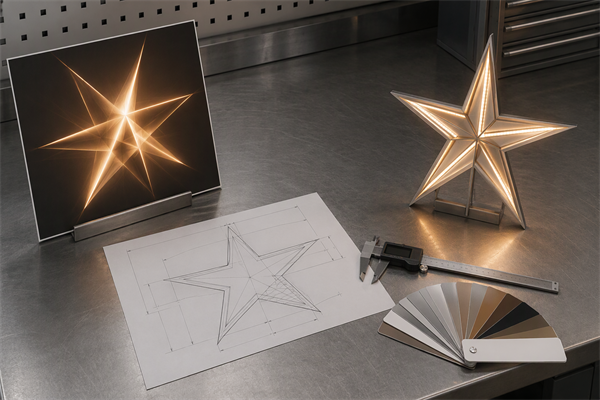
From render to BOM: the spec pack that prevents surprises
I treat the rendering as a direction, not a document. Your spec pack should include:
- Technical drawings with tolerances (e.g., motif 2.5 m x 1.2 m ±5 mm)
- LED spec: 5 mm epoxy, SMD 2835, or pixel nodes; wattage per meter; expected lumen output; color temp target (e.g., 2700K ±100K); RGB addressability (SPI/DMX)
- Ingress protection and environment: IP65/IP67 for outdoor[^4]; UV-stable cable; UV-resistant PVC to ASTM or ISO reference as applicable
- Voltage and power topology: 24 VDC low-voltage systems or 230 VAC; power budgets per run; maximum run length before voltage drop
- Control: static, chase, DMX, RGB pixel mapping; controller model; channel count plan
- Connectors and polarity: plug type, waterproof rating, keyed connectors, T’s and extensions
- Mounting assumptions: cable ties, clips, steel wire rope, brackets; hole positions; allowable loads (installer to confirm structural safety)
- Packaging and labels: inner box, export carton, pallet, carton marking, handling symbols; QR linking to installation layout
- Spares and maintenance: 2–5% spares; replacement node strategy; tool list
Table: example spec clarity for one motif
| Item | Requirement | Notes |
|---|---|---|
| Frame | 6063 aluminum, powder-coated RAL 9016 | Welded joints; smooth edges |
| LEDs | SMD 2835, 0.2 W, 2700K ±100K | CRI ≥80; bin locked |
| IP rating | IP65 | Potting at joints; test report available |
| Voltage | 24 VDC | Class II power supplies |
| Controller | DMX512 with standalone scenes | 8 universes max |
| Cable | 2×1.0 mm² tinned copper, UV resistant | Black |
| Connector | IP67 2-pin keyed | M-F orientation marked |
| Mount points | 6x M8 eyelets | Installer checks structure |
| Packing | Foam + corner protectors | Drop test to 80 cm |
| Labels | Project code + QR to layout | English/French |
Verification matters. I advise buyers to request sample photos with a gray card, lux readings at 1 m, and a short burn-in video. You do not need lab theatrics; you need enough data to match production with the render.
When should suppliers join your commercial Christmas lighting project planning?
Bringing suppliers in after you finalize a shopping list hides risks. The danger is late reveals: non-standard lead times, connectors that do not mate, frames that exceed container doors. Early involvement surfaces manufacturing and logistics limits before the quote locks.
Invite your supplier into the commercial Christmas lighting project during concept development. Ask for manufacturability feedback, connector standardization, realistic lead times, packing dimensions, and shipping constraints. Early collaboration reduces redesign, unit cost creep, and last-minute air-freight disasters.[^5]
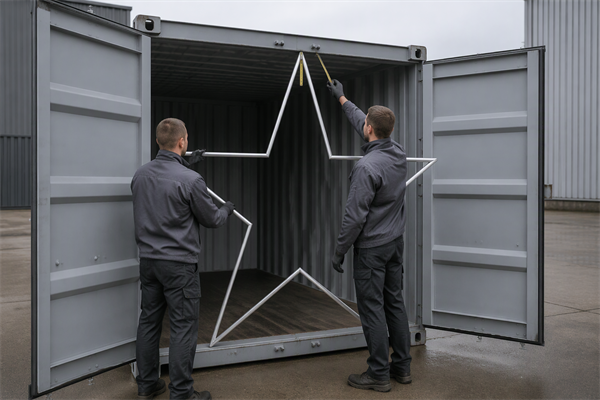
The feasibility questions that save weeks and thousands
In my pre-sales calls, I run a quick feasibility checklist. It is not about selling more; it is about revealing hidden constraints.
Feasibility checklist:
- Can the largest piece fit a standard 40' HQ container door[^6] (width x height)? If not, can it be modular?
- Are proposed connectors available in the required quantity within the season?
- Are requested LED bins (e.g., 2700K ±100K) secure through the whole batch?
- Are motifs compatible with the intended controller protocol and voltage?
- Do we have local plug standards for power supplies and an acceptable certification path?
- Can we standardize accessories across zones to reduce spares and simplify installation?
- What is the realistic sample turnaround considering national holidays and courier lead times?
- What IncoTerms match your clearance capacity (FOB Zhongshan, CIF, DDP)?
- What packaging density meets both protection and freight cost targets?
I once flagged a client’s 3.2 m star that could not pass a container door upright. Redesigning into two interlocking halves turned a potential air-freight bill into a standard ocean shipment and saved their margin. Suppliers see these traps every week. Use that perspective early.
Ask for documents, not promises:
- Factory certifications: ISO9001, BSCI. Verify the certificate numbers and audit dates.
- Test reports: IP tests, insulation resistance, and where applicable CE/UKCA/RCM/NRCS declarations—always validate against your market’s rules with local professionals.
- Sample retention and golden sample procedures.
What timeline and logistics protect a commercial Christmas lighting project from delays?
Logistics sink good projects. The risk is assuming carriers will always have space and customs will clear without a hitch. The fix is to lock capacity early, choose packaging rationally, and align documents and labels to your import process.
Protect a commercial Christmas lighting project with a locked production slot, early freight booking, compliant documentation, and practical packing. Define IncoTerms[^7], carton labels, palletization, and HS codes[^8] early. Keep an air-freight contingency for critical SKUs and maintain a buffer for customs variances.

Logistics playbook: decisions that compound in your favor
H3: Production slots and buffers
- Secure a production window once the design freezes.
- Use a 10–15% time buffer around sampling and final QC.
- Plan a short burn-in (e.g., 4–8 hours at rated voltage[^9]) on 100% of powered products; record sample serials.
H3: Freight decisions and IncoTerms
- Decide IncoTerms up front: EXW for buyers with China presence, FOB Zhongshan/Shenzhen for common cases, CIF/DDP if you want landed cost predictability.
- Pre-book ocean space for peak season; ask for a second sailing option.
- Price an air-freight fallback for a subset of SKUs (motifs under dimensional weight thresholds).
H3: Documentation and labeling
- Pro forma invoice with HS codes, country of origin, and packing list by carton.
- Test report references and declarations as required by the destination (validate locally).
- Carton labels: project code, zone, SKU, gross weight, dimensions, and handling icons.
H3: Packaging that survives the last mile
- Use foam and corner protectors on frames; avoid “pretty but fragile” packaging.
- Palletize to destination standards; respect height limits for warehouse racking.
- Mark install sequence on cartons; pack per zone to speed field teams.
Practical benchmark windows (indicative, not guarantees):
- Custom motif sampling: 7–10 days
- Production: 20–35 days depending on complexity and batch size
- Ocean to EU: 25–40 days; AU: 20–30; Middle East: 18–30; South Africa: 30–45
- Customs: 3–10 days depending on documents and inspections
The teams who finalize freight too late almost always lose a week to rollovers. Book early. Hold your documents tight. The calendar is as real as gravity.
How do you budget and quote accurately for a commercial Christmas lighting project?
Budgets drift when quotes hide assumptions. The risk is comparing unit prices that include different materials, brightness, connectors, or packing. The solution is a structured quote tied to a spec pack and a zone-by-zone bill of materials with accessories, spares, and installation aids.
Budget accurately by requesting a specification-bound quote for the commercial Christmas lighting project that itemizes materials, LED specs, connectors, control gear, accessories, spares, packing, QA steps, and logistics options. Compare landed cost per zone, not just unit price, and validate that samples match the stated bins and finishes.
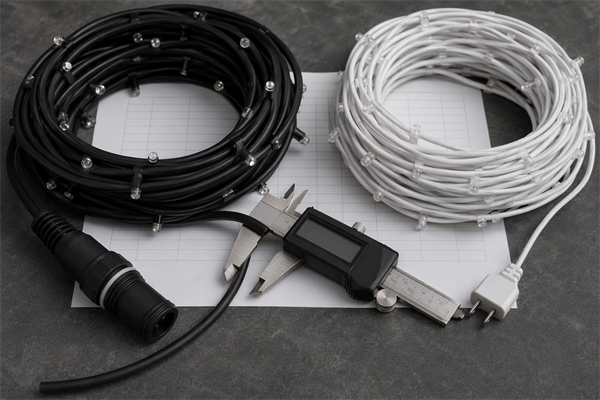
What goes into a quote that stands up in the field
H3: Quote structure tied to outcomes I organize quotes by installation zone. Each zone includes:
- Primary items (motifs, light strings, curtain lights, net lights)
- Controllers and power supplies
- Cables, connectors, mounting clips, safety cables
- Spare kits (2–5%)
- Packing and labeling
- Logistics line: FOB/CIF/DDP with lead-time window
H3: Technical clarity For each line, I include:
- LED type and bin (e.g., 2700K ±100K; RGB 16-bit dimming)
- Power consumption and maximum run length
- IP rating and cable type
- Connector model and polarity
- Mounting assumption
- Expected lifetime and warranty terms
H3: Cost realism
- Price both ocean and air options on critical SKUs.
- Offer alternates: e.g., 3000K vs 2700K; aluminum vs steel frame; DMX vs standalone effects.
- Add a contingency percentage for site consumables (tie-wraps, clips, gaffer tape, spare fuses) if installer requests.
Example comparison points:
- Commercial-grade string: 5 mm LED, 24 VDC, 100 LEDs/10 m, 7 W, IP65, molded connectors.
- Retail-grade string: 230 VAC, fixed plug, thin PVC cable, non-repairable. The former costs more per unit, but saves hours in installation and reduces failures.
Ask suppliers to reference certifications (ISO9001, BSCI) and provide traceable QC steps. Then verify documents. A clean quote with aligned assumptions is worth more than a cheap line price that derails on site.
What should installation teams prepare for a commercial Christmas lighting project installation?
Even perfect shipments fail without site readiness. The risk is landing a container to a team missing lifts, power plans, or safe mounting points. The fix is an installation readiness pack and a division of responsibilities between supplier and local professionals.
Prepare installation for a commercial Christmas lighting project by confirming power distribution, mounting methods, access equipment, safety compliance, and site sequencing. Use an installation pack with layouts, load estimates, connector maps, and test procedures. Always assign electrical work and structural fixing to qualified local teams.
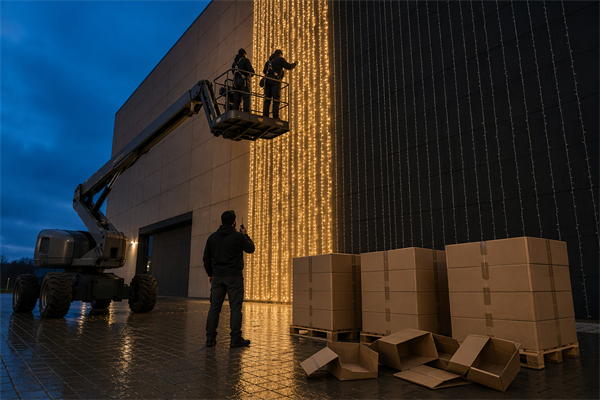
Make the site ready before the container opens
H3: Installation readiness pack I deliver a pack that includes:
- Zone layouts with cable paths and controller locations
- Connector maps and polarity notes
- Power budget per run and recommended power supply placements
- Test checklist: continuity, insulation resistance, functional effects test
- Spare parts list and swap procedure
- Unpacking order and re-packing instructions for off-season storage
H3: Roles and boundaries
- Supplier: product specs, test reports, controller configuration notes, and remote support.
- Installer: electrical connections, structural anchoring, MEWP operation, local compliance. I always recommend that licensed electricians and qualified riggers[^10] handle final connections and fixings per local codes.
H3: Tools and consumables checklist
- MEWPs or scaffolds, fall-arrest PPE
- Torque tools, crimpers, heat-shrink, UV-stable ties
- Weatherproof junction boxes, glands, conduit where needed
- Multimeters, insulation testers, DMX testers
- Label printer for on-site changes
H3: Commissioning and handover
- Power-on in sequences; verify current draw per circuit.
- Log serials and controller firmware versions.
- Capture a night photo set for future maintenance matching.
- Create a punch list and close before the public opening.
When teams align on a readiness pack, installation times compress, and stress drops. I have seen crews cut install hours by 20% just by receiving pre-sorted, zone-labeled cartons and a clear connector map.
How do you control quality for a commercial Christmas lighting project before shipment?
Quality is often treated as a final inspection. The risk is discovering color mismatches or wiring errors after arrival. The fix is upstream controls: component checks, color bin locking, process audits, burn-in, and traceability.
Control quality in a commercial Christmas lighting project by locking LED bins, validating incoming materials, auditing assembly, running 100% burn-in, and conducting pre-shipment inspections with photos, videos, and measurable data. Keep golden samples and serial logs so production matches the approved sample on every batch.
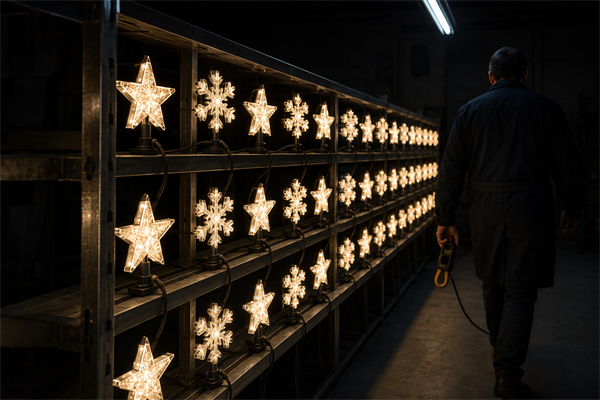
A QC flow that prevents expensive surprises
H3: Pre-build controls
- Component verification: LED bin certificates; driver brand; cable gauge.
- Sample approval: compare against render under similar lighting; check CCT with a meter; verify connectors and fit.
- Process plan: work instructions for soldering, sealing, and strain relief.
H3: In-line checks
- Visual checks at each station for solder quality and potting coverage.
- Polarity and continuity test before sealing.
- Random pull tests on connectors and cable grommets.
H3: Burn-in and functional testing
- 4–8 hours at rated voltage; cycle effects for DMX/pixel products.
- Temperature spot checks on power supplies under load.
- Record failures and corrective actions.
H3: Pre-shipment inspection (PSI)
- AQL-based sampling[^11] on appearance and function.
- Lumen/lux sampling on a defined distance (e.g., 1 m).
- IP test sampling if applicable and safe to perform.
- Photo/video set per SKU; packing verification; carton drop test (e.g., 80 cm).
- Documentation pack referencing ISO9001 procedures; BSCI audit status available on request.
Buyers should verify all certificates and test reports against the issuing bodies. For market compliance (CE/UKCA/RCM/others), engage local qualified professionals to confirm your specific application and labeling requirements before import.
Frequently Asked Questions
When should I place the order for a large commercial Christmas lighting project?
Work back from your installation date. For custom motifs, I recommend locking the design 12–16 weeks before switch-on. That window covers sampling, production, ocean freight, customs, and a buffer. If you are ordering standard items only, you can compress that, but keep at least 8–10 weeks.
Can I mix suppliers without risking color and connector mismatches?
You can, but control the variables. Specify LED bins (e.g., 2700K ±100K), connector models, polarity, and cable jacket color. Request samples from all suppliers and compare under the same conditions. Standardize controllers and power topology to reduce field incompatibilities.
What certifications should I request from the manufacturer?
Request ISO9001 for quality management and BSCI for social compliance, then verify certificate numbers and audit dates. For market entry, consult local professionals on CE/UKCA/RCM or other requirements. Ask for IP test reports, burn-in procedures, and material specs to match your application.
How much spare inventory should I plan?
I advise 2–5% spares by SKU, depending on complexity and criticality. Include spare connectors, fuses, controller outputs, and a few pre-terminated cables. Spares reduce downtime if a unit is damaged during installation or by weather during the season.
Should I choose 24 VDC or 230 VAC systems?
For large outdoor displays, 24 VDC improves safety[^12] and often simplifies long runs with proper power injection. However, 230 VAC systems can be efficient for simple static runs with certified components. Make this decision with your installer, considering local codes and run lengths.
Conclusion
Planning a commercial Christmas lighting project is a risk-control exercise that connects design intent with manufacturable specifications, realistic lead times, logistics, and installation readiness. Start from the installation date and work backwards. Engage suppliers early, demand clear specs, and verify quality. If you want a second set of eyes on your plan or a feasibility check, I am happy to review your timeline and spec pack.

[^1]: "Critical Chain Method", https://www.rose-hulman.edu/class/cs/csse372/201310/SlidePDFs/session21.pdf. Project-management literature on critical-path scheduling and schedule contingency supports the use of intermediate buffers to reduce the probability that delays in dependent activities will compromise a fixed completion date. Evidence role: general_support; source type: research. Supports: Schedule contingency and backward planning can reduce the risk that delays in dependent tasks affect a fixed completion date.. Scope note: This would support the scheduling principle generally, not prove that every Christmas lighting project requires the same buffer structure.
[^2]: "LED Color Characteristics", https://www1.eere.energy.gov/buildings/publications/pdfs/ssl/led-color-characteristics-factsheet.pdf. Technical guidance on LED lighting explains that LEDs are sorted by performance characteristics such as correlated color temperature and color rendering, supporting the need to specify bins when uniform appearance is required. Evidence role: mechanism; source type: government. Supports: LED binning and correlated color temperature tolerances affect perceived color consistency across products.. Scope note: The source would support the mechanism of color variation, not the article’s specific tolerance example.
[^3]: "The complete bill of materials : a study in collaborative manufacturing", https://dspace.mit.edu/entities/publication/b1bc7676-cd2c-4d29-be3a-3ed91318e404. Engineering and manufacturing references describe technical specifications and bills of materials as controls that reduce ambiguity in procurement and production, supporting the claim that vague specifications can produce inconsistent quotations and outputs. Evidence role: general_support; source type: education. Supports: Clear specifications and bills of materials reduce ambiguity in procurement and production processes.. Scope note: The support is contextual across manufacturing practice rather than specific to decorative lighting.
[^4]: "IP code", https://en.wikipedia.org/wiki/IP_code. IEC 60529 defines IP-code classifications, including dust-tight and water-ingress protection levels such as IP65 and IP67, which provides the technical basis for specifying ingress protection in outdoor electrical products. Evidence role: definition; source type: institution. Supports: IP65 and IP67 are standardized ingress-protection classifications for resistance to dust and water exposure.. Scope note: The standard defines protection levels; it does not by itself determine which rating is sufficient for a particular installation environment.
[^5]: "Evaluation of Early Supplier Involvement in Product Development", https://docs.lib.purdue.edu/cgi/viewcontent.cgi?article=1029&context=techmasters. Research on early supplier involvement in product development finds that supplier participation during design can improve manufacturability and reduce late engineering changes, supporting the article’s recommendation to involve suppliers before specifications are locked. Evidence role: expert_consensus; source type: paper. Supports: Early supplier involvement in product development can improve manufacturability and reduce late design changes or cost growth.. Scope note: The evidence would support redesign and cost effects generally; it may not directly measure air-freight emergencies in seasonal lighting projects.
[^6]: "Intermodal container", https://en.wikipedia.org/wiki/Intermodal_container. References on intermodal container standards describe the approximate dimensions and door openings of 40-foot high-cube containers, supporting the need to verify that oversized display structures can physically fit before ocean shipment. Evidence role: definition; source type: encyclopedia. Supports: Forty-foot high-cube containers have standardized approximate dimensions, including door-opening constraints relevant to cargo fit.. Scope note: Published dimensions are standardized or typical values; actual equipment should still be confirmed with the carrier.
[^7]: "Know Your Incoterms", https://www.trade.gov/know-your-incoterms. The International Chamber of Commerce describes Incoterms as standardized trade terms that allocate delivery obligations, costs, and risk transfer between buyers and sellers in international transactions. Evidence role: definition; source type: institution. Supports: Incoterms define trade terms that allocate delivery responsibilities, costs, and risk transfer between sellers and buyers..
[^8]: "Harmonized Tariff Schedule", https://hts.usitc.gov/. The World Customs Organization describes the Harmonized System as an international nomenclature for classifying traded goods, supporting the article’s instruction to identify HS codes in customs and shipping documentation. Evidence role: definition; source type: institution. Supports: The Harmonized System provides internationally used commodity codes for customs classification and trade documentation..
[^9]: "Infant Mortality in Reliability Studies", https://web.cortland.edu/matresearch/InfantMortStudyQR&CII.pdf. Reliability-engineering literature describes burn-in testing as a screening method intended to precipitate early-life failures under controlled operating conditions, supporting the use of powered testing before shipment. Evidence role: mechanism; source type: paper. Supports: Burn-in testing is used in electronics reliability engineering to reveal early-life failures under operating conditions.. Scope note: The literature supports burn-in as a mechanism, but it may not prescribe the article’s specific 4–8 hour duration for decorative lighting products.
[^10]: "1910.332 - Training", https://www.osha.gov/laws-regs/regulations/standardnumber/1910/1910.332. Occupational-safety guidance from government regulators requires or recommends competent or qualified persons for hazardous electrical and rigging-related work, supporting the article’s instruction to assign final connections and fixings to appropriately qualified local professionals. Evidence role: expert_consensus; source type: government. Supports: Electrical work and rigging tasks should be performed by competent or qualified persons to manage shock, fall, and load-related hazards.. Scope note: Specific licensing requirements vary by jurisdiction and project type.
[^11]: "ISO 2859-1", https://chemistry.unt.edu/~tgolden/courses/iso2859-1.pdf. ISO 2859-1 establishes procedures for acceptance sampling by attributes and defines acceptance quality limits, providing the standards basis for using AQL sampling in pre-shipment inspection. Evidence role: definition; source type: institution. Supports: AQL acceptance sampling is a standardized method for lot-by-lot inspection by attributes.. Scope note: The standard supports the inspection method, but the appropriate AQL level depends on the buyer’s risk tolerance and product category.
[^12]: "Extra-low voltage", https://en.wikipedia.org/wiki/Extra-low_voltage. Electrical-safety standards for SELV and PELV systems treat extra-low voltage as a protective measure against electric shock, supporting the claim that properly designed 24 VDC lighting can offer safety advantages over mains-voltage circuits. Evidence role: mechanism; source type: institution. Supports: Extra-low-voltage systems are treated in electrical-safety standards as a protective measure against electric shock when designed within defined limits.. Scope note: Low voltage does not eliminate all hazards; current capacity, power supplies, wiring, environmental exposure, and local code compliance remain relevant.
Table of Contents
- How to Plan a Commercial Christmas Lighting Project from Design to Installation
- Why start a commercial Christmas lighting project by the installation deadline?
- How do you translate a commercial Christmas lighting project design into manufacturable specifications?
- When should suppliers join your commercial Christmas lighting project planning?
- What timeline and logistics protect a commercial Christmas lighting project from delays?
- How do you budget and quote accurately for a commercial Christmas lighting project?
- What should installation teams prepare for a commercial Christmas lighting project installation?
- How do you control quality for a commercial Christmas lighting project before shipment?
- Frequently Asked Questions
- Conclusion