 EN
EN

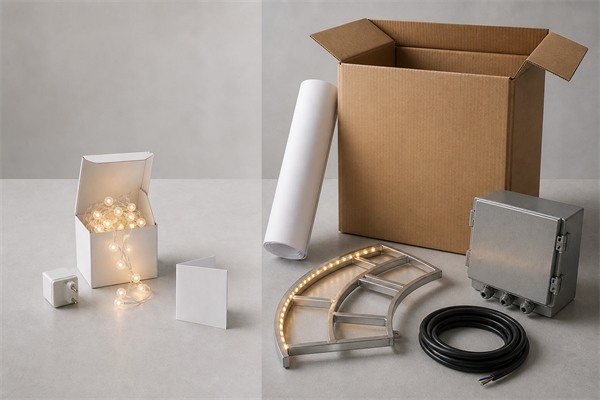
European Festive Lighting Compliance: CE, RoHS, and Energy Labelling
European festive lighting compliance can look simple at first, especially when a supplier says, “Yes, we have CE and RoHS.” The problem starts when labels, manuals, warnings, declarations, or model references do not match the actual order. I have seen buyers lose time on repeated file checks, so I treat compliance as pre-order risk control.
European festive lighting compliance means verifying the product type, destination market, sales channel, CE-related documents, RoHS support, packaging labels, manuals, warnings, and energy-labelling applicability before ordering. A CE mark or one certificate is not enough.[^1] Buyers should confirm the complete file package against current EU requirements and their own import, retail, or project acceptance process.

In my work with European importers, retail buyers, and project contractors, the hardest problems rarely appear during quotation. They usually appear near shipment, customs review, retail listing, or customer handover. That is why I recommend checking compliance evidence before price, packaging, and production details are locked.
Why Is European Festive Lighting Compliance More Than a CE Mark?
European festive lighting compliance often fails when buyers treat the CE mark as a visual symbol only. The mark matters, but the real question is whether the supplier can support it with documents, product consistency, and correct order-specific information. If buyers skip that step, small errors can become expensive late-stage problems.
European festive lighting compliance is more than a CE mark because buyers need traceable documentation, correct product identification, suitable warnings, and consistent packaging information. The CE mark should connect to the actual model, design, electrical configuration, and intended use. Buyers should verify the Declaration of Conformity[^2] and related test references before placing an order.
The CE mark is the start, not the whole file
I often tell buyers that a CE mark on a christmas light box is like a title page. It points to a compliance story, but it does not tell the whole story by itself. For procurement, the stronger question is:
“Can this supplier provide a consistent compliance file for this exact product, this exact model, and this exact order?”
A professional buyer should not only ask, “Do you have CE?” A better request includes:
- Declaration of Conformity, linked to the correct supplier and product model
- Test report references, where applicable to the product category
- Technical file support, depending on product type and buyer requirements
- Rated voltage, wattage, IP rating[^3], and class information, if relevant
- Packaging label artwork, including warnings and language requirements
- User manual or instruction sheet, suitable for the destination market
- Nameplate or product marking layout, especially for adapters, controllers, and outdoor products
Why model matching matters
Festive lighting orders often include many similar-looking items. A buyer may order a warm white LED string light, an outdoor connectable light chain, and a custom motif light in the same season. They may all look similar in a catalogue, but the compliance questions are not identical.
Here is a simple comparison I use during buyer discussions:
| Product example | Common buyer risk | What I would verify before order |
|---|---|---|
| Retail-packed LED string light | Box label does not match product rating | Model number, voltage, wattage, CE file reference, warning text |
| Outdoor christmas light string | IP rating or outdoor-use wording is unclear | IP marking, cable type, plug/adaptor details, outdoor warnings |
| Custom motif light | Drawing and actual electrical parts change | BOM consistency, power supply details, installation instructions |
| Municipal decoration project item | Contractor needs handover documentation | Technical pack, installation notes, maintenance guidance |
The issue is not whether a supplier “has CE” in a general sense. The issue is whether the supplier has order-relevant compliance support.
My manufacturer-side view
As a China-based festive lighting manufacturer and trading-integrated supplier, I have helped buyers confirm CE/RoHS/label-related files many times. I am not a testing laboratory or a certification authority. However, I have seen a practical pattern: buyers feel safe when they see one certificate, but their risk decreases much more when the file, label, manual, product photos, and carton markings all match.
That is the mindset I recommend for European festive lighting compliance. Buyers should verify the evidence, not just the mark.
Which CE Documents Should Buyers Check for European Festive Lighting Compliance?
European festive lighting compliance becomes easier when buyers request CE-related documents before sampling or mass production. If buyers wait until goods are packed, corrections become harder. A missing Declaration of Conformity, unclear model reference, or inconsistent rating label can delay retail approval, internal audits, or customer acceptance.
Buyers should check the Declaration of Conformity, relevant test-report references, product model details, technical file availability, rating label artwork, packaging markings, user instructions, and warning texts[^4]. The exact CE document package depends on product type. Buyers should confirm requirements with qualified professionals and current EU rules before relying on any single document.

A practical CE document checklist
When a European buyer asks me for CE-related support, I usually suggest starting with a document checklist. The checklist should be practical, not theoretical. It should help the buyer connect the paperwork to the real product.
A basic pre-order checklist may include:
-
Product identification
- Model number
- Product name
- Item code used by the buyer
- Photos or drawings
- Electrical configuration
-
Declaration of Conformity
- Manufacturer or responsible party information
- Product model reference
- Applicable standards or directives, as stated in the document
- Signature and date
- Consistency with the ordered product
-
Test report references
- Report number
- Tested model
- Product description
- Laboratory name
- Standard reference
- Scope and limitations
-
Label and marking documents
- Product nameplate
- Adapter or controller marking
- Packaging label
- Carton label
- Warning label
-
Instruction and safety information
- Manual language
- Indoor/outdoor use statement
- Installation guidance
- Connection limits, if applicable
- Maintenance or replacement instructions, if applicable
What I check when documents arrive
I do not treat a document as useful just because it has a stamp or a logo. I check whether it connects logically to the order. For example, if a buyer orders an outdoor string light set with a specific plug, controller, and cable, the CE-related documents should not only describe a different indoor decorative product.
Here are the practical questions I ask:
| Question | Why it matters |
|---|---|
| Does the model number[^5] match the quotation and invoice? | Different model names create audit confusion |
| Does the report describe the same product structure? | A similar product may not cover the ordered design |
| Does the label show correct voltage and wattage? | Retail and customs checks may compare physical labels |
| Does the manual match indoor or outdoor use? | Wrong use instructions can create customer complaints |
| Are warnings suitable for the target country? | Language and safety text may affect retail listing |
Do not rely on screenshots alone
Some buyers receive screenshots of certificates during supplier selection. Screenshots may help in early discussions, but they are weak for serious procurement. I recommend requesting PDF files and checking whether the supplier can explain what each file covers.
Buyers should also decide who will perform the final review. For important retail-chain orders or public projects, I would involve a qualified compliance consultant, testing partner, or the buyer’s internal quality team. A supplier can provide documents and production support, but the buyer should not treat the supplier as the final legal interpreter.
That approach keeps European festive lighting compliance practical and controlled. It also avoids the common problem where a buyer discovers file gaps only after cartons are sealed.
Where Do RoHS Declarations Fit Into European Festive Lighting Compliance?
European festive lighting compliance is not only about electrical safety and CE markings. Material restrictions also matter[^6], especially for LED components, cables, soldering materials, controllers, plugs, adapters, and packaging-related claims. If buyers ask about RoHS too late, they may struggle to connect declarations with the actual bill of materials.
RoHS support fits into European festive lighting compliance as material-related evidence for restricted substances. Buyers should request RoHS declarations, test references where available, and supplier material controls for relevant components. They should verify whether the documents match the ordered product and confirm current regulatory requirements with qualified sources.
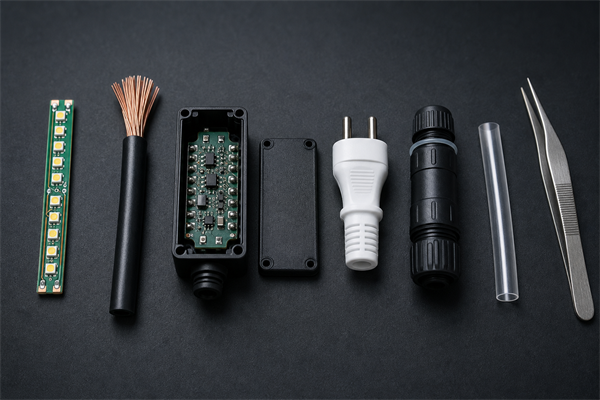
RoHS is not just one paper
In procurement conversations, RoHS is sometimes reduced to one sentence: “RoHS available.” That is not enough for careful buyers. A festive lighting product may contain many material sources:
- LED beads[^7]
- PVC or rubber cable
- Copper wire
- Solder joints
- PCB boards
- Plastic battery boxes
- Controllers
- Adapters
- Plugs
- Heat-shrink tubing
- Decorative frames or covers
For a simple christmas light string sold in retail packaging, the buyer may expect a standard RoHS declaration and relevant test support. For a custom commercial motif, the buyer may need more component-level confidence because the structure, metal frame, LEDs, and power supply may change from one project to another.
Supplier control matters
A strong RoHS discussion should include supplier control. Buyers can ask:
- Does the supplier purchase LEDs from approved vendors?
- Does the supplier keep material declarations from component suppliers?
- Does the supplier separate new material sources from old ones?
- Does the supplier update documents when a component changes?
- Does the supplier perform incoming material checks?
- Does the supplier keep traceability for production batches?
In our own order communication, I have seen repeated confirmations happen when a buyer changes a cable color, plug type, LED specification, or packaging format. The buyer may think the product is still the same. From a file-control perspective, the supplier should check whether the change affects documentation.
A simple RoHS risk table
| Change in order | Possible RoHS concern | Buyer action |
|---|---|---|
| Different cable supplier | Material formulation may change | Request updated material declaration |
| New LED bead model | Component substance profile may differ | Confirm RoHS support from LED supplier |
| New controller design | PCB and solder materials may change | Check test references or declarations |
| Custom decorative shell | Plastic or coating may vary | Ask for material information |
| New plug or adapter | Electrical component source changes | Verify component documents |
Be careful with broad claims
I avoid saying, “This product is RoHS compliant forever[^8],” because buyers should verify current rules, product scope, and documentation. A better supplier statement is specific and controlled. For example:
“For this model and order configuration, we can provide RoHS-related declaration support and relevant document references for buyer review.”
That sentence is less dramatic, but it is safer. It helps buyers understand the document’s scope. It also reflects how European festive lighting compliance works in real procurement. The buyer is not only buying a light. The buyer is buying a product package that must survive inspections, retail listing checks, and internal compliance review.
How Should Buyers Handle Energy Labelling in European Festive Lighting Compliance?
European festive lighting compliance becomes more sensitive when energy labelling is discussed. Many buyers ask whether a decorative lighting item needs an energy label. The correct answer depends on product type, light source configuration, removability, packaging, sales channel, and current EU rules. Buyers should avoid fixed assumptions.
Buyers should handle energy labelling by first checking whether the festive lighting product falls within current EU energy-labelling requirements. Not every decorative lighting product follows the same logic. Importers should verify applicability by product type, confirm label artwork when required, and avoid printing energy claims without current-rule review.

Why energy labelling creates confusion
Energy labelling is one of the most misunderstood topics in festive lighting procurement. A buyer may ask, “Does this festivel light need an energy label?” The supplier may answer too quickly. That is risky because decorative lighting products are not all treated the same way.
The following details may affect the discussion:
- Is the product a light source, a luminaire, or a decorative assembly?
- Are LEDs replaceable or non-replaceable?
- Is the product sold as retail packaging or project equipment?
- Is it a seasonal decorative item or a standard lighting product?
- Does the product include an adapter or controller?
- Is online retail listing required[^9]?
- Does the buyer need database registration or specific label files[^10]?
I am careful here because suppliers should not act like EU regulatory authorities. The correct route is to check current EU rules, the product’s technical structure, and the buyer’s market requirements.
Buyer questions before printing labels
Energy labels become dangerous when artwork is printed too early. If a buyer prints an incorrect label on 20,000 retail boxes, the correction cost is not small. Buyers should ask these questions before approving packaging:
- Is the product type within the current energy-labelling scope?
- If yes, who provides the correct label data?
- Does the label belong on the product, packaging, online listing, or documentation?
- Does the buyer’s retail channel require extra information?
- Does the destination country require specific language or presentation?
- Has the label artwork been reviewed before mass printing?
Retail and project channels may differ
A retail-packed LED string light sold through a supermarket chain may face strict packaging checks. The buyer’s listing team may ask for label images, energy data, barcode information, safety warnings, and product photos before the product goes live.
A municipal or commercial decoration project may focus more on technical documentation, installation guidance, power consumption, safety, and maintenance. Energy data may still matter, but the presentation may differ from retail packaging.
| Sales channel | Common energy-labelling concern | Practical buyer step |
|---|---|---|
| Supermarket retail | Packaging and online listing accuracy | Confirm label applicability before artwork approval |
| Importer wholesale | File completeness for downstream buyers | Keep product-specific data ready |
| Online marketplace | Listing fields and label images | Check platform requirements |
| Municipal project | Power consumption and handover documents | Provide technical data and installation guidance |
| Professional distributor | Mixed product categories | Separate files by product type |
My practical recommendation
I recommend creating an “energy label decision line” in the order file. It can be a simple internal note that says:
- Energy label applicability checked: Yes/No/Pending
- Reviewer: buyer, consultant, testing partner, or internal compliance team
- Product model: exact model number
- Packaging artwork status: pending or approved
- Online listing needs: yes or no
- Final confirmation date: filled before printing
This small habit prevents confusion. It also supports European festive lighting compliance because it records that the buyer and supplier did not guess. They checked, documented, and approved before production.
How Should Different Product Scenarios Change European Festive Lighting Compliance?
European festive lighting compliance should change by product scenario. A small retail LED string, an outdoor connectable light chain, a custom motif, and a city decoration project do not carry the same practical risks. If buyers use one universal checklist, they may miss the most important questions for the actual order.
Different product scenarios require different compliance questions because product structure, use environment, sales channel, and documentation needs vary. Retail-packed items need label and listing accuracy. Outdoor products need use-condition clarity. Custom motif lights need drawing and component control. Municipal projects need stronger technical handover documentation.
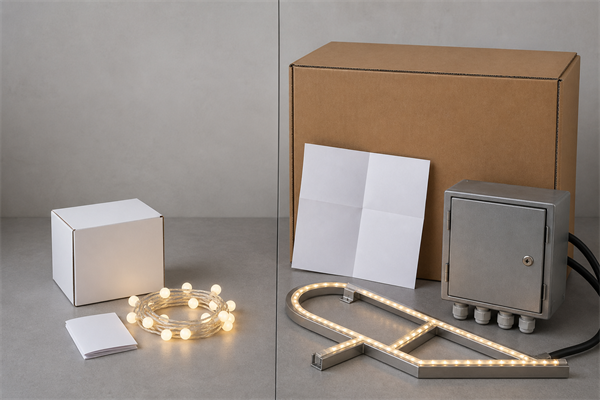
Scenario 1: Retail-packed LED string lights
Retail-packed LED string lights are usually high-volume and label-sensitive. The product may be simple, but the packaging must often pass buyer, retailer, and internal audit checks.
Buyers should focus on:
- CE-related document consistency
- RoHS support
- Packaging warnings
- Manual language
- Barcode and item code
- Energy-labelling applicability
- Product photos matching actual goods
- Carton marks matching purchase order details
A retail buyer once asked us to confirm warning text several times before final box printing. The product itself was stable, but the packaging approval took longer than expected. That experience taught me that European festive lighting compliance often lives in artwork files, not only in test reports.
Scenario 2: Outdoor festive light strings
Outdoor light strings raise different questions. Buyers should review use environment, IP rating, connection method, power supply, cable quality, and installation instructions. A product described as “outdoor” should have matching documents and markings.
Key questions include:
- Is the outdoor-use claim supported by product design?
- Is the IP rating shown correctly?
- Are connectors suitable for the intended use?
- Does the manual explain safe installation?
- Are plugs and adapters suitable for the destination market?
- Are maximum connection lengths clear?
Scenario 3: Custom motif lights
Custom motif lights are common for shopping malls, city streets, hotels, and event projects. These products may include metal frames, LED strips, string lights, controllers, transformers, and custom mounting points. Since the design changes by project, document control becomes more important.
Buyers should request:
| Document or detail | Why it matters |
|---|---|
| Approved drawing | Confirms size, shape, and structure |
| Electrical layout | Helps review power and connection logic |
| Component list | Supports consistency and RoHS review |
| Installation method | Reduces contractor-side confusion |
| Packaging method | Protects fragile custom shapes |
| Maintenance guidance | Helps project handover |
Scenario 4: Municipal and commercial decoration projects
For municipal and commercial projects, the buyer may not only need a product. They may need a documentation pack for contractors, consultants, and end clients. The questions become more operational.
The buyer may ask for:
- Product specifications
- Power consumption data
- Installation notes
- Maintenance instructions
- Spare parts list
- Safety warnings
- CE/RoHS-related support files
- Packing list by project area
- Photos or drawings for each motif
In these projects, I recommend early technical review. A supplier can help prepare drawings, labels, and files, but application-specific safety decisions should involve qualified professionals. Wind load, mounting structure, local electrical installation, and public-area safety are not just supplier paperwork issues.[^11]
This is why European festive lighting compliance must be scenario-based. The right checklist depends on where the product will be sold, how it will be used, and who will review it after arrival.
Frequently Asked Questions
Does a CE mark guarantee that a christmas light can be sold across Europe?
No. A CE mark alone does not guarantee market acceptance. Buyers should verify the Declaration of Conformity, test-report references, model consistency, product markings, packaging labels, manuals, and destination-market requirements. Retailers, customs, and internal audit teams may ask for different supporting documents.
Should every LED string light have an energy label?
Not necessarily. Energy-labelling applicability depends on product type, technical structure, sales format, and current EU rules.[^12] Buyers should not assume that every decorative LED string light follows the same labelling logic. They should verify requirements before approving packaging or online listing materials.
What is the biggest late-stage compliance risk for festive lighting orders?
The biggest late-stage risk is often inconsistency. The product may arrive with labels, manuals, warnings, model numbers, or supporting files that do not match the order. These errors can delay customs review, retail listing, customer acceptance, or internal compliance audits.
How can buyers reduce RoHS risk before placing an order?
Buyers can reduce RoHS risk by requesting product-specific declarations, checking component sources, confirming material changes, and asking whether test references or supplier declarations match the actual model. They should pay special attention when cables, LEDs, controllers, plugs, or plastic parts change.
Can a supplier decide all EU compliance requirements for the importer?
A supplier can provide product documents, technical information, label artwork support, and manufacturing traceability. However, importers should verify legal and market requirements through qualified professionals, testing partners, or internal compliance teams. The supplier should not be treated as the final regulatory authority.
Conclusion
European festive lighting compliance is a procurement risk-control process, not a simple CE/RoHS checkbox. Buyers should review product type, destination market, sales channel, documents, labels, manuals, warnings, and energy-labelling applicability before production starts. I recommend building a scenario-based checklist for each string light, christmas light, custom motif, or project order. If you are evaluating festive lighting suppliers for Europe, contact us early so we can prepare order-specific files, label confirmations, and documentation support for your review.

[^1]: "EU - EU Legislation and CE Marking", https://www.trade.gov/country-commercial-guides/eu-eu-legislation-and-ce-marking. European Commission CE-marking guidance explains that the CE mark is the visible result of a conformity-assessment process supported by technical documentation and an EU Declaration of Conformity, although the guidance is general and does not address festive lighting specifically. Evidence role: general_support; source type: institution. Supports: CE marking is supported by conformity assessment, technical documentation, and an EU Declaration of Conformity, so the visible mark alone is not the complete compliance file.. Scope note: The support is contextual because it explains CE marking generally rather than festive lighting as a product category.
[^2]: "Low Voltage Directive", https://en.wikipedia.org/wiki/Low_Voltage_Directive. Directive 2014/35/EU on electrical equipment requires manufacturers to draw up an EU Declaration of Conformity and sets out its model content in Annex IV; applicability depends on whether the festive lighting product falls within the Directive’s voltage and product scope. Evidence role: general_support; source type: government. Supports: EU electrical-equipment legislation requires an EU Declaration of Conformity and specifies information that should be included for products within its scope.. Scope note: The source directly supports the role of the Declaration of Conformity for in-scope electrical equipment, but product-specific scope must still be checked.
[^3]: "IP code - Wikipedia", https://en.wikipedia.org/wiki/IP_code. IEC 60529 defines the IP Code system for classifying degrees of protection provided by electrical enclosures against ingress of solid objects and water, supporting the use of IP ratings as a relevant outdoor-use indicator. Evidence role: definition; source type: institution. Supports: IP ratings are standardized codes indicating degrees of protection provided by enclosures against ingress of solids and water.. Scope note: The standard defines the rating system but does not by itself confirm that a particular festive lighting product is suitable for outdoor installation.
[^4]: "EU Consumer Goods General Product Safety Regulation (GPSR)", https://www.trade.gov/market-intelligence/eu-consumer-goods-general-product-safety-regulation-gpsr. Regulation (EU) 2023/988 on general product safety requires manufacturers and importers to provide instructions and safety information in a language easily understood by consumers, as determined by the Member State concerned; the Regulation is horizontal and may operate alongside product-specific lighting rules. Evidence role: general_support; source type: government. Supports: EU product-safety rules require products to be accompanied by relevant safety information and instructions in a language that consumers can understand, as determined by Member States.. Scope note: The support is general product-safety support rather than a festive-lighting-specific labeling standard.
[^5]: "EU Consumer Goods General Product Safety Regulation ...", https://www.trade.gov/market-intelligence/eu-consumer-goods-general-product-safety-regulation-gpsr. The European Commission’s Blue Guide describes traceability information such as product type, batch, serial number, and manufacturer or importer details as part of the system that allows authorities and economic operators to identify products and related conformity documentation. Evidence role: mechanism; source type: institution. Supports: EU product-compliance guidance links product identification and traceability information to market surveillance and conformity assessment.. Scope note: The source supports the traceability mechanism generally and does not prescribe the exact buyer checklist used in the article.
[^6]: "RoHS", https://en.wikipedia.org/wiki/RoHS. Directive 2011/65/EU restricts the use of specified hazardous substances in electrical and electronic equipment, supporting the relevance of material-level evidence for festive lighting products that fall within the Directive’s scope. Evidence role: general_support; source type: government. Supports: The EU RoHS framework restricts specified hazardous substances in electrical and electronic equipment, making material composition relevant to electrical decorative lighting products within scope.. Scope note: The Directive supports the general RoHS relevance, while the exact scope and exemptions must be checked for the specific product.
[^7]: "EU RoHS Compliance Service: EN IEC 63000 File & EU DoC", https://complymarket.com/en/services/eu-rohs-compliance. EN IEC 63000 describes a technical-documentation approach for assessing electrical and electronic products with respect to restricted substances, including the use of supplier declarations and material or component information; it supports the component-control logic rather than proving any specific LED bead is compliant. Evidence role: mechanism; source type: institution. Supports: RoHS technical documentation commonly uses material declarations, supplier information, and assessment of parts or components to support restricted-substance compliance.. Scope note: The source supports the documentation mechanism and does not verify the material content of a particular component.
[^8]: "Directive (EU) 2015/863 Amends EU RoHS to Restrict 4 New Phthalates", http://www.chemsafetypro.com/Topics/Restriction/Directive_EU_2015_863_EU_RoHS_Restricts_4_Phthalates_DEHP_BBP_DBP_DIBP.html. Commission Delegated Directive (EU) 2015/863 amended RoHS by adding four phthalates to the restricted-substance list, illustrating that RoHS obligations can change over time and that compliance statements should be tied to current rules and product configuration. Evidence role: historical_context; source type: government. Supports: EU RoHS requirements have been amended over time and exemptions are subject to review, so compliance status is time- and configuration-dependent.. Scope note: The source gives historical context for changing RoHS obligations, not direct evidence about a specific festive lighting product.
[^9]: "Ecodesign and energy labelling — light sources ... - EUR-Lex", https://eur-lex.europa.eu/EN/legal-content/summary/ecodesign-and-energy-labelling-light-sources-and-separate-control-gear.html. Commission Delegated Regulation (EU) 2019/2015 includes provisions for distance selling and internet sales of covered light sources, supporting the article’s statement that online listings may need label images or product information. Evidence role: general_support; source type: government. Supports: EU energy-labelling rules include requirements for displaying energy labels and product information in distance selling and internet sales for covered light sources.. Scope note: The source supports online-display obligations for covered light sources, not every decorative lighting assembly.
[^10]: "EPREL Public website", https://eprel.ec.europa.eu/. European Commission information on EPREL explains that suppliers must register products covered by EU energy-labelling rules and provide label and product-information data before placing them on the EU market; this supports the database point only where the festive lighting product is within the relevant energy-labelling scope. Evidence role: general_support; source type: institution. Supports: EU energy-labelling rules and the EPREL system require suppliers of covered products to register product information and provide label-related data before placing products on the EU market.. Scope note: The support is conditional because EPREL duties apply only to covered product categories and classifications.
[^11]: "Construction Permit Submittal Requirements for Temporary ...", https://www.countyofmonterey.gov/government/departments-a-h/housing-community-development/permit-center/special-events-getting-started/construction-permit-submittal-requirements-for-temporary-structures-at-special-events. Public-event safety guidance from government health-and-safety authorities treats temporary structures and electrical installations as requiring competent planning, installation, inspection, and risk assessment, supporting the article’s statement that public festive lighting projects involve site-specific safety issues beyond supplier paperwork. Evidence role: general_support; source type: government. Supports: Public-event and temporary-installation safety guidance treats temporary structures and electrical systems as matters requiring competent design, installation, inspection, and site-specific risk control.. Scope note: The support is contextual because it addresses public-event and temporary-installation safety generally, not festive lighting motifs specifically.
[^12]: "Ecodesign and energy labelling — light sources ... - EUR-Lex", https://eur-lex.europa.eu/EN/legal-content/summary/ecodesign-and-energy-labelling-light-sources-and-separate-control-gear.html. Commission Delegated Regulation (EU) 2019/2015 establishes energy-labelling requirements for light sources and addresses containing products, supporting the article’s point that applicability depends on product classification and current EU rules. Evidence role: mechanism; source type: government. Supports: EU energy-labelling rules for lighting distinguish light sources and containing products and impose label or information duties depending on product classification and supply context.. Scope note: The Regulation supports the classification-based approach, but a specific festive lighting item still requires product-level assessment.
Table of Contents
- European Festive Lighting Compliance: CE, RoHS, and Energy Labelling
- Why Is European Festive Lighting Compliance More Than a CE Mark?
- Which CE Documents Should Buyers Check for European Festive Lighting Compliance?
- Where Do RoHS Declarations Fit Into European Festive Lighting Compliance?
- How Should Buyers Handle Energy Labelling in European Festive Lighting Compliance?
- How Should Different Product Scenarios Change European Festive Lighting Compliance?
-
Frequently Asked Questions
- Does a CE mark guarantee that a christmas light can be sold across Europe?
- Should every LED string light have an energy label?
- What is the biggest late-stage compliance risk for festive lighting orders?
- How can buyers reduce RoHS risk before placing an order?
- Can a supplier decide all EU compliance requirements for the importer?
- Conclusion