 EN
EN

Creative Displays: How Should Buyers Choose Commercial Christmas Decor & Lighting?
Commercial Christmas decor and lighting can look simple at first, but the wrong choice can create delays, outdoor performance problems, and disappointing visual results. Many buyers start with a photo or a unit price. A better approach is to treat festive decoration as a project decision shaped by site conditions, safety, customization, and delivery timing.
Commercial Christmas decor and lighting should be selected by matching the display goal, installation environment, product structure, waterproof and electrical requirements, customization schedule, and supplier reliability. Buyers should not judge only by brightness or price. They should verify market standards, request clear specifications, and plan production early enough to meet the Christmas project window.
In my work with importers, wholesalers, event teams, and municipal project buyers, one lesson stands out: a beautiful display starts long before installation. The smartest buyers ask better questions early, so the result looks festive, performs reliably, and arrives on time.
How Should Buyers Define Commercial Christmas Decor and Lighting Goals?
Many buyers ask, “Which Christmas lights should we buy?” That question sounds practical, but it is often too narrow. If the goal is unclear, the buyer may choose a product that looks good in a catalog but fails to match the space, audience, weather, or installation plan.
Commercial Christmas decor and lighting should begin with the project goal. Buyers need to define the space, viewing distance, traffic flow, operating hours, brand image, and expected service duration before selecting products. This helps them compare LED string lights, motif lights, curtain lights, and custom decorative structures more accurately.
Start with the space, not the product
I encourage customers to describe the site before the product. A street project, a mall atrium, and a hotel entrance may all use LED products, but each needs different design logic.
A good procurement brief should answer:
- Where will the decor be installed?
- Will people view it from close range or far away?
- Is the goal photo sharing, traffic guidance, brand display, or city beautification?
- How many hours will the lights operate each day?
- Will the products be reused next year?
- Who will install and maintain the display locally?
These questions separate decorative preference from project requirement. Warm white string lights suit a hotel garden, but a large outdoor plaza needs brighter motif light structures, stronger frames, and clearer shapes for viewing from a distance.
A project goal changes the product choice
Commercial buyers often compare products by photo. A photo is fast and visual, but it does not show cable thickness, frame strength, LED spacing, waterproof design, packing method, or replacement planning.
Here is a simple comparison:
| Project Goal | Common Product Direction | Key Buying Concern |
|---|---|---|
| Street decoration | Pole-mounted motif light, cross-street decor, tree string light | Wind exposure, mounting points, cable routing |
| Shopping mall display | 3D Christmas tree, curtain light, indoor motif | Fire safety documents, visual consistency, installation access |
| Outdoor plaza | Large decorative structure, walk-through arch, photo spot | Frame stability, waterproofing, crowd interaction |
| Building façade | LED curtain, icicle light, outline lighting | Height access, fixing method, voltage system |
| Retail chain stores | Standardized christmas light sets and decorative pieces | Consistent packaging, repeat orders, delivery schedule |
A practical way to write the buying brief
A useful brief does not need to be complicated. It can include:
- Site type: street, mall, plaza, façade, hotel, park, or retail store.
- Climate conditions: rain, snow, wind, humidity, salt air, or high heat.
- Visual style: classic Christmas, luxury gold, modern cool white, colorful family theme, or branded colors.
- Product scale: small decorative units, medium displays, or large customized structures.
- Power preference: low-voltage system, local plug type, transformer requirement, or buyer-specified standard.
- Timeline: artwork confirmation, sample approval, production, inspection, shipment, and local installation date.
This brief turns commercial Christmas decor and lighting from a guess into a controlled procurement process, and helps suppliers recommend realistic solutions instead of quoting the cheapest item.
I have seen buyers save weeks of back-and-forth communication by sending site photos, dimensions, and target delivery dates in the first inquiry.
Where Will Commercial Christmas Decor and Lighting Be Installed?
Outdoor festive displays face very different risks from indoor displays.[^1] If buyers treat every site the same, they may underestimate rain, wind, temperature changes, public contact, and installation difficulty. That mistake can cause maintenance pressure during the busiest retail and tourism season.
Commercial Christmas decor and lighting should be selected according to the installation scenario. Municipal streets, shopping centers, outdoor plazas, building façades, and retail stores need different combinations of waterproof rating, structural design, brightness, fixing method, power configuration, and maintenance planning.[^2] Buyers should verify local electrical and installation requirements before ordering.
Municipal streets need durability and repeatability
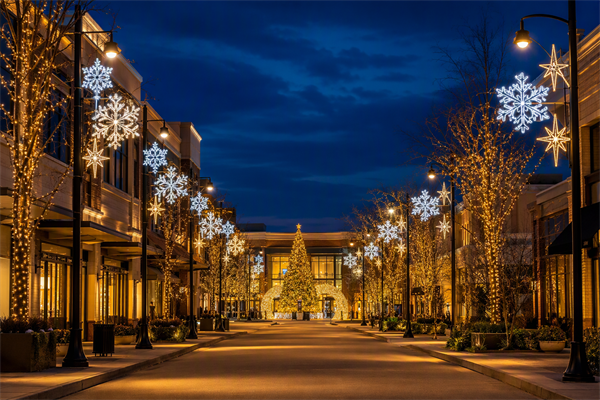
Street projects are exposed to weather, dust, vehicle movement, and sometimes traffic vibration. The buyer may need pole-mounted motif light units, overhead decorations, tree-wrapping string light products, or customized city-themed displays.
For street use, buyers usually need to evaluate:
- Outdoor waterproof design, verified for the target market and application.
- Frame material and anti-rust treatment, especially for metal motif structures.
- Cable quality and connector protection, because failure points often appear around joints.
- Installation method, which should be reviewed by qualified local professionals.
- Replacement parts, such as spare LEDs, connectors, power units, or sections.
I am not a local electrical or structural engineer, but from supplier-side communication, buyers reduce risk when they involve local installation experts early. A product suitable in one market may still need document checks or adjustments in another.
Shopping centers need visual consistency and visitor safety
Shopping centers care about atmosphere, brand image, and photo value, but commercial Christmas decor and lighting there also needs stable workmanship because visitors may stand close.
Common mall products include:
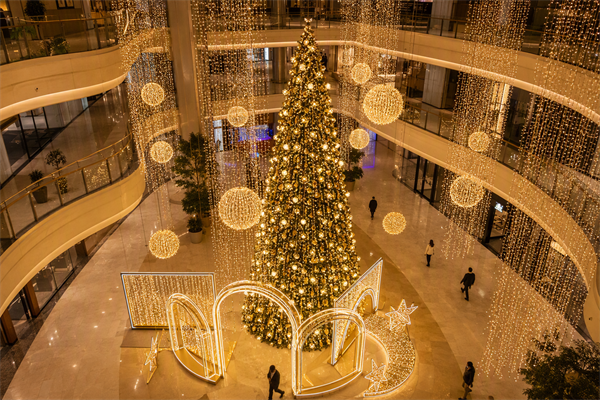
- Large indoor Christmas trees
- Hanging decorative lights
- LED curtain lights
- 3D photo spots
- Custom motif light designs
- Festive ceiling elements
- Branded decorative structures
For indoor spaces, the buyer may focus less on heavy rain and more on fire-related documentation, low heat output, cable management, and public contact points[^3]. Local regulations and property management rules should always be checked.
Outdoor plazas need stronger planning
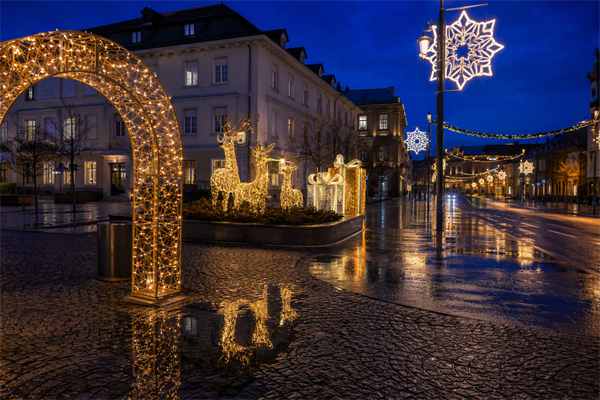
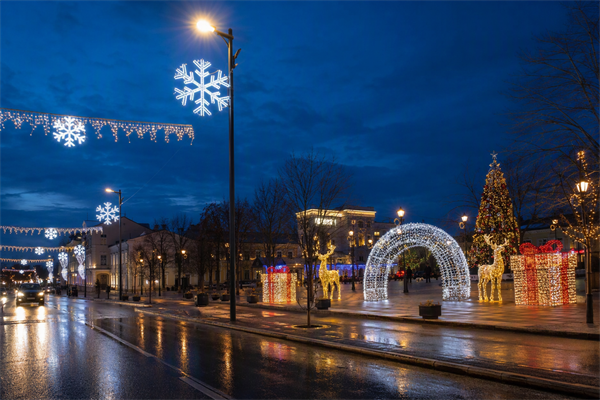
Outdoor plazas are challenging: public interaction, open weather exposure, long operating hours, and heavy photo traffic. Buyers may choose walk-through arches, large motif light sculptures, LED reindeer, giant gift boxes, or custom landmarks.
A plaza display should be evaluated by both visual and practical criteria:
| Evaluation Point | Why It Matters |
|---|---|
| Viewing distance | Large spaces need stronger silhouettes and clearer shapes |
| Crowd movement | People may touch or lean near decor |
| Rain exposure | Water protection around connections is critical |
| Operating hours | Long daily use increases heat and stability demands |
| Maintenance access | Faulty sections should be reachable and replaceable |
| Local approval | Public-space installations may need permits or inspections[^4] |
Building façades need professional review
Building façade lighting can be dramatic and complex. LED curtain lights, icicle lights, and outline lighting may need work at height, wind-load review, and secure fixing[^5], so buyers should not judge from a product photo.
They should ask:
- Who will install the system locally?
- What fixing points are available?
- What voltage and plug standard does the market require?
- What waterproof and cable specifications must be verified?
- What access equipment is needed for maintenance?
For façade projects, a qualified local professional should evaluate installation, electrical connection, structural fixing, and compliance. The supplier can support with specifications, drawings, packing details, and production QC, but local application decisions remain with the buyer's project team.
What Product Types Fit Commercial Christmas Decor and Lighting Projects?
A common mistake is to choose one product type for every space. A string light may work beautifully on trees, but it may not create enough shape for a large plaza. A large motif light may attract attention, but it may not suit a narrow retail window.
Commercial Christmas decor and lighting projects usually combine several product types, such as LED string lights, motif lights, curtain lights, decorative structures, and customized festive patterns. The right mix depends on scale, viewing distance, installation conditions, budget, reuse plans, and the desired visual impact.
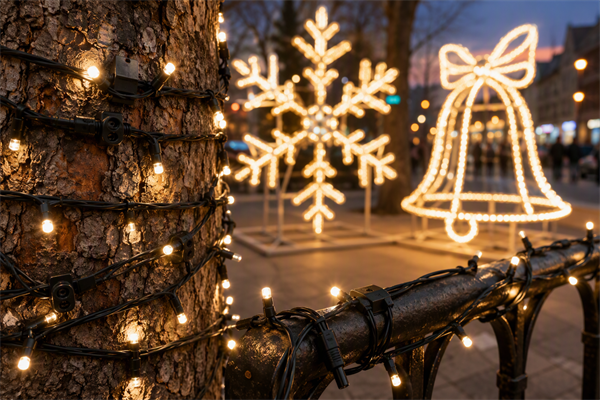
LED string lights are flexible but not universal
The term string light covers many designs. Buyers may use string lights for trees, columns, railings, shopfronts, small outdoor gardens, and layered background effects. A commercial-grade string light usually needs more careful specification than a simple household christmas light.[^6]
Important details include:
- LED quantity per meter
- Wire color and wire material
- Voltage and plug type
- Waterproof rating to verify
- Connector type
- Extendable length
- Controller function, if any
- Packaging method
- Spare parts and labeling
A string light is often cost-effective for large coverage, but it may not provide strong identity by itself. I often suggest combining string lights with larger shapes or focal points when the site needs a more memorable display.
Motif lights create recognizable festive shapes
A motif light is useful when buyers want clear visual symbols. Common motifs include snowflakes, stars, bells, gifts, candles, reindeer, angels, and custom city or brand icons. Municipal buyers often use motif lights on poles, across streets, or on building edges.
Motif lights need close attention to frame quality. The lighting effect is only one part of the product. Buyers should also check:
- Frame diameter and material
- Welding quality
- Surface treatment
- LED rope or strip fixing method
- Cable exit points
- Mounting accessories
- Packing protection
- Repair access
A decorative shape that looks perfect in a digital drawing may be hard to ship if the structure is too large. I therefore like to discuss sectional production, which can reduce carton size, improve container loading, and make installation easier.
Decorative structures create high-impact photo spots
Large decorative structures include walk-through arches, giant baubles, 3D stars, Christmas trees, gift boxes, and customized holiday scenes. These products are popular for plazas, hotels, amusement parks, and commercial centers.
They provide strong visual value, but they require more project planning. The buyer should consider:
- Structure size: Larger products may need sectional production and assembly drawings.
- Material choice: Metal frame, acrylic, PVC, PE, fabric, or mixed materials.
- Surface finish: Paint, powder coating, glitter, tinsel, artificial greenery, or translucent panels can change both appearance and maintenance.
- Packing volume: Large displays can increase freight cost sharply.
- Installation support: Buyers may need drawings, labels, and local professional teams.
Product selection by scenario
| Product Type | Best Use | Buyer Should Check |
|---|---|---|
| LED string light | Trees, columns, outlines, background lighting | Wire quality, LED spacing, waterproof design |
| christmas light sets | Retail seasonal shelves, small displays, standard décor | Market certification documents, plug type, packaging |
| Motif light | Streets, poles, façades, themed symbols | Frame strength, fixing method, cable protection |
| Curtain light | Walls, façades, mall atriums | Drop length, connector protection, installation height |
| 3D decorative structure | Plazas, hotels, photo areas | Structural design, packing, assembly, public contact risks |
| Custom festivel light designs | Branded or regional seasonal projects | Artwork approval, mold or frame time, MOQ, schedule |
I included “festivel light” because some international buyers use that spelling in searches and inquiries. In professional documents, “festive light” or “festive lighting” is clearer, but suppliers should still understand the buyer's meaning.
How Do Quality Control and Safety Checks Affect Commercial Christmas Decor and Lighting?
Buyers often focus on brightness or unit price, because both are easy to compare. Yet outdoor seasonal projects usually fail for less visible reasons: weak connectors, poor waterproofing, unstable frames, rushed packing, or unclear inspection standards.
Commercial Christmas decor and lighting quality should be evaluated through materials, workmanship, electrical configuration, waterproof design, production inspection, packaging, and document verification. Buyers should confirm applicable standards in their own market and request test reports, certificates, photos, samples, or third-party inspections when needed.
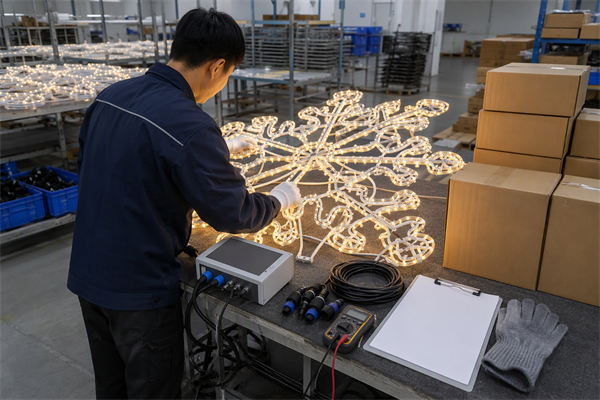
Brightness is not the whole story
Brightness matters, but it is not the only performance indicator. A display that looks bright in a short video may not perform well after weeks of rain, wind, and daily operation. In procurement discussions, I prefer to look at the product as a system:
- LEDs
- Wire and cable
- Connectors
- Power supply or transformer
- Controller
- Frame or mounting structure
- Waterproof protection
- Packaging
- Installation accessories
- Maintenance plan
If one part is weak, the whole display may suffer.
Waterproof ratings must be verified
Buyers often ask for “waterproof lights.” That phrase is too general. Outdoor decorative lighting may use different waterproof designs depending on exposure level. A covered outdoor shopping entrance is not the same as an open municipal street in heavy rain.
Buyers should verify:
- The claimed IP rating[^7], such as IP44, IP65, or other ratings, where applicable.
- The test basis, because documentation may differ by market and product type.
- The connector protection, since joints are common risk points.
- The installation angle, because water can collect if products are mounted incorrectly.
- The maintenance process, especially after storms or long operation.
Waterproof ratings are documents and design claims to verify, not magic guarantees.[^8] Real performance depends on product design, installation, maintenance, and site exposure.
Electrical documents should match the market
Commercial Christmas decor and lighting for Europe, Australia, South Africa, the Middle East, and other markets may require different plugs, voltage systems, labels, and documentation.[^9] Buyers should confirm local requirements before placing an order.
As a supplier based in Zhongshan, China, my company has experience exporting festive decorative lighting to several regions and holds ISO9001 and BSCI certifications, which buyers can request and verify during supplier evaluation. Product-level compliance, however, still needs to be checked according to the specific order and destination market.
Useful document questions include:
- Does the product need CE, RoHS, UKCA, SAA, or other market-specific documents[^10]?
- Is the plug type correct?
- Is the voltage correct?
- Are labels and warnings required in a local language?
- Does the buyer need third-party lab testing?
- Does the project owner require supplier audit documents?
QC should happen before shipment, not after arrival
Seasonal products have a hard deadline: if a problem appears after arrival, there may be no time for replacement. Quality control should therefore be built into production.[^11]
A practical QC plan may include:
| QC Stage | What to Check |
|---|---|
| Material inspection | LED type, wire, frame, connectors, accessories |
| In-process inspection | Welding, wiring, light fixing, surface finish |
| Lighting test | Function, color consistency, controller mode |
| Waterproof-related check | Seal points, connector protection, exposed joints |
| Packing inspection | Carton strength, labels, assembly parts, spare parts |
| Final inspection | Quantity, appearance, operation, shipping marks |
For customized motif light or decorative structure projects, I also like to share production photos at key stages. This helps buyers confirm shape, color, and workmanship before packing. It is much easier to adjust a frame in production than to solve a mismatch after shipment.
When Should Buyers Start Commercial Christmas Decor and Lighting Procurement?
Christmas procurement often feels far away until it becomes urgent. Then buyers face rushed artwork approval, full production schedules, limited shipping space, and higher logistics pressure. A beautiful plan can miss the season if the timeline is not managed early.
Buyers should start commercial Christmas decor and lighting procurement several months before installation, especially for custom designs. Concept confirmation, quotation, sample or drawing approval, production, inspection, packaging, shipping, customs clearance, and local installation all take time.[^12] Early planning reduces cost pressure and deadline risk.
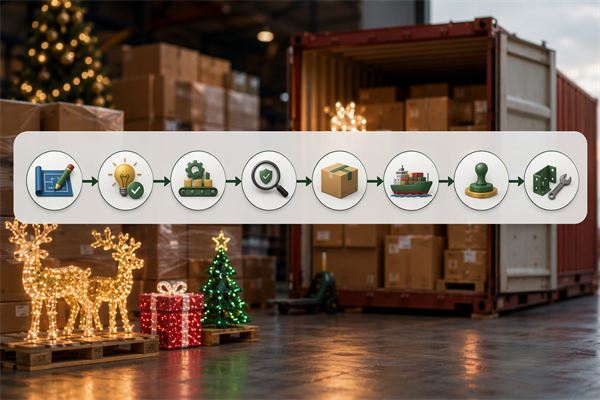
Custom projects need more time than standard products
Standard LED string light products may be faster if materials are available and packaging is simple. Custom motif light designs, large structures, special colors, and branded displays need a longer process.
A typical custom project may include:
- Inquiry and requirement clarification
- Design reference or drawing discussion
- Quotation and technical confirmation
- Sample, mock-up, or material confirmation
- Deposit and production scheduling
- Frame production or light assembly
- In-process quality checks
- Final lighting test
- Packing and labeling
- Shipment booking
- Customs clearance
- Local delivery and installation
Each step can take longer if information is incomplete. A missing plug type, unclear size, or late artwork change can delay the whole order.
A realistic planning calendar
The best timeline depends on product complexity and shipping route, but buyers can use a simple planning model.
| Project Type | Suggested Start Time Before Installation | Reason |
|---|---|---|
| Standard string light order | 2–3 months | Production and shipping still need buffer |
| Retail christmas light program | 3–5 months | Packaging, labeling, and chain-store distribution take time |
| Municipal motif light project | 4–6 months | Design, documents, production, and installation planning are more complex |
| Large custom plaza display | 5–8 months | Structure design, sectional packing, QC, and sea freight require longer planning |
| New product development | 6–10 months | Sampling, testing, packaging, and approvals need multiple rounds |
The hidden risk is not only production
Many buyers think the factory production time is the main schedule risk. It is important, but it is not the only risk. Seasonal projects also depend on:
- Buyer approval speed
- Artwork accuracy
- Material availability
- Factory capacity during peak months
- Inspection booking
- Carton and packaging production
- Vessel space
- Customs documents
- Local inland transport
- Installation team availability
I have seen customers lose valuable time to slow internal approval: the supplier was ready, but the buyer's design, procurement, and project teams had not confirmed the same version. This is common in municipal and shopping center projects with many stakeholders.
How to reduce deadline pressure
Buyers can reduce schedule risk with a disciplined process:
- Confirm the installation date first.
- Work backward from that date.
- Freeze design changes before production starts.
- Approve drawings and materials in writing.
- Reserve production capacity early.
- Request production photos at agreed stages.
- Plan inspection before the shipping deadline.
- Prepare customs and import documents early.
- Keep spare parts in the shipment.
Commercial Christmas decor and lighting has one special challenge: the season cannot move. If products arrive late, they lose much of their value in January, which makes timeline control part of the product decision, not just a logistics detail.
Frequently Asked Questions
What is the difference between commercial Christmas decor and regular Christmas lights?
Commercial Christmas decor is usually selected for larger spaces, longer operation, outdoor exposure, public visibility, and repeat use, while regular Christmas lights may focus on household decoration. Commercial buyers should check materials, waterproof design, voltage, certifications, packaging, and supplier QC before ordering.
Which is better for outdoor projects, string light or motif light?
A string light is flexible for trees, outlines, and background effects. A motif light creates clear festive shapes for streets, poles, plazas, and façades. Many outdoor projects use both; the choice depends on viewing distance, installation method, weather exposure, and desired impact.
How early should I order custom commercial Christmas lighting?
I recommend starting custom commercial Christmas lighting several months ahead: simple orders may need 2–3 months, while large custom displays may need 5–8 months, including design confirmation, production, inspection, freight, customs, and local installation.
What documents should buyers verify before importing festive lighting?
Buyers should verify documents required by their market, such as product test reports, electrical compliance documents, plug and voltage specifications, labeling requirements, and supplier audit documents. Standards vary by country and product type, so buyers should confirm requirements with local professionals or compliance consultants.
Is the cheapest christmas light option suitable for commercial projects?
The cheapest christmas light option is not always suitable: low price may mean weaker wire, lower-grade connectors, poor waterproofing, limited QC, or fragile packaging. Compare total project risk, not only unit price.
Conclusion
Commercial Christmas decor and lighting is a project-based procurement decision, not a simple purchase of attractive lights. Buyers should define the site goal, match products to the installation scenario, verify quality and compliance documents, and plan early enough to protect the Christmas deadline. If you are comparing LED string light, motif light, decorative structures, or custom festive displays, I can help review your project requirements and suggest practical supply options for your market.

[^1]: "Lightning Safety When Working Outdoors", https://www.osha.gov/sites/default/files/publications/OSHA3863.pdf. Government safety guidance on outdoor electrical equipment and event installations identifies weather exposure, public access, and installation conditions as material risk factors, supporting the article’s distinction between indoor and outdoor festive displays. Evidence role: general_support; source type: government. Supports: Outdoor electrical and event installations require attention to weather exposure, public access, electrical hazards, and installation conditions.. Scope note: The source may address outdoor electrical or event installations generally rather than Christmas decor specifically.
[^2]: "Recommended Practice: Landscape Lighting", https://store.ies.org/product/recommended-practice-landscape-lighting/. Professional lighting and electrical-installation guidance treats site environment, mounting method, electrical configuration, and maintenance access as design variables, supporting the claim that different commercial locations require different specification choices. Evidence role: expert_consensus; source type: institution. Supports: Lighting installations should be designed according to environment, mounting conditions, electrical configuration, use, and maintenance needs.. Scope note: The cited guidance may cover architectural or outdoor lighting broadly rather than seasonal Christmas displays only.
[^3]: "1910.334 - Use of equipment.", http://www.osha.gov/laws-regs/regulations/standardnumber/1910/1910.334. Fire-safety and occupational-safety guidance for decorative lighting and public indoor spaces identifies combustible decorations, heat sources, electrical cords, and occupant contact as relevant hazards, supporting the article’s safety checklist for shopping centers. Evidence role: general_support; source type: institution. Supports: Indoor decorations and electrical lighting in public spaces should be assessed for fire risk, heat, cord management, and contact with occupants.. Scope note: The support is contextual because general fire-safety guidance may not specify commercial Christmas lighting procurement documents.
[^4]: "Application Forms and Requirements for Public Space Usage", https://ddot.dc.gov/page/application-forms-and-requirements-public-space-usage. Municipal permitting materials for temporary public-space installations and special-event electrical work show that permits or inspections may be required before installation, supporting the article’s caution about public-space approvals. Evidence role: case_reference; source type: government. Supports: Some jurisdictions require permits, electrical review, or inspections for temporary public-space installations or lighting displays.. Scope note: Requirements vary by jurisdiction, so a cited municipal example demonstrates the possibility rather than a universal rule.
[^5]: "Walking-Working Surfaces and Personal Protective ...", http://www.osha.gov/laws-regs/federalregister/2016-11-18. Occupational-safety and façade-installation guidance identifies work at height, wind exposure, and secure anchorage as key controls for exterior building work, supporting the article’s warning about façade lighting review. Evidence role: mechanism; source type: government. Supports: Exterior façade installations can involve fall hazards, wind exposure, and anchorage or fixing requirements.. Scope note: The source may address façade or exterior work generally rather than decorative lighting specifically.
[^6]: "Decorative Light Strings", https://www.energystar.gov/products/decorative_light_strings. Product-safety standards for decorative lighting strings classify products by intended use and construction characteristics, supporting the article’s distinction between commercial-grade specification and ordinary household decoration. Evidence role: definition; source type: institution. Supports: Decorative lighting products are evaluated by intended use, environment, electrical characteristics, and construction requirements.. Scope note: Access to full standards may be restricted, and public summaries may describe the classification without listing all technical requirements.
[^7]: "IP code", https://en.wikipedia.org/wiki/IP_code. The IEC 60529 IP Code defines enclosure protection levels against solid-object and water ingress, supporting the article’s statement that claimed IP ratings should be verified for outdoor lighting products. Evidence role: definition; source type: encyclopedia. Supports: IP ratings classify the degree of protection provided by enclosures against solid objects and water ingress.. Scope note: The IP Code defines enclosure test categories; it does not by itself prove long-term field durability under all installation conditions.
[^8]: "A Complete Guide To IP Ratings And IEC 60529 For ...", https://www.dgkingpo.com/ip-ratings-and-iec-60529-standard-equipment-protection-guide/. Ingress-protection and enclosure-rating guidance describes ratings as standardized test classifications rather than unrestricted performance guarantees, supporting the article’s caution that field waterproof performance also depends on design, installation, maintenance, and exposure. Evidence role: mechanism; source type: institution. Supports: Ingress-protection ratings are based on defined test conditions and must be interpreted alongside installation, maintenance, and environmental exposure.. Scope note: The source supports the principle of rating limitations, not the performance of any particular Christmas lighting product.
[^9]: "Low Voltage Directive", https://en.wikipedia.org/wiki/Low_Voltage_Directive. Government product-safety and electrical-compliance materials show that electrical goods are regulated through market-specific conformity, labeling, plug, and voltage requirements, supporting the article’s warning that export-market requirements differ. Evidence role: general_support; source type: government. Supports: Electrical products are subject to market-specific compliance regimes, including conformity marking, voltage and plug compatibility, labeling, and safety documentation.. Scope note: The exact obligations depend on product design and destination jurisdiction, so the source provides regulatory context rather than order-specific compliance advice.
[^10]: "CE marking", https://en.wikipedia.org/wiki/CE_marking. Official conformity-assessment guidance for the EU, United Kingdom, and Australia identifies CE, RoHS-related obligations, UKCA marking, and electrical safety approvals as regulatory mechanisms for relevant electrical products, supporting the article’s examples of market-specific documents. Evidence role: definition; source type: government. Supports: CE, RoHS, UKCA, and Australian electrical approvals are examples of market-specific conformity or safety documentation that may apply to electrical lighting products.. Scope note: Applicability depends on the precise product category, voltage, components, and destination market.
[^11]: "ISO 9001 and 9002 Requirements by Section", https://faculty-web.msoe.edu/tritt/be4xx/iso9000sum.html. Quality-management guidance such as ISO 9001 emphasizes controlled production processes, verification, and inspection before release, supporting the article’s claim that QC should be integrated before shipment rather than deferred until arrival. Evidence role: expert_consensus; source type: institution. Supports: Quality-management systems emphasize process control, in-process verification, inspection, and documented conformity before delivery.. Scope note: Quality-management standards describe general process principles and do not specify a Christmas-light inspection checklist.
[^12]: "Special Documents", https://www.trade.gov/special-documents. Government import and trade guidance describes documentation, shipment, customs clearance, and delivery as distinct stages in international trade, supporting the article’s statement that procurement lead time extends beyond factory production. Evidence role: general_support; source type: government. Supports: International procurement commonly involves documentation, inspection or compliance checks, shipping, customs clearance, and delivery steps that add time beyond production.. Scope note: The source supports the general import-process sequence rather than the article’s specific month-by-month Christmas lighting schedule.
Table of Contents
- Creative Displays: How Should Buyers Choose Commercial Christmas Decor & Lighting?
- How Should Buyers Define Commercial Christmas Decor and Lighting Goals?
- Where Will Commercial Christmas Decor and Lighting Be Installed?
- What Product Types Fit Commercial Christmas Decor and Lighting Projects?
- How Do Quality Control and Safety Checks Affect Commercial Christmas Decor and Lighting?
- When Should Buyers Start Commercial Christmas Decor and Lighting Procurement?
-
Frequently Asked Questions
- What is the difference between commercial Christmas decor and regular Christmas lights?
- Which is better for outdoor projects, string light or motif light?
- How early should I order custom commercial Christmas lighting?
- What documents should buyers verify before importing festive lighting?
- Is the cheapest christmas light option suitable for commercial projects?
- Conclusion