 EN
EN


How to Find a Reliable Christmas Lights Wholesaler for Your Business
Finding a reliable Christmas lights wholesaler feels straightforward until your shipment arrives late, fails a port inspection, or looks nothing like the sample. The cost isn't just a bad order — it's a missed selling season. This guide covers what experienced buyers actually check before committing to a supplier.
Choosing a Christmas lights wholesaler is a supply risk management decision, not a price comparison exercise. A reliable wholesale partner is one who can verify certifications on request, commit to production timelines that protect your sell window, and demonstrate product consistency between sample and bulk order — before you place a deposit, not after.

Knowing the short answer is useful. Knowing how to apply it is what separates buyers who have a clean import season from those scrambling for alternatives in October. The sections below break down each qualification criterion into concrete, actionable checks.
Is a Low Unit Price a Reliable Quality Signal for Christmas Lights?
Buyers anchor on price because it feels objective. In most categories, price correlates loosely with quality. In LED string lights and festival lighting, it does not — and anchoring on it costs buyers more in the long run.
Price does not indicate quality in Christmas lights wholesale. LED holiday lighting is a commoditized product where suppliers can hit any target price by adjusting wire gauge, LED bin grade, or housing material. Two identical-looking string lights at different price points may share zero components. The correct question is not "how much?" but "what am I getting at that price?"
Why Price Works Against You in This Category
Buyers often ask us how we compare with a lower-priced offer they've received. The honest answer: we can't tell them without knowing the spec behind it. Neither can they.
Here is what a supplier can adjust to hit a lower price point — while delivering a product that looks identical in a sample photo:
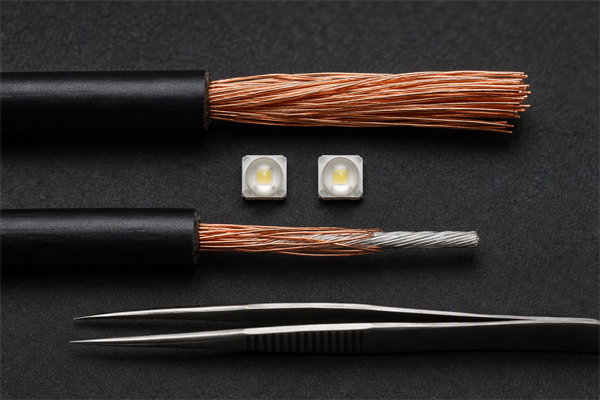
- Wire gauge — 22AWG vs. 24AWG copper wire produces a measurable voltage drop difference over 10-metre runs, and thinner wire presents a fire risk at higher load.[^1]
- LED bin quality — Binning determines colour consistency across a production run.[^2] Budget bins produce visible colour variation across the same string, which matters for retail display.
- Housing and IP rating — IP44-rated connectors[^3] cost more to mould and assemble than unrated connectors. Both may appear in a product listing as "waterproof."
- PVC vs. copper core — Some suppliers substitute copper-clad aluminium (CCA) wire marketed as copper wire. CCA has higher resistance[^4], which affects both safety and long-term performance.
What Buyers Should Ask Instead
When you receive a quote for LED string lights or Christmas motif lights, request an itemised product specification sheet before comparing prices. Ask the supplier to confirm:
- Wire gauge and conductor material (copper or CCA)
- LED chip brand or bin specification
- IP rating and the standard it was tested against
- Housing material and wall thickness for motif light frames
- Country of conformity marking and the lab that issued it
A supplier who answers these questions specifically is demonstrating transparency. A supplier who responds with "quality is guaranteed" without addressing the spec is telling you what they don't know — or don't want you to know.
Buyer tip: Request a production sample with a confirmed spec sheet, not a showroom sample. Then verify that the bulk order matches the spec sheet, not just the visual appearance.
Are Supplier Certification Claims Trustworthy?
This is the question buyers should be asking far more aggressively than they do. Certification claims are standard language in every Christmas lights supplier listing. Verified certifications are far rarer.
Certification claims in the Christmas lights wholesale market are not the same as verified certifications. CE, RoHS, BSCI, and ISO marks are routinely listed on supplier pages and quotations. Buyers should treat any certification claim as unverified until they have examined the actual certificate document and confirmed it matches the product being ordered.

What a Real Certificate Looks Like
We hold ISO9001 and BSCI certifications. We can share those documents on request, and buyers should be able to identify exactly what they cover. Here is what to look for in any certificate a supplier provides:
| Certificate Element | What to Check |
|---|---|
| Issuing laboratory or body | Named, accredited third party — not the supplier itself |
| Scope of certification | Must describe the specific product category, not a generic description |
| Product model number | Should match the model you are ordering, not a related SKU |
| Issue date and expiry | Current certificates only; expired documents indicate lapsed compliance |
| Certificate number | Can be cross-checked with the issuing body's public registry |
Common Certificate Red Flags
Buyers regularly receive what looks like a complete compliance document but is actually a stock certificate applied across unrelated products. Watch for:
- Generic product descriptions — "LED lighting products" covering everything from string lights to commercial fixtures
- No model match — Certificate references a product code you haven't been quoted
- Unverifiable issuing body — Lab name that doesn't appear in any accredited laboratory database
- Scanned copies only — Legitimate certificates should be available in original-issue format, and most issuing bodies allow online verification
For festival lights and decorative motif lights entering the EU, CE marking requires a Declaration of Conformity aligned to the Low Voltage Directive and EMC Directive.[^5] Ask for the DoC alongside the CE certificate, and confirm it names the standards tested. For Australian and Middle Eastern markets, electrical safety requirements differ[^6] — confirm the applicable local standard with your certifying authority before finalising your order specification.
When Should You Place Your Christmas Lights Wholesale Order?
This is the point most buyers underestimate, and it is where reliable suppliers and unreliable ones diverge most clearly. Timing is not a logistics question — it is a qualification criterion.
Buyers should place confirmed Christmas lights wholesale orders no later than 4–6 months before their peak selling season. Manufacturers serving global seasonal demand face genuine capacity constraints in Q2 and Q3.[^7] A supplier who accepts your late order without flagging lead time risk is not demonstrating flexibility — they are accepting an order they may not be able to fulfil on time or at standard quality.

The Seasonal Demand Compression Problem
Christmas lighting — including LED string lights, outdoor festival lights, and decorative motif lights — has one of the most compressed sell windows in seasonal retail. Most markets see concentrated demand in a 6–8 week window.[^8] Missing that window by even two weeks can mean carrying inventory for twelve months.
From our side of the factory floor, this is what the order calendar looks like:
- January–March: Post-season review, new design sampling, early repeat orders from established buyers
- April–June: Primary order booking window for Northern Hemisphere Christmas season
- July–August: Production capacity fills for confirmed orders; late-entry buyers face longer lead times or capacity rejection
- September–October: Final production runs, quality inspection, and container booking
- November: Goods should be in-market or clearing customs
A common pattern we see is buyers making first contact in August or September for a November delivery. At that point, we have to be direct about what is and isn't achievable — and any supplier who doesn't have that conversation with you in September is doing you a disservice.
How to Protect Your Timeline
- Confirm production lead time in writing — standard production runs for Christmas string lights and motif lights typically require 45–75 days depending on order volume and customisation.
- Request a production schedule with milestone dates for material procurement, assembly, QC, and goods ready date.
- Book ocean freight in advance — peak season container availability is a separate constraint from factory lead time.[^9]
- Build in pre-shipment inspection time — third-party inspection adds 3–7 days but should be planned for, not skipped under deadline pressure.
How Do You Evaluate a Wholesaler's Response to Your Product Specification?
This is the most reliable single signal a buyer has before placing an order. A trustworthy Christmas lights wholesaler does not pitch — they ask questions.
A reliable Christmas lights wholesaler will ask about your target market's electrical standard, required certifications, packaging format, and order volume before issuing a quote. Buyers who receive an instant price without any specification questions have received a generic quote, not a real offer aligned to their product requirements.

The Questions a Real Supplier Asks
When buyers contact us about LED string lights, outdoor festival lights, or decorative motif lights, we ask:
- Target market — electrical standards, plug type, and voltage requirements vary significantly between the EU (230V, CEE 7/4 plug), the US (120V, NEMA), and the Middle East or Australia[^10]
- Required certifications — CE, SAA, and SABS are not interchangeable; each requires separate testing
- Packaging requirements — retail shelf packaging, bulk carton, or private label affects cost and lead time
- Volume and order frequency — a one-time order and an annual programme require different conversations about pricing, tooling, and inventory commitment
- Custom requirements — colour, length, IP rating, and timer function all affect the product specification and should be confirmed before sampling
Red Flags in Early Supplier Communication
Compare the two responses below to an inquiry for outdoor Christmas string lights:
| Response Type | What It Signals |
|---|---|
| "USD $X per piece, MOQ 500 units, delivery 30 days" | Generic quote; no specification confirmed |
| "Could you confirm your target market, voltage, and required certifications? We'll prepare a matching spec and sample price." | Specification-driven approach; suggests real manufacturing capability |
A vague, instant quote is not a sign of an efficient supplier. It is a sign of a supplier selling a standard product regardless of your requirements. That is fine if your requirements are genuinely standard — but you should know which it is before you commit.
Frequently Asked Questions
What is a realistic minimum order quantity for Christmas lights wholesale?
Most manufacturers set MOQs between 500 and 2,000 units per SKU for standard LED string lights, and higher for custom motif lights with bespoke tooling. MOQs vary by product complexity and customisation level. Always confirm MOQ in writing alongside unit price, since per-unit pricing often changes significantly at different volume tiers.
How do I verify that a Chinese supplier's certifications are genuine?
Request the original certificate document, not a scanned copy. Confirm the issuing laboratory name and cross-check it against the relevant accreditation body's public registry — for example, ILAC for international lab accreditation[^11]. Verify that the certificate scope and model number match the product you are ordering, and check that the certificate is current, not expired.
What is the difference between CE marking and a CE certificate?
CE marking is a self-declaration by the manufacturer that the product meets applicable EU directives.[^12] A CE "certificate" from a third-party lab means the product has been independently tested against those directives. The latter provides stronger evidence of compliance. Ask for both the Declaration of Conformity and any associated third-party test report.
Can I order custom-length LED string lights or branded packaging?
Yes. Most manufacturers producing LED string lights and festival lights at scale offer customisation on length, LED count, colour, and wire colour, as well as private-label packaging. Custom orders typically carry higher MOQs and longer lead times due to tooling and materials procurement. Confirm both before finalising your specification.
What should I check in a pre-shipment inspection for Christmas lights?
Key inspection points include: carton quantity and labelling accuracy, visual defect rate on LED string lights or motif light frames, power-on function test, IP rating connector integrity, and compliance marking on product and packaging. Third-party inspection firms can conduct AQL-based sampling inspections — request this before goods are loaded, not after arrival.
Conclusion
Finding a reliable Christmas lights wholesaler comes down to four concrete practices: evaluating product specifications rather than unit price, verifying certifications against the actual product model, placing orders within a timeline that protects your sell window, and reading a supplier's first response to your inquiry as a qualification signal. These are not abstract principles — they are actions you can take before committing a single dollar to an order.
We manufacture LED string lights, decorative festival lights, and custom motif lights from Zhongshan, China, serving importers and procurement teams across Europe, Australia, the Middle East, and South Africa. If you are entering the Christmas lighting category or re-evaluating your current supplier, we welcome specific questions about specifications, certifications, and lead times. Contact us to request a product specification sheet or sample programme.

[^1]: "Electrical Wire Gauges", http://hyperphysics.phy-astr.gsu.edu/hbase/Tables/wirega.html. Electrical wire-gauge references show that conductor resistance and allowable current vary with AWG size; this supports the article's claim that substituting thinner conductors can increase voltage drop and reduce safety margin under load. Evidence role: mechanism; source type: institution. Supports: A neutral electrical reference should support that smaller AWG conductors have higher resistance and lower current-carrying capacity, which can contribute to voltage drop and overheating under load.. Scope note: Such a source would support the electrical mechanism generally, but it would not by itself prove that a specific Christmas light product is unsafe.
[^2]: "Solid-state lighting metrology | NIST", https://www.nist.gov/programs-projects/solid-state-lighting-metrology. Technical literature on LED binning explains that LEDs are sorted by chromaticity and performance characteristics, which provides general support for the claim that bin selection affects colour consistency across production. Evidence role: mechanism; source type: research. Supports: A technical or research source should explain that LEDs are sorted into bins based on parameters such as luminous flux, forward voltage, and chromaticity, affecting color uniformity.. Scope note: The source would explain the mechanism of LED binning, not verify the bin quality of any particular supplier's production run.
[^3]: "IP code", https://en.wikipedia.org/wiki/IP_code. The IEC 60529 ingress-protection code defines IP ratings by levels of protection against solid objects and water; IP44 therefore provides a standardized basis for distinguishing rated connectors from unrated ones. Evidence role: definition; source type: institution. Supports: A standards or institutional source should define the IP Code and explain that IP44 indicates protection against solid objects over 1 mm and splashing water.. Scope note: The standard defines the rating but does not substantiate the article's related statement about relative manufacturing cost.
[^4]: "Copper-clad aluminium wire", https://en.wikipedia.org/wiki/Copper-clad_aluminium_wire. Electrical materials references report higher resistivity for aluminium than for copper, supporting the article's statement that copper-clad aluminium conductors can have greater resistance than equivalent copper conductors. Evidence role: mechanism; source type: research. Supports: A materials or electrical engineering source should support that aluminium has higher resistivity than copper and that copper-clad aluminium conductors generally have higher resistance than solid copper conductors of comparable size.. Scope note: The source would support the material-property comparison, not the prevalence of CCA substitution among Christmas light suppliers.
[^5]: "Low Voltage Directive", https://en.wikipedia.org/wiki/Low_Voltage_Directive. European Commission guidance states that manufacturers must draw up an EU Declaration of Conformity for products subject to CE marking and identifies the Low Voltage and EMC directives as applicable frameworks for many electrical products. Evidence role: general_support; source type: government. Supports: An EU source should support that CE-marked products require an EU Declaration of Conformity and that electrical equipment can be subject to the Low Voltage Directive and EMC Directive.. Scope note: Applicability depends on the product's voltage, design, and intended use, so the source would support the compliance framework rather than classify every Christmas light model.
[^6]: "IEC Standards for Electronic and Electrical Products", https://www.compliancegate.com/iec-standards/. Government and regional standards guidance describes electrical equipment safety obligations as jurisdiction-specific, supporting the article's caution that buyers must confirm the applicable local standard before import. Evidence role: general_support; source type: government. Supports: A government or regional standards source should show that electrical product safety compliance is governed by local or regional schemes rather than a single global standard.. Scope note: The source would establish regulatory variation generally, not list every applicable rule for each Middle Eastern market.
[^7]: "Holiday Supply Chain Planning: How Small Businesses ...", https://web.uri.edu/risbdc/holiday-supply-chain-planning-how-small-businesses-can-prepare-early/. Research on seasonal-demand supply chains shows that compressed selling periods require advance production and capacity planning, providing contextual support for the claim that Christmas lighting suppliers may face capacity constraints well before the retail season. Evidence role: general_support; source type: paper. Supports: A supply-chain research source should support the general relationship between seasonal demand, advance production planning, and capacity constraints.. Scope note: This would be contextual evidence from seasonal supply-chain theory or broader retail categories, not direct measurement of Christmas light factories in Q2 and Q3.
[^8]: "Local Retail, Global Trends", https://www.oecd.org/en/publications/local-retail-global-trends_55e2edec-en.html. Retail industry statistics commonly define the winter holiday sales season as November through December, supporting the article's characterization of Christmas demand as concentrated in a short selling window. Evidence role: statistic; source type: institution. Supports: A retail institution or statistical source should show that holiday sales are concentrated in November and December in major markets.. Scope note: The source would support the broad timing of holiday retail demand, but the exact 6–8 week duration may vary by country and product category.
[^9]: "Addressing Supply Chain Bottlenecks", https://www.fmc.gov/addressing-supply-chain-bottlenecks/. Maritime trade analyses document that container shipping capacity, equipment availability, and port congestion can affect cargo movement independently of production schedules, supporting the article's distinction between factory lead time and freight constraints. Evidence role: general_support; source type: institution. Supports: A maritime trade or logistics source should support that container shipping capacity and availability fluctuate seasonally and can delay cargo movement apart from production readiness.. Scope note: The source would support the logistics risk generally, not predict container availability for a specific shipment or lane.
[^10]: "AC power plugs and sockets", https://en.wikipedia.org/wiki/AC_power_plugs_and_sockets. International electrical references catalog national differences in mains voltage and plug/socket types, supporting the article's statement that product specifications must be adapted to the target market. Evidence role: definition; source type: institution. Supports: An institutional electrical reference should document national differences in mains voltage and plug/socket systems, including European, U.S., and Australian systems.. Scope note: Such references identify common national systems but may not cover all local certification rules or every Middle Eastern jurisdiction in detail.
[^11]: "International Laboratory Accreditation Cooperation", https://en.wikipedia.org/wiki/International_Laboratory_Accreditation_Cooperation. The International Laboratory Accreditation Cooperation describes its mutual-recognition arrangement for accredited laboratories and accreditation bodies, supporting the article's reference to ILAC as a route for checking laboratory accreditation. Evidence role: definition; source type: institution. Supports: An ILAC source should explain its role in international laboratory accreditation cooperation and the recognition of accredited testing bodies.. Scope note: ILAC can support accreditation verification, but it does not itself validate whether a specific product certificate matches an ordered SKU.
[^12]: "EU - EU Legislation and CE Marking", https://www.trade.gov/country-commercial-guides/eu-eu-legislation-and-ce-marking. European Commission guidance states that CE marking indicates the manufacturer's declaration that a product complies with applicable EU legislation, supporting the article's distinction between CE marking and third-party certification. Evidence role: definition; source type: government. Supports: An EU source should state that manufacturers are responsible for declaring conformity and affixing CE marking when applicable requirements are met.. Scope note: Some product categories require notified-body involvement, so the self-declaration framing should be read in relation to the applicable directive and product risk category.
Table of Contents
- How to Find a Reliable Christmas Lights Wholesaler for Your Business
- Is a Low Unit Price a Reliable Quality Signal for Christmas Lights?
- Are Supplier Certification Claims Trustworthy?
- When Should You Place Your Christmas Lights Wholesale Order?
- How Do You Evaluate a Wholesaler's Response to Your Product Specification?
-
Frequently Asked Questions
- What is a realistic minimum order quantity for Christmas lights wholesale?
- How do I verify that a Chinese supplier's certifications are genuine?
- What is the difference between CE marking and a CE certificate?
- Can I order custom-length LED string lights or branded packaging?
- What should I check in a pre-shipment inspection for Christmas lights?
- Conclusion