 EN
EN


Buying Christmas Lights in Bulk: 10 Things Importers Should Check Before Ordering
Buying Christmas lights in bulk looks straightforward until your container arrives and half the shipment fails a retailer's compliance check. Importers who treat bulk LED string light orders as simple product purchases — rather than market-specific procurement decisions — consistently run into problems that could have been avoided before the order was confirmed.
Buying Christmas lights in bulk is primarily a risk management exercise, not a product selection task. The ten most critical checks cover: market-specific certification requirements, voltage and plug standards, IP rating for the deployment environment, wire gauge and load capacity, LED chip quality, pre-shipment inspection clauses, packaging compliance, MOQ and reorder reliability, motif light structural integrity, and supplier traceability. Skipping any one of these checks creates a risk that compounds after the goods ship.

Every point on that list sounds obvious in hindsight. The problem is that most of the costly mistakes I've seen happen not because buyers were careless, but because they didn't know which questions to ask before the order was locked in. The sections below walk through each check with the context that actually makes it actionable.
1. Does Your Target Market's Certification Come First — Not Last?
Certification failures don't happen at the port. They happen in the conversation where a buyer and supplier agree on specs without establishing which compliance mark is required for the destination market.
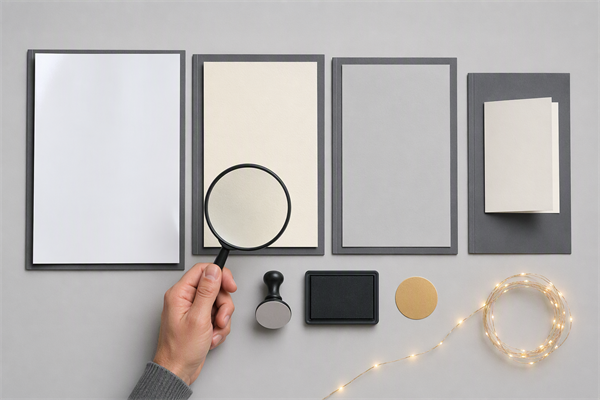
Certification is the first commercial filter for any bulk Christmas light order. CE marking applies across the EU. UKCA is now required for Great Britain post-Brexit. SAA certification covers Australia and New Zealand. SASO certification applies to Saudi Arabia.[^1] Each mark has different testing protocols, documentation requirements, and scope — and a product certified for one market is not automatically compliant in another.
Understanding why this step belongs at the start — not after sampling — changes the entire procurement sequence.
Why Certification Is a Commercial Risk, Not a Technical Formality
In my experience working with buyers across Europe, Australia, and the Middle East, the most expensive certification mistakes share a common pattern: the buyer confirmed the order, negotiated price, approved the sample, and then asked about compliance documentation.
By that point, the factory has already committed to a production run built to a standard spec. Retrofitting certification — adding the correct plugs, adjusting cable ratings, sourcing compliant components — either delays production significantly or results in goods that technically carry a mark but weren't built holistically to that standard from the start.
A few specific patterns I've seen come up repeatedly:
- EU buyers sometimes focus heavily on CE marking but overlook the specific directives that apply — particularly the Low Voltage Directive (LVD) and the Restriction of Hazardous Substances (RoHS) Directive. Both apply to LED string lights and festival lights.[^2]
- Australian buyers frequently ask for SAA, but the scope of testing they request doesn't always cover outdoor-rated products for large-scale city decorations vs. retail packaged string lights. The application context matters.
- Saudi and UAE buyers sometimes conflate SASO requirements with general Gulf standards. Saudi Arabia's SASO scheme has specific mandatory product registration requirements that go beyond a test report — buyers who don't clarify this early can face clearance delays.
Practical advice: Treat certification as your first supplier qualification question, not a checkbox after the sample is approved. Ask for existing test reports, check their issue date, and confirm they cover the exact product variant you're ordering — not just a similar SKU.
2. Are You Ordering the Right Voltage and Plug for Your Market?
Voltage and plug standards seem like a basic check, but the variation across markets is consistently underestimated by first-time importers.
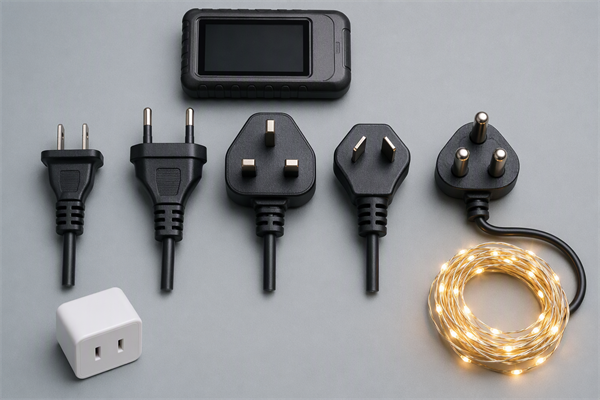
Christmas lights and string lights are designed for specific voltage ranges and outlet formats. The US and Canada operate on 110V/60Hz. Europe, Australia, and most of the Middle East run on 220–240V/50Hz.[^3] Plugs vary further: Type A/B in North America, Type C/F in Europe, Type I in Australia, Type G in the UK and UAE.[^4] A product built for one market's voltage will fail — or become a fire hazard — in another.
Real Inquiry Scenarios That Illustrate the Risk
This isn't a theoretical problem. Here are patterns I've encountered directly in buyer inquiries:
- A buyer sourcing festival lights for the UAE asked us to supply products with EU-style Type C/F plugs, reasoning that "most of their clients use European-style sockets." In practice, the UAE officially uses Type G (British-style three-pin) outlets. Supplying Type C plugs into that market creates a safety risk and an installation problem at the event site.
- An Australian importer once received a quote for string lights without specifying voltage. The supplier defaulted to the factory's most common production run — 110V products destined for the North American market. The buyer caught this only when reviewing the shipping documentation.
- A South African retail buyer asked for "standard 230V products" but didn't specify plug type. South Africa uses Type M (large three-pin) plugs, not the Type C or Type F common in Europe. The difference only surfaced during pre-shipment review.
What to Confirm Before You Order
| Market | Voltage | Frequency | Common Plug Type |
|---|---|---|---|
| United States / Canada | 120V | 60Hz | Type A / B |
| European Union | 220–240V | 50Hz | Type C / E / F |
| United Kingdom | 230V | 50Hz | Type G |
| Australia / New Zealand | 230V | 50Hz | Type I |
| UAE | 230V | 50Hz | Type G |
| Saudi Arabia | 127V / 220V | 60Hz / 50Hz | Type A, B, G (varies by region) |
| South Africa | 230V | 50Hz | Type M |
Saudi Arabia's dual-voltage situation deserves special attention. Different regions of the country historically ran on different systems, and some older infrastructure still uses 127V/60Hz.[^5] Buyers supplying large-scale motif light installations for Saudi municipal or commercial clients should clarify the actual site voltage before confirming specs.
3. Does Your IP Rating Match the Deployment Environment?
IP rating is one of the most misapplied specs in bulk Christmas light procurement. Buyers often default to "outdoor" as a category without distinguishing between what "outdoor" actually means for their application.
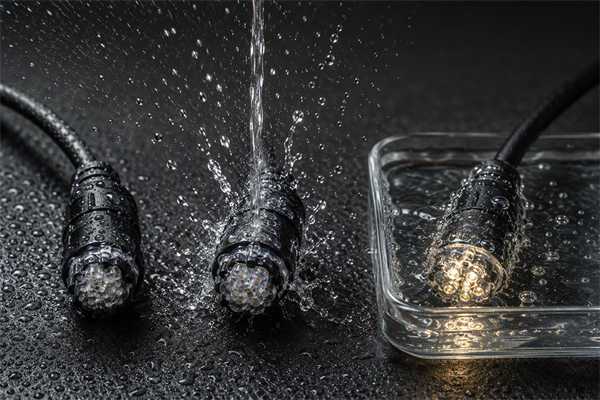
IP (Ingress Protection) rating defines a product's resistance to solid particles and water.[^6] For Christmas lights and outdoor festival lights, the most relevant ratings are IP44 (splash-resistant, suitable for covered outdoor areas), IP65 (dust-tight and jet-water resistant, suitable for exposed outdoor use), and IP67/IP68 (submersion-rated, for installations near water features or in high-rainfall environments).[^7]
Why the Application Context Changes Everything
A retail chain buyer sourcing Christmas lights for shelf display packaging has almost no IP requirement — the product will be used indoors by end consumers. An event management company renting string lights for a temporary outdoor venue in Dubai needs IP65 at minimum for the LED string light runs, because desert environments combine dust infiltration risk with unexpected rain during winter months.
A municipal contractor in South Africa installing motif lights on street poles for a city-wide Christmas display needs IP65 or higher across every component — the driver, the connectors, and the light body itself. An IP44-rated product will degrade within a single season in that environment.
In my experience, the disconnect often appears at the connector level. Buyers specify IP65 for the LED modules but don't check whether the in-line connectors between sections carry the same rating. A string light assembly is only as waterproof as its weakest connection point.
Checklist for IP rating verification:
- Confirm IP rating applies to the full assembly — not just the LED housing
- Ask for the IEC 60529 test report, not just the IP mark on the product label
- Match the IP rating to the worst-case environmental condition at the installation site, not the average condition
4. Is LED Count the Right Spec to Focus On?
"How many LEDs per metre?" is one of the most common opening questions I receive from new importers. It's a reasonable starting point, but it's the wrong primary filter.
LED count per metre is a secondary specification. The variables that actually determine performance and reliability in bulk Christmas light orders are LED chip quality and bin consistency, wire gauge and its load-bearing capacity, and IP rating for the operating environment. A string light with 60 low-grade LEDs per metre will underperform a 40-LED product using quality-binned chips within a single season.
Reframing the Spec Checklist
Here's how I'd suggest shifting the evaluation from count-based to application-relevant:
LED chip quality and binning: Reputable LED chips from established manufacturers come with tighter colour binning — meaning the white colour temperature stays consistent across hundreds of metres of string light.[^8] Cheaper chips drift visibly, which matters enormously for retail window displays and high-profile city decorations where colour consistency is a visual quality signal.
Wire gauge: This is a safety and longevity variable that almost never appears in initial buyer inquiries. Wire gauge determines how much current the string can safely carry and how it performs in low-temperature environments. Undersized wire on a long festival light run creates voltage drop — lights at the end of the run are noticeably dimmer than lights at the start.[^9] For large-scale motif light installations drawing continuous current over a full Christmas season, wire gauge is a failure point.
Chip brand transparency: Ask your supplier to declare the LED chip brand used in production. Suppliers who can't or won't answer this question clearly are typically using unbranded or inconsistently sourced components. This matters most for large reorders — if the chip source changes between production batches, your colour consistency changes too.
5. Will the Sample Quality Reflect What Ships in Your Production Batch?
The sample approval step is standard in almost every international procurement process. But treating sample approval as a quality guarantee for the full production batch is a structural misunderstanding of how factory production works.
Sample quality does not predict batch quality without a pre-shipment inspection clause. Factories produce samples with close attention to detail and often using selected materials. Production batches operate at volume with different staffing, shift patterns, and material sourcing realities. The only reliable bridge between sample quality and batch quality is a formal pre-shipment inspection, either third-party or buyer-supervised.

What Pre-Shipment Inspection Actually Covers
This isn't about distrust of the supplier. It's about understanding how manufacturing at volume differs from sample production.
A pre-shipment inspection typically covers:[^10]
- Random batch sampling against the approved sample (usually AQL 2.5 for general merchandise)
- Packaging compliance — correct barcodes, labelling for the destination market, carton markings
- Electrical function test — confirming LEDs illuminate, controllers work, and no dead sections exist
- Physical inspection — checking for damaged cable insulation, loose connectors, or housing defects
For buyers who are ordering from a supplier for the first time, or who are placing orders larger than previous transactions with a known supplier, a third-party inspection through a recognised agency is worth the cost. The inspection fee is a small fraction of the total order value. A failed batch — especially one that clears customs before the defects are discovered — is not recoverable.
6. Does the Packaging Meet Your Market's Retail or Project Requirements?
Packaging is the check that procurement teams in event management and project contracting often skip entirely. It matters more than it appears to.
Packaging for bulk Christmas lights must meet the destination market's language, labelling, and safety warning requirements. For retail import, this includes local language instructions, correct CE/UKCA/SAA marking on the retail box, rated voltage displayed prominently, and any required disposal or recycling symbols.[^11] For project-based buyers, packaging affects handling efficiency, storage density, and the logistics of on-site deployment.
Two Very Different Packaging Contexts
Retail chain buyers need packaging that sells the product from the shelf. This means:
- Printed boxes with localised language content
- Accurate product photography (the box should show what's inside)
- Barcode formats compatible with the retailer's inventory system (EAN-13 for Europe and Australia, UPC-A for North America)
Event management and municipal contractors have almost the opposite priority. They want packaging that protects the product during transit and storage, allows fast extraction on-site, and labels each unit clearly enough that a site crew can identify the right product without opening every box. For large motif light projects, cable management within the packaging — how the light is coiled and protected — directly affects installation time.
7. Are the Motif Lights Built for Long-Term Outdoor Installation?
Motif lights — shaped decorative lights typically used in street and large-venue installations — carry structural requirements that standard string light checks don't cover.
Motif lights for outdoor commercial use must be evaluated for structural frame integrity, UV resistance of the outer casing, connector weather-sealing, and mounting point load capacity. A motif light installed on a street pole or building façade will experience wind loading, thermal cycling, and prolonged UV exposure over a deployment period of 30–90 days. Failure in any of these dimensions creates safety risk and early product retirement.

What Municipal and Event Buyers Should Specifically Ask
- Frame material: Powder-coated steel and UV-stabilised polycarbonate are the standard materials for durable outdoor motif lights. Ask your supplier to confirm both the frame material and the surface treatment.
- Connector specification: All connectors should carry the same IP rating as the body. Ask for connector brand and rating explicitly.
- Mounting point load testing: Large motif lights create wind loading on the structures they're mounted to. Ask whether load testing has been conducted and whether installation guidelines are included.
- Driver location and protection: The driver (power supply) for an LED motif light is typically the weakest weatherproofing point. Confirm where it's located and what IP rating it carries.
8. What Is the Realistic Minimum Order Quantity — and Can It Be Reordered?
MOQ conversations often happen early but incompletely. The reorder question is the one that matters most for buyers who are building a recurring seasonal procurement programme.
Minimum order quantity for bulk Christmas lights and festival lights typically ranges from 500 to 5,000 units depending on product complexity and whether the order involves custom specifications. More important than the MOQ itself is whether the supplier can guarantee component and specification consistency on repeat orders — including LED chip sourcing, wire gauge, and colour binning.
The Reorder Consistency Problem
I've seen this become a problem most visibly with retail buyers who place a successful first order, sell through quickly, and place a reorder six months later — only to receive a product that looks slightly different under retail lighting conditions. The cause is usually a chip batch change or a component substitution that the supplier considered equivalent.
For buyers building a seasonal inventory programme, the right questions to ask a prospective supplier include:
- Do you maintain production records by order batch?
- Can you guarantee the same LED chip brand and bin for reorders?
- What is your typical lead time for repeat orders vs. new orders?
- Do you hold safety stock of core components, or is each order built to demand?
Suppliers who can answer these questions specifically — and consistently — are the ones worth building a long-term procurement relationship with.
9. Does the Supplier Have Traceable Quality Management?
ISO 9001 certification and BSCI auditing are two of the most commonly referenced supplier credentials in the holiday lighting category. They mean different things and cover different risks.
ISO 9001 certification indicates that a supplier has a documented quality management system covering production processes, inspection procedures, and corrective action protocols. BSCI (Business Social Compliance Initiative) auditing covers labour conditions, working hours, and social compliance — it is not a product quality standard. Both are relevant for professional importers, but they are not interchangeable.
What Traceability Actually Means in Practice
For buyers placing recurring orders, supplier traceability means the ability to track which components went into which production batch. This matters when:
- A field failure occurs and you need to determine whether it affects your entire shipment or a specific production lot
- A certification body requests a technical file for a complaint or audit
- A retailer requests documentation for a product recall investigation
Ask your supplier directly: "If I report a field failure in six months, can you tell me which component batch and which production date was used in my order?" The answer to that question tells you more about the supplier's quality management maturity than any certificate document.
10. Have You Defined the Quality Gate Before the Order, Not After?
This is the check that ties all the others together. A quality gate is the agreed standard against which the shipment will be evaluated — and it needs to be documented in writing before production begins.
A quality gate for bulk Christmas light procurement should define: the approved sample reference, the AQL (Acceptable Quality Level) for defects, the specific electrical and visual tests to be conducted, who conducts the pre-shipment inspection, and what happens commercially if the batch fails inspection. Without a documented quality gate, "quality disputes" become contractual disputes.
Why This Is a Commercial Document, Not a Technical One
From a sales and pre-shipment communication perspective, the most difficult situations I've encountered aren't cases where a product clearly failed. They're cases where the buyer and supplier had different understandings of what "acceptable" meant — and neither party had documented their expectation in advance.
A quality gate document doesn't need to be complex. It needs to cover:
- Reference sample: Which sample, date-stamped and kept by both parties, defines the accepted standard
- Defect classification: What constitutes a critical defect (e.g., non-illuminating LED, damaged insulation), a major defect (e.g., colour inconsistency, connector looseness), and a minor defect (e.g., cosmetic marking)
- AQL level: Standard commercial practice uses AQL 2.5 for major defects and AQL 4.0 for minor defects[^12]
- Inspection party: Third-party agency (SGS, Bureau Veritas, Intertek are common), buyer representative, or supplier self-inspection with documentation
- Fail consequence: What happens if the batch doesn't pass — rework, replacement, partial shipment hold
Frequently Asked Questions
What certifications are required for importing Christmas lights into Australia?
SAA (Standards Australia) certification is the primary electrical safety requirement for Christmas lights and festival lights sold in Australia. Products must meet the relevant Australian Standards. Buyers should request the SAA test report specific to the product being ordered, not a generic certification covering a different model. Verification through the Australian product registration system is advisable for high-volume retail import.
Is it safe to use European-certified Christmas lights in the UAE or Saudi Arabia?
Not without confirming the local electrical standards. The UAE officially uses Type G (British-standard) plugs and 230V/50Hz supply — which is voltage-compatible with EU products but requires a different plug. Saudi Arabia has historically had dual voltage infrastructure in different regions. CE certification covers EU market compliance only. Always confirm plug type, voltage, and any local approval requirements before finalising specs for Gulf market orders.
What does IP65 mean for outdoor Christmas string lights?
IP65 means the product is fully dust-tight (first digit: 6) and protected against water jets from any direction (second digit: 5). For outdoor Christmas lights used in exposed environments — street decorations, open-air event venues, exterior building displays — IP65 is the practical minimum rating. IP44 (splash-proof) is acceptable only for covered outdoor areas. The IP rating should apply to the full assembly, including connectors.
How do I evaluate LED quality without laboratory testing?
Ask your supplier to declare the LED chip brand and model used in production. Request the chip manufacturer's datasheet and check the rated luminous efficacy and colour rendering index. For string lights and festival lights where colour consistency matters, ask about the colour binning specification. Consistent bin codes across a production batch indicate a supplier who is managing chip quality, not just buying to price.
What is a reasonable pre-shipment inspection AQL level for bulk festival lights?
AQL 2.5 for major defects is the standard commercial benchmark for general consumer goods, including bulk Christmas lights and decorative string lights. This means that in a random sample of your batch, a defect rate above 2.5% in the major defect category triggers a batch rejection or hold. For high-value retail orders or large-scale event rental inventory, tightening to AQL 1.5 for major defects is justified.
Conclusion
Buying Christmas lights in bulk successfully comes down to asking the right questions before the order is confirmed — not after the container ships. The ten checks covered here — from market-specific certification and voltage standards, through IP rating and LED chip quality, to pre-shipment inspection clauses and documented quality gates — represent the decision points where most importer risk is actually created or eliminated.
No supplier can guarantee a perfect outcome for every shipment. What matters is whether the buyer and supplier have built enough shared clarity around specifications, compliance requirements, and quality standards that problems can be identified and resolved before they become commercial losses. That clarity starts with the buyer knowing what to ask.
If you are preparing a specification brief for your next bulk string light, festival light, or motif light order, I am glad to work through the market-specific requirements with you. Reach out with your target market, deployment environment, and quantity — and we can start from the right questions.

[^1]: "Saudi Arabia Testing, Inspection and Certification", https://www.trade.gov/saudi-arabia-testing-inspection-and-certification. Official conformity-assessment guidance from the European Commission, the UK government, Australian electrical-safety regulators, and Saudi SASO/SABER authorities supports the point that electrical lighting products are subject to market-specific compliance schemes rather than a single globally transferable certification. Evidence role: general_support; source type: government. Supports: Official market-access rules differ by jurisdiction and electrical lighting products may require different conformity markings, registrations, or approvals depending on the destination market.. Scope note: The source may support the regulatory framework generally rather than naming every Christmas light product variant.
[^2]: "RoHS", https://en.wikipedia.org/wiki/RoHS. European Union guidance on the Low Voltage Directive and RoHS Directive supports the conclusion that many mains-powered LED lighting products fall within EU electrical-safety and hazardous-substance compliance regimes. Evidence role: general_support; source type: government. Supports: The EU Low Voltage Directive and RoHS Directive cover defined categories of electrical and electronic equipment, including lighting products when they fall within the directive scopes.. Scope note: Applicability depends on the product's voltage range, construction, and intended use, so the source provides regulatory context rather than certification of a specific string-light model.
[^3]: "Mains electricity", https://en.wikipedia.org/wiki/Mains_electricity. International Electrotechnical Commission country data on mains voltages and frequencies supports the article's distinction between North American 60 Hz supply and the 220–240 V, 50 Hz systems used in many other markets. Evidence role: general_support; source type: institution. Supports: National mains electricity systems use different nominal voltages and frequencies, creating compatibility requirements for imported electrical lighting products.. Scope note: Country tables provide nominal public-supply values; actual site supply can vary by installation and region.
[^4]: "Mains electricity by country", https://en.wikipedia.org/wiki/Mains_electricity_by_country. The International Electrotechnical Commission's World Plugs reference supports the article's summary that plug formats differ by market, including Type A/B in North America, Type I in Australia, and Type G in the United Kingdom and United Arab Emirates. Evidence role: general_support; source type: institution. Supports: Plug and socket outlet types differ by country and commonly follow the regional pattern described in the article.. Scope note: Some countries permit multiple plug types or have legacy installations, so the source supports common usage rather than every installation condition.
[^5]: "Mains electricity by country", https://en.wikipedia.org/wiki/Mains_electricity_by_country. Country-level electrical-system references and Saudi utility documentation support the contextual point that Saudi Arabia has had mixed nominal-voltage conditions, including legacy 127 V service in some locations. Evidence role: historical_context; source type: institution. Supports: Saudi Arabia has historically used more than one nominal voltage in parts of its electrical system, making site-voltage confirmation important for electrical products.. Scope note: Such sources may not prove the voltage at a particular municipal or commercial installation; they justify the need for site-specific confirmation.
[^6]: "IP code", https://en.wikipedia.org/wiki/IP_code. IEC 60529 materials on the IP Code define ingress-protection ratings as classifications of enclosure protection against solid foreign objects and water ingress. Evidence role: definition; source type: institution. Supports: The IP Code under IEC 60529 defines degrees of protection provided by enclosures against access, solid foreign objects, dust, and water..
[^7]: "IP code", https://en.wikipedia.org/wiki/IP_code. IEC 60529 IP Code definitions support the article's explanation that IP44, IP65, IP67, and IP68 represent progressively different combinations of solid-particle and water-ingress protection. Evidence role: definition; source type: institution. Supports: IEC IP code definitions distinguish splash protection, dust-tight protection with water jets, and immersion-related protection levels.. Scope note: IEC 60529 defines test conditions; it does not by itself determine whether a given rating is adequate for every outdoor Christmas-light installation.
[^8]: "LED Color Characteristics", https://www.energy.gov/sites/prod/files/2016/08/f33/led-color-characteristics-factsheet.pdf. U.S. Department of Energy solid-state lighting guidance explains that LED binning groups devices by characteristics such as color and flux, supporting the mechanism by which consistent bin selection can reduce visible color variation. Evidence role: mechanism; source type: government. Supports: LED binning is used to group LEDs by photometric and color characteristics, helping control color variation among assembled lighting products.. Scope note: The guidance explains the general mechanism and does not verify the binning practices of any particular Christmas-light supplier.
[^9]: "Section 4: Calculating Voltage Drop", https://www.txdot.gov/manuals/trf/hwi/electrical_systems/calculating_voltage_drop-chdhdebc.html. Electrical-engineering references on conductor resistance and voltage drop support the article's explanation that long runs using insufficient wire gauge can deliver lower voltage to downstream lighting loads. Evidence role: mechanism; source type: education. Supports: Voltage drop increases with conductor resistance and circuit length, and inadequate conductor sizing can reduce delivered voltage to lighting loads.. Scope note: The degree of dimming depends on circuit design, load current, conductor material, and the type of LED driver used.
[^10]: "ISO 2859-1", https://chemistry.unt.edu/~tgolden/courses/iso2859-1.pdf. Quality-inspection standards such as ISO 2859 and trade-facilitation guidance on pre-shipment inspection support the article's description of random sampling and specification-based checks before goods are shipped. Evidence role: general_support; source type: institution. Supports: Pre-shipment inspection practice commonly relies on sampling plans and checks products against specifications before shipment.. Scope note: The exact inspection checklist for Christmas lights must still be defined contractually for the product and destination market.
[^11]: "EU - Labeling/Marking Requirements", https://www.trade.gov/country-commercial-guides/eu-labelingmarking-requirements. Government guidance on CE/UKCA product marking and WEEE-style disposal labeling supports the article's point that retail packaging for electrical lighting products must address destination-market labeling and safety-information requirements. Evidence role: general_support; source type: government. Supports: Electrical product packaging and labeling can be subject to market-specific requirements, including conformity markings, user information, and waste-disposal labeling.. Scope note: Specific label content depends on jurisdiction, product classification, and sales channel, so the source provides regulatory context rather than a complete packaging checklist.
[^12]: "ISO 2859-1", https://chemistry.unt.edu/~tgolden/courses/iso2859-1.pdf. Acceptance-sampling standards based on ISO 2859 support the use of defined AQL levels to classify lot acceptance criteria for major and minor defects. Evidence role: general_support; source type: institution. Supports: AQL values are used in acceptance sampling plans to set defect thresholds for inspected lots, and 2.5/4.0 levels are commonly used in consumer-goods inspection contexts.. Scope note: The standard defines sampling methodology; it does not mandate 2.5 and 4.0 as universal requirements for Christmas-light imports.
Table of Contents
- Buying Christmas Lights in Bulk: 10 Things Importers Should Check Before Ordering
- 1. Does Your Target Market's Certification Come First — Not Last?
- 2. Are You Ordering the Right Voltage and Plug for Your Market?
- 3. Does Your IP Rating Match the Deployment Environment?
- 4. Is LED Count the Right Spec to Focus On?
- 5. Will the Sample Quality Reflect What Ships in Your Production Batch?
- 6. Does the Packaging Meet Your Market's Retail or Project Requirements?
- 7. Are the Motif Lights Built for Long-Term Outdoor Installation?
- 8. What Is the Realistic Minimum Order Quantity — and Can It Be Reordered?
- 9. Does the Supplier Have Traceable Quality Management?
- 10. Have You Defined the Quality Gate Before the Order, Not After?
-
Frequently Asked Questions
- What certifications are required for importing Christmas lights into Australia?
- Is it safe to use European-certified Christmas lights in the UAE or Saudi Arabia?
- What does IP65 mean for outdoor Christmas string lights?
- How do I evaluate LED quality without laboratory testing?
- What is a reasonable pre-shipment inspection AQL level for bulk festival lights?
- Conclusion