 EN
EN


The Best Time to Buy Christmas Lights: Summer Sales vs. Black Friday?
The best time to buy Christmas lights is a serious question for B2B buyers because one late decision can affect product selection, production capacity, inspection time, and delivery[^1]. Many buyers wait for a lower price, then discover that custom packaging, motifs, or large-volume orders need more time[^2]. I usually see better results when buyers plan main orders in summer and use Black Friday only for flexible top-ups.
The best time to buy Christmas lights for B2B buyers is usually summer for main seasonal orders, especially when customization, large quantities, retail packaging, or project deadlines are involved. Black Friday can be useful for small replenishment, clearance stock, or non-critical items, but it should not be the foundation of a professional Christmas lighting supply plan.

I have handled overseas inquiries where buyers asked about price, lead time, samples, plug standards, packaging, and shipping in the same conversation. The pattern is clear. The real issue is not only discount timing. The real issue is whether the buyer can still control the supply chain[^3].
Why Is Summer Often the Best Time to Buy Christmas Lights for B2B Orders?
Summer can feel early when the selling season is still months away. However, professional Christmas lighting buyers often face a different problem. They do not only need a product. They need the right product, in the right packaging, with confirmed quality, delivered before retail launch or installation work begins.
The best time to buy Christmas lights for main B2B orders is often summer because buyers still have room to confirm styles, request samples, adjust specifications, schedule production, inspect goods, and arrange shipping[^4]. Summer planning reduces procurement risk and protects delivery certainty better than waiting for late-season discounts.
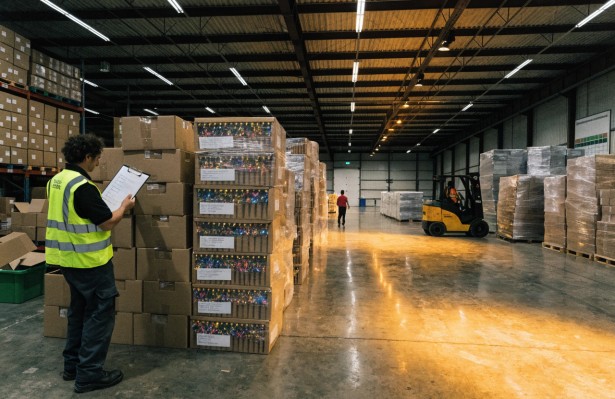
Summer protects more than price
I do not treat summer as a magic "cheapest season." Prices depend on materials, order quantity, product complexity, exchange rates, packaging, and production planning. However, summer often gives buyers something more valuable than a small discount: control.
For importers, wholesalers, retail chains, event management companies, and municipal decoration contractors, Christmas lighting is not just a seasonal product. It is a timed commercial program. A missed delivery window can create empty shelves, delayed installations, or last-minute substitutions.[^5]
When I discuss orders with overseas buyers, the most practical summer advantages usually include:
- More product choice before popular styles are fully booked.
- More production capacity before factories enter peak pressure.
- More time for samples before final approval.
- More room for packaging changes for retail channels.
- More inspection flexibility before shipment.
- More realistic delivery planning for seasonal launch dates.
A large order of LED string light products, motif lights, curtain lights, or outdoor decorative lighting usually has several steps. Buyers may need to confirm voltage, plug type, cable color, LED color temperature, IP rating, controller function, packaging artwork, barcode labels, carton marks, and compliance documents. These details are manageable when there is enough time. They become risky when everyone is rushing.
The hidden risk of treating Christmas lights as ready stock
Many buyers assume a christmas light is a standard product that can be replenished near peak season. That assumption may work for small local consumer purchases, but it is dangerous for B2B procurement.
Large-volume Christmas lighting orders are often not as "off-the-shelf" as they seem. Even a simple string light can require decisions such as:
| Procurement detail | Why it matters for B2B buyers |
|---|---|
| Plug standard | Different markets need different plugs and voltage requirements.[^6] |
| Cable color | Green, black, white, transparent, and rubber cable affect use cases. |
| LED color | Warm white, cool white, RGB, and custom colors change stock planning. |
| Packaging | Retail chains often need branded boxes, labels, and barcodes. |
| IP rating | Outdoor projects need suitable weather resistance.[^7] |
| Quantity | Large orders need production scheduling, not just picking from shelves. |
| Certification | Buyers may need documents for market access or internal approval. |
I have seen many inquiries where buyers ask, "Do you have stock?" That question is normal, but it is incomplete. The better question is, "Do you have stock that matches my exact market, packaging, quality, quantity, and delivery schedule?" In many cases, the answer depends on how early the buyer starts.
Summer buying also helps protect project deadlines
Municipal contractors and event management groups face another challenge. They often need lighting products installed before a public date. A city square, shopping mall, hotel, or commercial street cannot wait until the last week before Christmas.
For project buyers, summer planning supports:
- Design confirmation for motifs, frames, and color schemes.
- Quotation comparison across suppliers and technical options.
- Sample or drawing approval before production.
- Production scheduling for custom decorative shapes.
- Pre-shipment inspection before goods leave the factory.
- Installation preparation after arrival.
This is why I usually advise B2B buyers to separate "discount thinking" from "procurement thinking." A discount is useful only if the goods arrive in time and match the business need. For main seasonal supply, summer often gives buyers the strongest balance of price, choice, and schedule security.
Is Black Friday the Best Time to Buy Christmas Lights for Replenishment?
Black Friday attracts attention because buyers expect big discounts. That expectation is not wrong, but it can create pressure. B2B buyers may see low prices and assume they can still build their main seasonal supply around late November purchases. In practice, that approach often leaves too little room for customization, production, and shipping.
Black Friday can be a good time to buy Christmas lights for small-volume replenishment, clearance products, or flexible stock. It is usually not the best time to buy Christmas lights for main B2B orders because late timing limits product choice, customization, quality confirmation, and delivery reliability.
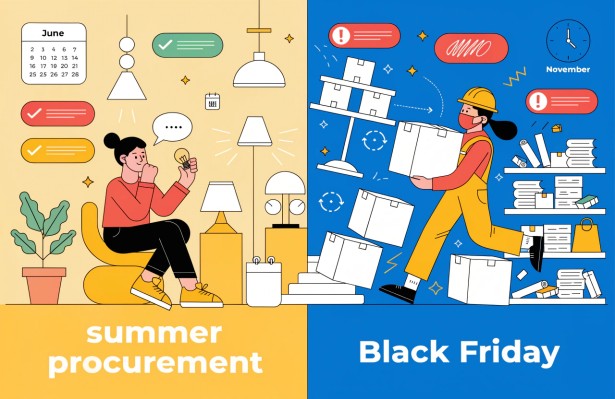
Black Friday has a place, but it has limits
I do not think Black Friday is a bad opportunity. It can be useful when the buyer has flexible requirements. If an importer or distributor needs a small top-up of standard items, Black Friday offers may help. If a retailer wants promotional stock and can accept available styles, late-season deals may work. If a wholesaler wants clearance items for the next season, Black Friday may also be worth checking.
However, Black Friday is late for most professional Christmas lighting supply plans. By that time, many retail programs should already be on shelves.[^8] Many outdoor decoration projects should already be installing or testing.[^9] Many import shipments should already have arrived or be close to arrival.
Black Friday works best when the order has these characteristics:
- Small quantity
- Standard specification
- No custom packaging
- No urgent retail launch
- No strict installation deadline
- Flexible design choice
- Acceptable substitute models
Black Friday becomes risky when the order has these characteristics:
- Large quantity
- Custom motif or drawing
- Private label packaging
- Strict compliance documentation
- Fixed delivery deadline
- Specific LED color or cable requirement
- Project-based installation schedule
A practical comparison for B2B buyers
The table below shows how I usually compare summer sales and Black Friday from a procurement-risk angle.
| Buying window | Best for | Main advantage | Main risk |
|---|---|---|---|
| Summer sales | Main seasonal orders | More time for customization, production, and inspection | Earlier cash-flow or inventory commitment |
| Early autumn | Repeat orders or confirmed programs | Still possible for some standard products | Capacity may be tighter |
| Black Friday | Small replenishment or clearance | Possible discount on available stock | Limited choice and late delivery risk |
| Post-season | Next-year planning or clearance | Low-price opportunities | Stock may not match future demand |
This comparison matters because many B2B buyers do not lose money only through high unit prices. They also lose money through missed delivery dates, wrong specifications, poor substitutions, and rushed decisions.
Why late discounts can become expensive
A lower unit price does not always mean a lower total cost.[^10] When buyers wait too long, they may need to accept compromises. They may choose a less suitable model. They may pay more for urgent handling. They may miss a retail launch. They may need to split shipments or buy from several suppliers. They may lose time confirming details with internal teams.
I usually encourage buyers to calculate the total procurement cost, not only the product price. That cost includes:
- Product price
- Packaging cost
- Inspection cost
- Logistics planning
- Internal approval time
- Sales opportunity
- Risk of late arrival
- Risk of incorrect specifications
A Black Friday deal can still be smart. For example, a distributor may use it to add extra standard LED string lights to a warehouse program. A retailer may use it for promotional shelf items if delivery is local and stock is confirmed. A project contractor may buy backup products if the technical requirements are flexible.
However, I would not use Black Friday as the backbone for a high-stakes seasonal supply plan. For B2B buyers, the best time to buy Christmas lights is the time that protects the business outcome. In most main-order cases, that time arrives before Black Friday.
How Should Importers Decide the Best Time to Buy Christmas Lights for Custom Products?
Custom Christmas lighting can create strong brand value and better project results. It can also create longer lead times. Buyers sometimes underestimate how many decisions sit behind a custom product. A small change in motif size, cable type, LED spacing, or retail box design can affect sampling, costing, production, and inspection.
Importers should decide the best time to buy Christmas lights for custom products by working backward from the required delivery date[^11]. They should include time for design discussion, quotation, sampling, approval, production, quality inspection, and shipping. For most custom B2B orders, summer confirmation gives safer planning than late-season buying.

Customization changes the buying calendar
A standard product and a custom product should not use the same purchasing calendar. A standard LED string light order may move faster if materials and packaging are available. A custom motif light, custom color combination, or private label retail pack usually needs more coordination.
Common customization requests include:
- Logo or private label packaging
- Retail box artwork
- Barcode and carton label requirements
- Custom motif shapes
- Specific frame sizes
- Outdoor-rated structure
- Special LED color combinations
- Programmed flashing functions
- Market-specific plug and voltage
- Bulk display packaging for chain stores
Each detail sounds simple during inquiry. However, each detail needs confirmation. I have often seen quotation discussions slow down because the buyer needs to check with a design team, purchasing manager, compliance department, or end customer. This is normal. It is also the reason early planning matters.
A backward-planning method
I like using a backward timeline because it makes the decision practical. Buyers should start with the date when goods must be ready for sale or installation. Then they should work backward through each stage.
Here is a simplified planning model:
| Stage | What the buyer confirms | Why timing matters |
|---|---|---|
| Sales or installation date | Store launch, event opening, municipal schedule | This is the non-negotiable deadline. |
| Arrival window | Warehouse or project site arrival | Goods need time for sorting and distribution. |
| Shipment schedule | Booking and transit planning | Late booking can reduce options. |
| Inspection date | Pre-shipment quality check | Problems need correction time. |
| Production period | Manufacturing and packing | Capacity becomes tighter near peak season. |
| Sample approval | Function, color, size, packaging | Delayed approval delays production. |
| Quotation stage | Price, MOQ, specification | Unclear details slow down costing. |
| Product selection | Model, material, design direction | Better selection exists earlier. |
This method helps buyers understand that the purchase order date is not the beginning of the real need. It is already the middle of the process.
Custom orders need quality confirmation time
Professional buyers care about product quality because Christmas lighting failures are visible. A failed decorative arch, flickering motif, or inconsistent LED color can damage a retailer's brand or a city project's appearance.
I do not claim to provide universal laboratory data here. My perspective comes from supplier-side sales and production-planning communication. From that experience, I can say that quality confirmation needs time. Buyers may need to check:
- LED brightness consistency
- Cable flexibility
- Connection strength
- Controller function
- Outdoor suitability
- Packaging protection
- Label accuracy
- Carton strength
- Sample appearance against approved artwork
If a problem appears during inspection, buyers need time to solve it. Summer orders give that time. Late orders reduce options. When timing is too tight, a buyer may feel forced to accept goods that are "good enough" because the season is already close. That is not a good position for a serious importer, retailer, or contractor.
Early purchasing has one real downside
Early buying is not perfect. It can create inventory pressure or cash-flow pressure. A retail buyer may worry about demand changes. A wholesaler may not want to commit too much before collecting customer orders. A project contractor may wait for final approval from the client.
That concern is reasonable. I usually suggest a balanced strategy:
- Confirm core styles early.
- Reserve capacity for key products.
- Use forecasts for main quantities.
- Keep some budget for flexible replenishment.
- Review Black Friday only for suitable top-ups.
This strategy avoids two extremes. Buyers do not overcommit too early on every item. They also do not wait too long for the products that matter most. For custom products, this balance is usually the safest answer to the best time to buy Christmas lights question.
What Procurement Timeline Makes the Best Time to Buy Christmas Lights More Predictable?
Seasonal lighting procurement becomes stressful when buyers treat every step as urgent. A clear timeline reduces stress because each decision has a place. Buyers can still negotiate price, but they also protect samples, production slots, quality checks, and delivery windows.
The best procurement timeline for Christmas lighting starts with style and quantity planning in spring, quotation and sampling in late spring or early summer, main order confirmation in summer, inspection before shipment, and Black Friday only for small replenishment or clearance opportunities when stock and timing are flexible.
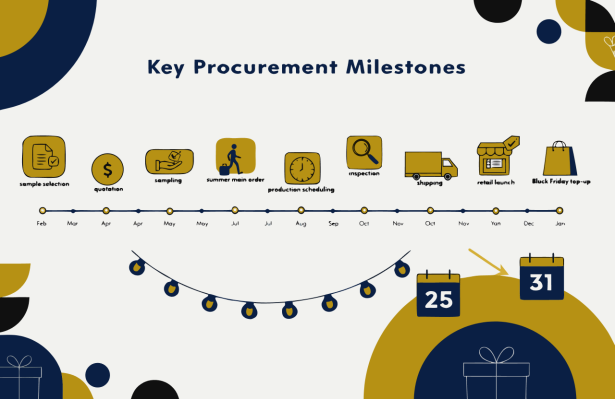
A practical B2B buying calendar
I prefer a calendar that matches how seasonal orders actually move. Different markets and shipping routes vary, so buyers should adjust this model to their own situation. Still, the structure works well for many professional buyers.
| Period | Recommended action | Buyer goal |
|---|---|---|
| February–March | Review last season's sales or project results | Identify winning styles and problem products. |
| March–April | Request catalogs, product suggestions, and trend options | Build a realistic product shortlist. |
| April–May | Ask for quotations and clarify specifications | Compare pricing and technical details. |
| May–June | Confirm samples, packaging direction, and compliance needs | Remove uncertainty before order placement. |
| June–August | Place main orders and lock production schedule | Protect capacity and delivery window. |
| August–September | Monitor production and prepare inspection | Catch issues before shipment. |
| September–October | Arrange shipment and receiving plans | Support retail launch or installation. |
| November | Handle local distribution or installation | Prepare for peak demand. |
| Black Friday | Buy small top-ups or clearance only if suitable | Avoid using late deals as the main plan. |
| December–January | Review performance and collect feedback | Improve next year's procurement. |
This timeline turns the best time to buy Christmas lights into a planning process instead of a single shopping day.
Why buyers should confirm specifications before price negotiations
Some buyers ask for the lowest price before they define the product. I understand why. Price matters. However, unclear specifications often create misleading quotations. Two string light products may look similar in a photo but differ in LED quantity, cable thickness, waterproof level, copper content, plug quality, controller function, packaging, and testing requirements.
Before comparing prices, buyers should confirm:
- Indoor or outdoor use
- Total length and LED spacing
- LED color and brightness
- Cable material and color
- Power source and plug type
- IP rating expectation
- Packing method
- Retail or project use
- Certification or audit requirements
- Order quantity by model
A clear specification makes quotations more accurate. It also reduces later changes. In my experience, the fastest order discussions happen when the buyer provides a clear use case and target market. For example, "outdoor warm white string light for retail chain packaging" is much easier to quote than "send me your best price for christmas light."
Style selection is a business decision
The Christmas lighting market is visual. Buyers need products that fit local taste, retail shelf space, project themes, and price points. A supermarket chain may need fast-moving boxed lights. A distributor may need a broad mix of indoor and outdoor models. A municipal contractor may need large decorative motifs with strong visual impact. An event company may need flexible products that can be reused across installations.
When buyers start early, they can build a better assortment. They can compare:
| Product type | Typical B2B use | Planning note |
|---|---|---|
| LED string lights | Retail, wholesale, trees, outdoor decoration | High-volume item with many specification options. |
| Curtain lights | Retail displays, hotels, commercial spaces | Size and controller function need confirmation. |
| Motif lights | Streets, malls, municipal projects | Custom size and structure may need more lead time. |
| Net lights | Landscaping and commercial decoration | Cable color and outdoor rating matter. |
| Icicle lights | Building edges and winter themes | Market preference affects color and length. |
| Custom festivel light designs | Events, cities, themed installations | Design approval should start early. |
I intentionally used "festivel light" here because some buyers search with spelling variations when looking for festival lighting suppliers. In business communication, however, clear product naming helps both sides avoid confusion.
A two-layer buying strategy
A strong seasonal buying plan often has two layers.
Layer 1: Main order in summer
This layer includes the products that cannot fail. These may include best-selling retail SKUs, private label products, custom motifs, project-specific decoration, and high-volume wholesale items.
Layer 2: Flexible replenishment later
This layer includes standard items, promotional stock, or clearance opportunities. Black Friday may fit here if stock is available and delivery expectations are realistic.
This two-layer approach gives buyers flexibility without creating unnecessary risk. The buyer secures the essential program early and still leaves room for late opportunities. In my view, this is the most practical answer for importers and professional lighting buyers who ask about the best time to buy Christmas lights.
Frequently Asked Questions
Is summer always the cheapest time to buy Christmas lights?
Summer is not always the cheapest time to buy Christmas lights. However, summer often gives B2B buyers better product choice, production capacity, customization time, and delivery control. For main orders, those advantages can be more valuable than waiting for a possible late-season discount.
Can Black Friday work for wholesale Christmas light orders?
Black Friday can work for wholesale Christmas light orders when the buyer needs small quantities, standard models, or clearance stock. It is less suitable for large custom orders, private label packaging, strict delivery deadlines, or project-based installation schedules.
When should retailers confirm Christmas lighting packaging?
Retailers should usually confirm Christmas lighting packaging before main production begins. Packaging artwork, barcodes, carton marks, language requirements, and shelf display needs can affect lead time.[^12] Early confirmation helps avoid rushed corrections and supports smoother delivery before the holiday selling season.
What is the biggest mistake B2B buyers make with Christmas lights?
The biggest mistake is assuming Christmas lights are always ready stock. Many B2B orders need specific plugs, packaging, LED colors, outdoor ratings, quantities, and compliance documents. These requirements reduce flexibility, especially when buyers wait until the peak season.
How should project contractors plan custom motif lights?
Project contractors should work backward from the installation deadline. They should allow time for design approval, quotation, sampling or drawing confirmation, production, inspection, shipping, and site preparation. Custom motif lights need earlier planning than standard string light products.
Conclusion
The best time to buy Christmas lights depends on order purpose, quantity, customization, and deadline. For B2B buyers, summer is usually the stronger window for main orders because it protects product choice, production capacity, quality confirmation, and delivery certainty. Black Friday can still help with small replenishment or clearance stock, but it should not carry the main seasonal supply plan. If you are planning LED string lights, custom motif lights, or retail Christmas lighting programs, I recommend discussing specifications and timelines early so we can help you build a safer procurement schedule.

[^1]: "Understanding Lead Time: Definition, Process, and Impact on Business", https://www.investopedia.com/terms/l/leadtime.asp. Supply-chain research links procurement lead times and capacity constraints with downstream delivery performance, supporting the article's point that late purchasing decisions can reduce control over production, inspection, and shipment timing. Evidence role: general_support; source type: paper. Supports: Procurement timing and lead-time variability can affect production scheduling, inspection windows, and delivery reliability.. Scope note: The source is likely to address supply-chain timing generally rather than Christmas lighting specifically.
[^2]: "Why Focusing on Lead Time—Not Just Efficiency—Drives Success", https://interpro.wisc.edu/lead-time-drives-manufacturing-success/. Research on make-to-order and customized manufacturing indicates that product-specific requirements and approval steps increase planning complexity and lead-time uncertainty, which contextualizes why custom lighting motifs or packaging may require earlier ordering. Evidence role: mechanism; source type: paper. Supports: Customization and make-to-order production add coordination, approval, and manufacturing steps that can lengthen lead times.. Scope note: The evidence would support the manufacturing mechanism broadly, not the exact lead time for Christmas lighting products.
[^3]: "Supply Chain Management and Demand Uncertainty", https://scholarworks.uni.edu/cgi/viewcontent.cgi?article=4890&context=grp. Supply-chain planning literature shows that earlier coordination among buyers and suppliers can reduce uncertainty and improve delivery performance, providing contextual support for the article's emphasis on maintaining supply-chain control. Evidence role: general_support; source type: paper. Supports: Early procurement planning and coordination with suppliers can reduce uncertainty and improve supply-chain performance.. Scope note: The source would support the general procurement principle rather than directly measuring Christmas-light purchasing outcomes.
[^4]: "PRESHIPMENT INSPECTION PROGRAMS AND THEIR EFFECTS ...", https://www.usitc.gov/publications/332/pub2003.pdf. International trade and logistics guidance commonly treats production, pre-shipment inspection, and transport booking as separate stages in cross-border procurement, supporting the article's claim that buyers need time for each step. Evidence role: general_support; source type: institution. Supports: International procurement commonly involves production scheduling, quality inspection, and shipment planning as distinct process stages.. Scope note: The source would document standard trade processes rather than provide Christmas-light-specific timing.
[^5]: "The Impact of Stockouts on Customer Loyalty to Lean Retailers", https://scholarworks.waldenu.edu/cgi/viewcontent.cgi?article=2010&context=dissertations. Retail operations research finds that stockouts can lead to lost sales, customer switching, and substitution behavior, supporting the article's warning that missed seasonal delivery windows can create commercial disruption. Evidence role: general_support; source type: paper. Supports: Stockouts and late deliveries can cause lost sales, substitutions, and operational disruption.. Scope note: The evidence would be strongest for retail stockouts and only contextual for municipal or event-installation delays.
[^6]: "Mains electricity by country", https://en.wikipedia.org/wiki/Mains_electricity_by_country. References on mains electricity by country document substantial variation in plug and socket types, voltages, and frequencies across markets, supporting the need to specify plug and voltage requirements for international lighting orders. Evidence role: definition; source type: encyclopedia. Supports: Countries use different mains voltages, frequencies, and plug/socket types..
[^7]: "National Electrical Manufacturers Association", https://en.wikipedia.org/wiki/National_Electrical_Manufacturers_Association. Ingress protection standards such as IEC 60529 define levels of protection against dust and water intrusion, supporting the article's point that outdoor lighting projects require weather-appropriate product specifications. Evidence role: definition; source type: institution. Supports: Ingress protection ratings classify the degree of protection electrical enclosures provide against solids and water.. Scope note: The standard defines protection categories but does not determine which rating is sufficient for every installation site.
[^8]: "Strategic Shopping: Why Americans Start Early but Spend Less", https://spiegel.medill.northwestern.edu/2025-holiday-shopping-trends/. Holiday retail surveys from industry institutions report that a substantial share of consumers begin holiday shopping before Thanksgiving weekend, supporting the article's statement that many retail programs should already be on shelves by Black Friday. Evidence role: statistic; source type: institution. Supports: Many consumers begin holiday shopping before Black Friday, requiring retailers to stock seasonal programs earlier.. Scope note: Consumer shopping data supports retail timing generally and may vary by country, product category, and sales channel.
[^9]: "Temporary Holiday Lighting · NYC311 - NYC.gov", https://portal.311.nyc.gov/article/?kanumber=KA-03024. Municipal notices and public works schedules commonly describe holiday lighting installation and testing before the main December holiday period, providing case-based support for the article's warning that Black Friday is late for project execution. Evidence role: case_reference; source type: government. Supports: Municipal or public holiday lighting programs often schedule installation and testing before the main holiday period.. Scope note: Municipal schedules are examples rather than universal rules for all commercial or private projects.
[^10]: "Total Cost of Ownership (TCO) in Procurement", https://us.caddi.com/resources/insights/total-cost-ownership. Procurement literature on total cost of ownership emphasizes that purchase price is only one component of sourcing cost, alongside logistics, quality, administrative effort, and risk, supporting the article's caution against judging Black Friday deals by unit price alone. Evidence role: expert_consensus; source type: paper. Supports: Procurement decisions should consider total cost of ownership rather than unit price alone..
[^11]: "Backward Planning - Learning Commons - Kalamazoo College", https://learningcommons.kzoo.edu/backward-planning/. Operations-management sources define backward scheduling as planning from a due date back through required activities, supporting the article's recommendation to set custom-product timelines by working backward from the delivery deadline. Evidence role: definition; source type: education. Supports: Backward scheduling plans activities by starting from a required completion date and calculating preceding task dates.. Scope note: The method is general to operations and project planning, not unique to lighting imports.
[^12]: "A packaging artwork change doesn't happen overnight. What may seem ...", https://www.linkedin.com/posts/aim---european-brands-association_a-packaging-artwork-change-doesnt-happen-activity-7467870091825635328-BSZ9. Packaging and retail-identification guidance, including barcode and labeling standards, shows that packaging information and identifiers must be prepared and verified before products enter retail channels, supporting the article's point that packaging details can affect lead time. Evidence role: general_support; source type: institution. Supports: Retail packaging and labeling require defined information, identifiers, and approval steps that can affect production readiness.. Scope note: The source would support the need for packaging and labeling preparation but may not quantify the exact added lead time.
Table of Contents
- The Best Time to Buy Christmas Lights: Summer Sales vs. Black Friday?
- Why Is Summer Often the Best Time to Buy Christmas Lights for B2B Orders?
- Is Black Friday the Best Time to Buy Christmas Lights for Replenishment?
- How Should Importers Decide the Best Time to Buy Christmas Lights for Custom Products?
- What Procurement Timeline Makes the Best Time to Buy Christmas Lights More Predictable?
-
Frequently Asked Questions
- Is summer always the cheapest time to buy Christmas lights?
- Can Black Friday work for wholesale Christmas light orders?
- When should retailers confirm Christmas lighting packaging?
- What is the biggest mistake B2B buyers make with Christmas lights?
- How should project contractors plan custom motif lights?
- Conclusion