 EN
Private Label Christmas Lights: A Sourcing Guide for Retailers and Importers
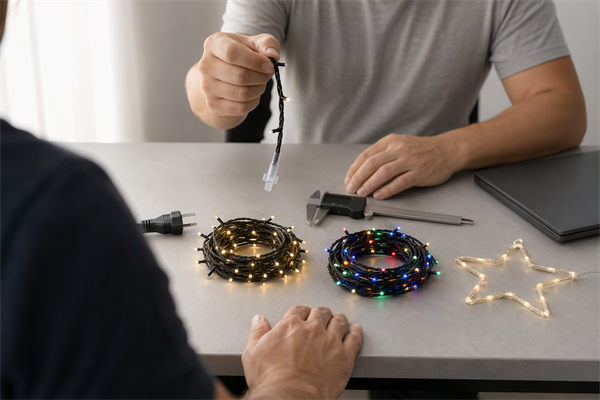
Sourcing private label Christmas lights sounds straightforward — pick a supplier, add your logo, ship to stores. But retail buyers who have managed a seasonal lighting program know the reality is far more stressful. A missed compliance document, a late shipment, or inconsistent packaging across SKUs can collapse an entire festive season's margin before a single unit sells.
Private label Christmas lights require more than a low unit price and a logo swap. A capable sourcing program covers product selection, compliance documentation, packaging approval, production scheduling, and inspection — all timed around a narrow retail window. Retailers and importers who treat this as a full launch system, rather than a simple purchase order, consistently protect shelf dates, brand standards, and customer safety.
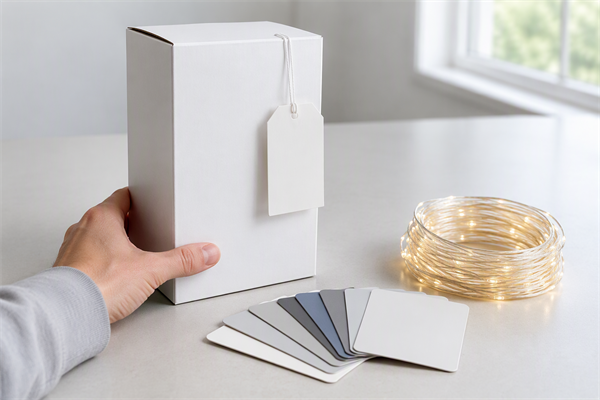
The sections below break down each stage of a private-label Christmas light program — from the first supplier conversation to the last pre-shipment check. If you are preparing for an upcoming festive season or reviewing a sourcing process that has caused problems in the past, this guide is built for your decision-making context.
What Does "Private Label" Actually Mean for Christmas Lights?
Many procurement teams enter their first private-label Christmas light project expecting a simple OEM arrangement — choose a product, print a box, ship it out. The reality surprises them. Packaging, labeling, instruction manuals, compliance marks, SKU structure, and retailer-specific requirements all need to align before a single unit enters mass production.
Private label Christmas lights means the retailer or importer sells the product under their own brand. That requires the supplier to produce goods that match a full retail specification — including product performance, safety certification, packaging artwork, language-accurate instruction manuals, warning labels, and carton marks — not just the physical light string itself.

Understanding the full scope of private label upfront prevents the most common sourcing failures I see in projects. Let me explain what is actually involved.
The Components of a Private-Label Christmas Light Program
A complete private-label festive light program typically includes the following deliverables:
- Product specification: LED count, wire color, light color, IP rating, plug type, voltage standard, indoor vs. outdoor rating
- Packaging design and approval: Retail box artwork, language requirements, country-of-origin statement, legal importer name
- Compliance marks and certifications: CE, RoHS, SAA, GS, or other market-specific marks — with test reports buyers can verify
- Instruction manual: Language-accurate, market-specific safety warnings and installation instructions
- SKU and barcode structure: EAN/UPC codes registered to the retailer's own brand[^1]
- Carton marks: Correct shipping marks, inner pack quantity, gross/net weight, and retailer routing labels
- Inspection protocol: Pre-shipment inspection criteria agreed before production begins
Why Scope Creep Happens Late
In my experience supporting overseas retail and import programs, the most common friction point is not product quality — it is packaging and document coordination arriving late in the process. Artwork approvals, certified test report reviews, and manual translations are frequently treated as afterthoughts. When they land in the final two weeks before the production deadline, delays become inevitable.
The more structured approach is to treat every item in the list above as a gate that must clear before the next stage begins.
Why Is Price-Only Supplier Comparison Misleading for Festive Light Sourcing?
Procurement teams under budget pressure naturally compare quotes by unit cost. For commodity categories, this is a reasonable starting point. For private-label Christmas lights sold through national retail chains, it is a misleading filter that consistently leads to more expensive problems downstream.
A supplier offering the lowest per-unit price for Christmas lights may not include certification support, compliant packaging coordination, consistent batch quality, or reliable pre-season delivery. Each of these gaps creates costs — chargebacks, delayed distribution, shelf gaps, or compliance failures — that far exceed the original price saving.
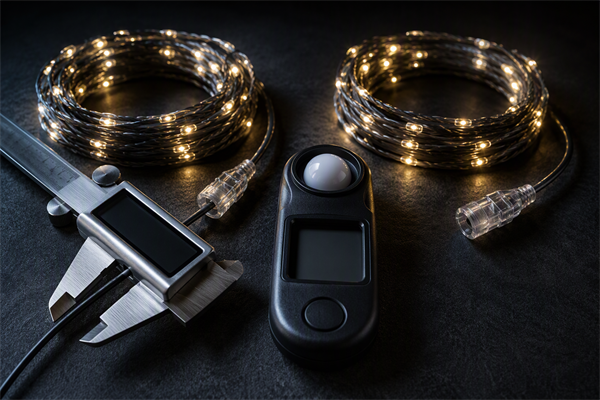
The true cost of a private-label festive light program is not visible in the first quote. Here is where the hidden costs tend to appear.
Where Low-Price Quotes Break Down
1. Certification and Testing Gaps
A supplier may quote a price that excludes third-party test report costs. Some suppliers offer "certification support" that turns out to mean they have a generic test report on file — not a report tied to your specific product configuration or batch. For markets such as the EU (CE, RoHS), Australia (SAA), or the Gulf (ESMA), a non-compliant or misapplied certificate can result in customs holds or retailer rejection. Buyers should ask for the specific test report, confirm the product model matches exactly, and check report validity dates.
2. Packaging Compliance Costs
Retailers in Europe, Australia, and the Middle East impose strict requirements on packaging language, safety symbols, warning statements, and barcode formats. A supplier unfamiliar with your target market may produce packaging that requires a costly reprint — or worse, a re-pack operation at destination. I have seen shipments arrive with French-language packaging sent to an English-speaking market, or Christmas string lights sold into a 220V market with a 110V instruction manual still inside the box.
3. Quality Consistency Across Batches
A low-price quote is often based on a sample made with selected components. Mass production batches, especially for high-volume seasonal festive light orders, can use substituted LED chips, altered wire gauges, or different connector specs if the supplier is not disciplined about component locking. Buyers should ask whether a Bill of Materials (BOM) is locked at the sample approval stage and whether any material substitution requires buyer approval.
4. Delivery Reliability
Christmas lights are the definition of a seasonal product. A shipment arriving three weeks after the retailer's floor-set date is effectively unsaleable for that season.[^2] A supplier who wins a price comparison but cannot commit to a production schedule tied to your required delivery window is not a cost saving — it is a liability.
| Evaluation Factor | Price-Only Comparison | Full-Value Comparison |
|---|---|---|
| Unit cost | ✅ Visible | ✅ Visible |
| Certification support | ❌ Not captured | ✅ Must be scoped |
| Packaging compliance | ❌ Not captured | ✅ Must be verified |
| BOM locking | ❌ Not captured | ✅ Must be agreed |
| Production scheduling | ❌ Not captured | ✅ Must be committed |
| Pre-shipment inspection | ❌ Not captured | ✅ Must be specified |
What Should a Capable Supplier Clarify Before Quoting?
A well-organized manufacturer or trading company should ask detailed questions before issuing a private-label Christmas light quotation. If a supplier issues a price within hours of a first inquiry with no clarifying questions, that is a signal to slow down — not an indication of efficiency.
Before quoting private label Christmas lights, a capable supplier should clarify the target market and voltage standard, indoor or outdoor application, required plug type and IP rating, applicable certifications, packaging language, instruction manual requirements, order quantity and SKU mix, retailer compliance requirements, and the required delivery date.
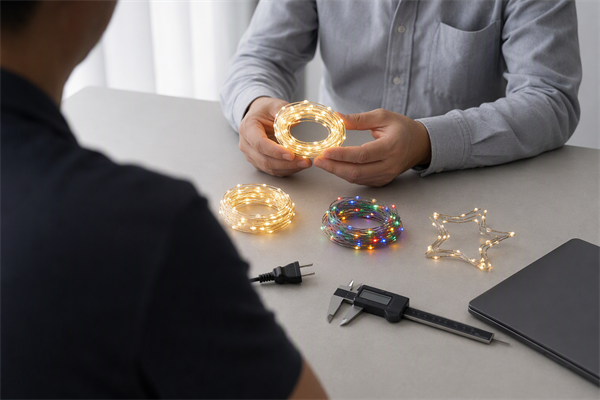
This pre-quote clarification process protects both sides. Here is why each item matters to your program.
The Pre-Quote Checklist: Item by Item
Target Market and Voltage Standard
The same LED string light or motif light cannot be sold across all markets without modification. Europe operates at 220–240V with a Type C or F plug. Australia uses 230V with a Type I plug. The US and some Gulf states use 110–120V.[^3] Voltage mismatch is a safety and certification failure, not a minor adjustment.
Indoor vs. Outdoor Application
Outdoor Christmas lights require an IP44 rating at minimum — and IP65 for exposed installations.[^4] Indoor-rated festive lights sold in outdoor-use packaging create both a liability and a compliance problem. The application must be confirmed before sampling.
Required Certifications
Different markets require different marks. CE and RoHS for the EU. SAA for Australia. GS or VDE for Germany. ESMA or SASO for the UAE and Saudi Arabia. Each certification path has lead time, cost, and scope implications. A supplier should be able to confirm which test reports they hold, for which product configurations, and from which accredited laboratories.
Packaging Language and Retailer Requirements
Large retail chains — supermarkets in particular — impose specific requirements on packaging format, font size for safety warnings, barcode placement, and sometimes even shelf-ready packaging (SRP) configurations. These requirements should be shared with the supplier before artwork development begins, not after.
Order Quantity and SKU Mix
Private-label programs often span multiple SKUs — for example, a range of indoor string lights, outdoor motif lights, and battery-operated decorative lights under a single brand identity. The SKU mix affects tooling, carton configuration, and minimum order quantity per item. Confirming this early prevents underordering on popular lines and overordering on slow movers.
Required Delivery Date
Working backward from a retail floor-set date, the supplier should help map a production schedule that includes sample approval time, packaging artwork cycles, mass production, pre-shipment inspection, and ocean freight lead time. For Christmas season, this timeline typically needs to begin no later than late Q1 of the same year for a peak November–December in-store date.[^5]
How Should Buyers Structure the Sourcing Timeline?
Seasonal products punish late decisions more than most categories. Private-label Christmas lights require a sequence of approvals and production gates — and each gate, if missed, compresses the next one dangerously.
A private-label Christmas light sourcing timeline should be structured around six gates: concept and specification confirmation, sample approval, packaging and compliance document approval, production authorization, pre-shipment inspection, and shipment release. Missing or compressing any gate increases the risk of arriving late, out of compliance, or with quality inconsistencies on the shelf.
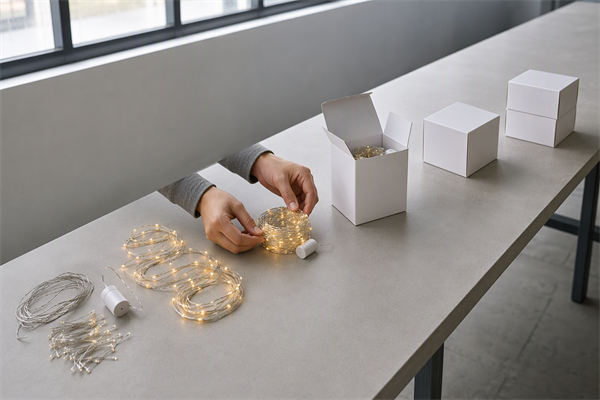
Here is how I recommend mapping those gates in practice.
A Working Timeline Framework
| Gate | Key Activities | Risk If Skipped |
|---|---|---|
| 1. Concept & Spec | Product selection, market confirmed, certifications scoped | Wrong product built to wrong standard |
| 2. Sample Approval | Physical sample reviewed, BOM locked, measurements verified | Mass production diverges from expectation |
| 3. Packaging & Compliance | Artwork finalized, test reports verified, manuals approved | Non-compliant packaging, customs risk |
| 4. Production Authorization | PO confirmed, production schedule agreed, materials sourced | Late starts cause late delivery |
| 5. Pre-Shipment Inspection | AQL inspection[^6], function test, packaging spot-check | Defects ship; no correction opportunity |
| 6. Shipment Release | Documents complete, booking confirmed, ETD/ETA tracked | Customs delays or port congestion surprises |
Common Timeline Mistakes
Starting too late. For a European Christmas retail program with a November in-store date, working backward through a 30-day ocean freight, 30-day production run, 3-week packaging approval, and 2-week sample cycle means the first supplier conversation should happen no later than March or April of that year.[^7] Many buyers start in June — and then try to compress every gate.
Treating sample approval and packaging approval as one step. Product samples can be approved before packaging artwork is finalized. These are separate workstreams. Running them in parallel, rather than sequentially, saves two to four weeks without cutting corners.
Skipping pre-shipment inspection. For seasonal products with a single delivery window, a pre-shipment inspection is arguably the most cost-effective quality investment in the entire program. The cost of an AQL inspection is a fraction of a re-shipment or a retail chargeback.[^8]
Frequently Asked Questions
How early should I start sourcing private label Christmas lights for a retail season?
For a November–December in-store date, most experienced importers start the sourcing and specification process in Q1 of the same year. Complex programs involving custom motif lights, new certifications, or multiple SKUs may require even earlier starts. Ocean freight lead times and port congestion in Q3 can reduce your buffer significantly.
What certifications do private label Christmas lights typically need?
The required certifications depend on your target market. CE and RoHS are standard for the EU. SAA certification applies in Australia. GS or VDE marks are common for the German market. Gulf markets may require ESMA or SASO compliance.[^9] Buyers should always request the actual test report, confirm the model number matches the product ordered, and check the report's issue date and scope.
Can a supplier provide private label packaging in multiple languages?
Yes — but this must be confirmed and scoped before artwork development begins. Multi-language packaging for string lights and decorative festive lights sold across different markets requires careful review of safety warning translations, legal text requirements, and country-of-origin statements.[^10] Each language version should be reviewed by someone with native-level fluency in that market's regulatory context.
What is the minimum order quantity for private label Christmas lights?
Minimum order quantities vary by supplier and by product type. Standard string lights and indoor festive lights typically have lower MOQs than custom motif lights, which often require tooling investment. Buyers should confirm MOQ per SKU — not just the total program quantity — to avoid being forced into unbalanced stock positions across their range.
How do I protect batch consistency in mass production?
The most effective protection is locking a Bill of Materials at the sample approval stage and requiring written approval for any material substitution during production[^11]. Additionally, a pre-shipment inspection covering both functional testing and packaging spot-checks provides a final verification point before goods leave the factory.
Conclusion
Private label Christmas lights represent one of the highest-stakes sourcing decisions in seasonal retail. The window for selling is narrow, the compliance requirements are market-specific, and the cost of failure — whether that is a missed shelf date, a customs rejection, or a product recall — lands squarely on the retailer's brand. Treating private-label festive light sourcing as a full retail launch system, rather than a simple purchase order, is the most reliable way to protect margin, shelf timing, and customer trust.
The right supplier for a private-label Christmas light program is not necessarily the one who quotes lowest. It is the supplier who asks the right questions before quoting, maintains quality from sample through mass production, provides verifiable compliance documentation, and builds a realistic production schedule tied to your delivery deadline.
If you are planning a private-label program for string lights, motif lights, or other festive decorative lighting and want to understand whether your current supplier setup is aligned with these requirements, I am happy to walk through the requirements with you. Request a private label sourcing checklist to start the conversation.

[^1]: "GS1", https://en.wikipedia.org/wiki/GS1. GS1, the international standards body governing barcode systems, assigns EAN-13 and UPC-A barcodes through company-specific prefixes; for private label products, the retailer or importer selling under their own brand is expected to hold the GS1 company prefix associated with the product's barcode, distinguishing it from the manufacturer's own product identifiers. Evidence role: mechanism; source type: institution. Supports: That EAN and UPC barcodes are assigned through the GS1 system and that the registered brand owner — in a private label context, the retailer — must hold the relevant GS1 company prefix.
[^2]: "impact of seasonality on demand forecasting techniques ...", https://scholarworks.lib.csusb.edu/etd/1914/. Retail industry research consistently documents that the majority of Christmas seasonal merchandise revenue is generated within a compressed window preceding December 25, with late-arriving inventory facing sharply reduced sell-through rates and elevated markdown risk. Evidence role: general_support; source type: research. Supports: The concentration of seasonal holiday merchandise sales within a narrow pre-Christmas window, making late-arriving inventory commercially unviable for that season. Scope note: Specific sell-through data varies by product category, retailer type, and market; the article's claim of effective unsaleability is a practical generalization rather than a universally quantified threshold.
[^3]: "AC power plugs and sockets", https://en.wikipedia.org/wiki/AC_power_plugs_and_sockets. The International Electrotechnical Commission and related reference sources document regional voltage standards (110–120V and 220–240V) and plug type classifications (Type C, F, and I) that govern electrical product compatibility across markets. Evidence role: definition; source type: encyclopedia. Supports: Voltage standards and plug type classifications by country or region. Scope note: General reference sources confirm voltage and plug standards but do not specifically address Christmas light compliance obligations.
[^4]: "IP code - Simple English Wikipedia, the free encyclopedia", https://simple.wikipedia.org/wiki/IP_code. IEC 60529 defines the IP (Ingress Protection) rating system; IP44 denotes protection against solid objects greater than 1mm and water splashing from any direction, while IP65 denotes full dust protection and protection against water jets, classifications relevant to outdoor electrical product suitability. Evidence role: definition; source type: institution. Supports: The IP44 and IP65 ingress protection classifications as defined under IEC 60529 and their application to outdoor electrical equipment. Scope note: The IEC standard defines the classification system but does not itself mandate specific IP ratings for Christmas lights; applicable mandates derive from market-specific product safety regulations.
[^5]: "Holiday Supply Chain Planning: How Small Businesses ...", https://web.uri.edu/risbdc/holiday-supply-chain-planning-how-small-businesses-can-prepare-early/. Retail supply chain and import planning literature indicates that seasonal holiday merchandise sourced from Asian manufacturers typically requires six to nine months of total lead time when accounting for product development, compliance testing, production, and ocean freight, supporting a Q1 sourcing initiation for a November–December in-store date. Evidence role: general_support; source type: research. Supports: That seasonal holiday merchandise sourcing from overseas suppliers typically requires a lead time of six to nine months to accommodate sampling, production, compliance, and ocean freight ahead of a November–December retail window. Scope note: Actual lead times vary by product complexity, supplier location, certification requirements, and shipping route; the Q1 recommendation is a planning heuristic rather than a fixed industry standard.
[^6]: "ISO 2859-1", https://chemistry.unt.edu/~tgolden/courses/iso2859-1.pdf. Acceptable Quality Limit (AQL) inspection is governed by ISO 2859-1 (Sampling procedures for inspection by attributes), which defines statistical sampling plans used to determine whether a production lot meets a specified quality threshold based on the inspection of a representative sample. Evidence role: definition; source type: institution. Supports: The definition and standardized methodology of Acceptable Quality Limit (AQL) sampling inspection as codified in ISO 2859-1.
[^7]: "Latest Supply Chain and Freight Indicators", https://www.bts.gov/freight-indicators. Shipping industry data from freight logistics providers and port authorities indicates that standard full-container-load (FCL) ocean freight transit from major Chinese export ports (e.g., Yantian, Ningbo) to Northern European ports typically ranges from 25 to 35 days, supporting the article's 30-day planning estimate. Evidence role: statistic; source type: institution. Supports: Average ocean freight transit times from major Chinese ports to European ports, typically cited in the range of 25–35 days depending on routing and port pair. Scope note: Transit times fluctuate with routing, carrier, port congestion, and geopolitical disruptions such as those affecting the Suez Canal; the 30-day figure is an approximation for planning purposes.
[^8]: "GAO-09-512R, Feasibility of Requiring Financial ...", https://www.gao.gov/assets/a96073.html. Supply chain quality management literature indicates that the cost of pre-shipment inspection — typically a few hundred to low thousands of dollars per shipment — is substantially lower than downstream failure costs including retail chargebacks, return freight, and product recall expenses, which can reach multiples of the original shipment value. Evidence role: general_support; source type: research. Supports: That third-party pre-shipment inspection costs are substantially lower than the financial exposure from retail chargebacks, re-shipment, or product recalls. Scope note: Precise cost comparisons depend on shipment size, retailer chargeback policies, and defect severity; no universally applicable ratio exists.
[^9]: "European Union Reduction of Hazardous Substances ...", https://www.waru.edu/artifact/european-union-reduction-hazardous-substances-rohs-and-waste-electrical-and-electronic. The European Commission's Low Voltage Directive (2014/35/EU) and RoHS Directive (2011/65/EU) establish CE and RoHS marking obligations for electrical equipment placed on the EU market; equivalent frameworks exist under Australian regulatory bodies and Gulf Cooperation Council standards authorities. Evidence role: general_support; source type: government. Supports: Regulatory frameworks mandating CE, RoHS, and equivalent market-specific certifications for electrical consumer products sold in the EU, Australia, and Gulf markets. Scope note: Regulatory scope and specific product categories covered vary by directive and jurisdiction; buyers should verify current requirements with the relevant national authority.
[^10]: "EU - Labeling/Marking Requirements", https://www.trade.gov/country-commercial-guides/eu-labelingmarking-requirements. EU product safety and general product labeling regulations, including the General Product Safety Directive and sector-specific directives, require that safety information and instructions be provided in the official language(s) of the member state(s) where a product is placed on the market. Evidence role: general_support; source type: government. Supports: EU and member-state requirements for consumer product packaging to include safety information and legal text in the official language(s) of the market where the product is sold. Scope note: Specific language requirements vary by product category and member state; the article's claim is broadly accurate but the precise obligations depend on the applicable directive and national transposition.
[^11]: "The 'Golden Sample' Approval Checklist: Your Single ...", https://www.chinafuturesound.com/the-golden-sample-approval-checklist-your-single-source-of-truth-for-qc/. Quality management frameworks including ISO 9001 and supply chain management literature identify Bill of Materials (BOM) control and formal change management procedures as foundational mechanisms for ensuring that mass production output conforms to approved sample specifications, reducing the risk of unauthorized material substitutions. Evidence role: mechanism; source type: research. Supports: That formalizing a Bill of Materials at the design or sample approval stage and implementing a change control process for material substitutions is a recognized quality management practice for maintaining production consistency. Scope note: ISO 9001 addresses change control as a general principle; its specific application to BOM locking in consumer goods manufacturing is an industry practice derived from the standard rather than an explicit ISO requirement.
Table of Contents
- Private Label Christmas Lights: A Sourcing Guide for Retailers and Importers
- What Does "Private Label" Actually Mean for Christmas Lights?
- Why Is Price-Only Supplier Comparison Misleading for Festive Light Sourcing?
- What Should a Capable Supplier Clarify Before Quoting?
- How Should Buyers Structure the Sourcing Timeline?
-
Frequently Asked Questions
- How early should I start sourcing private label Christmas lights for a retail season?
- What certifications do private label Christmas lights typically need?
- Can a supplier provide private label packaging in multiple languages?
- What is the minimum order quantity for private label Christmas lights?
- How do I protect batch consistency in mass production?
- Conclusion