 EN
EN

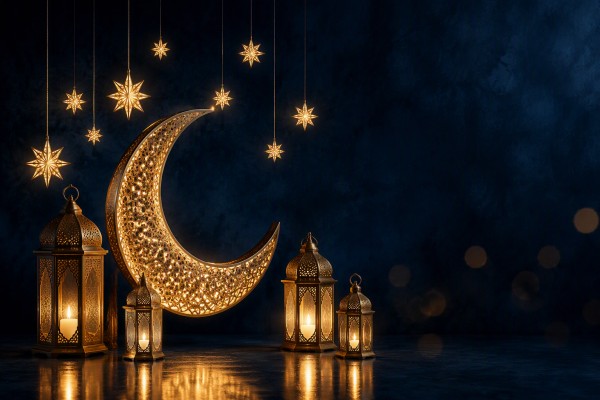
Ramadan Lighting Trends in Saudi Arabia: What Else Are Buyers Looking For?
Ramadan Lighting Trends in Saudi Arabia can look simple at first, but buyers often face a harder question than “which design is popular?” If the product mix is wrong, stock moves slowly, displays look weak, or delivery misses the peak season. I usually approach the trend question as a sourcing decision, not only a design discussion.
Ramadan lighting buyers in Saudi Arabia are looking for more than crescents, stars, lanterns, and warm-white light. They also evaluate usage scene, size, brightness, material, installation method, packaging, customization options, MOQ, sampling speed, and delivery reliability. The strongest product mix matches each sales channel and reduces inventory, display, and timing risks.
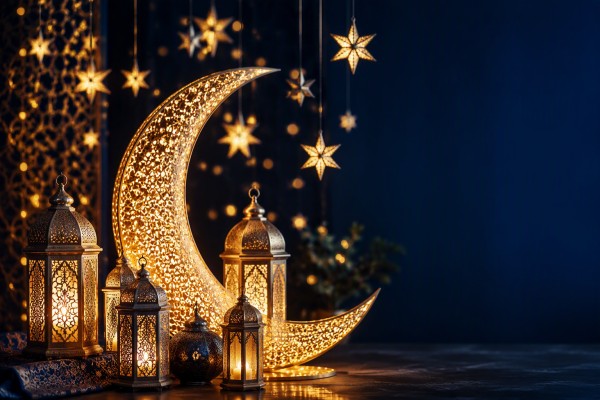
In our communication with Saudi and Middle East buyers, I often see one clear pattern. The first inquiry may mention a crescent or lantern, but the real order depends on many practical details. The sections below explain how I would evaluate those details before recommending products.
How Should Buyers Read Ramadan Lighting Trends in Saudi Arabia as a Sourcing Decision?
Many buyers ask for “trending Ramadan lights,” but that question can lead to vague quotations and unsuitable samples. A retail chain, a wholesaler, and a municipal contractor do not need the same product. If I skip the sales channel, I may recommend a beautiful item that fails in the real buying context.
Ramadan Lighting Trends in Saudi Arabia should be read as a decision framework.[^1] Buyers should first define the sales channel, usage scene, target price, order quantity, and delivery window. After that, they can choose the right designs, specifications, packaging, and customization level for retail, wholesale, events, hotels, streets, or public spaces.
Trend means “fit,” not only “style”
I have learned that a “trend” becomes useful only when it answers a buying problem. A crescent moon can be a retail shelf item, a mall atrium decoration, a hotel entrance feature, or a public street installation. The shape may look similar, but the procurement logic is different.
For example, a small LED crescent for retail should usually focus on:
- Attractive packaging
- Clear product photos
- Safe plug or battery configuration
- Shelf-friendly size
- Simple installation
- Repeatable carton packing
- Affordable landed cost
A larger commercial motif light may need:
- Weather-resistant structure
- Stronger frame material
- Higher visual impact from distance
- Stable mounting points
- Project drawings
- Clear spare parts plan
- Installation guidance
- Production schedule control
This is why I rarely treat Ramadan lighting as one product category. I divide it by buyer type first.
| Buyer type | Typical need | Common risk | Better sourcing focus |
|---|---|---|---|
| Importer | Broad product range | Wrong product mix | Series planning and MOQ balance |
| Wholesaler | Fast-selling SKUs | Slow inventory | Price tiers and carton efficiency |
| Retail chain | Shelf-ready products | Weak packaging | Barcode, display box, inner packing |
| Event company | Visual impact | Product not bright enough | Size, brightness, installation method |
| Hotel or mall decorator | Decorative atmosphere | Poor fit with space | Custom color, shape, and dimension |
| Public contractor | Outdoor installation | Durability and delivery risk | Material, structure, lead time, QC |
Questions I ask before recommending products
When a Saudi or Middle East buyer sends an inquiry, I try to clarify the decision path before quoting. I usually ask:
- Are you buying for retail, wholesale, event decoration, or public installation?
- Will the lights be used indoors, outdoors, on shelves, on walls, on streets, or in open plazas?
- Do you need standard items or customized patterns?
- What size range do you expect?
- What quantity and price level are you targeting?
- What is the required delivery date before Ramadan?
- Do you need neutral packaging, branded packaging, or a full retail series?
These questions save time. They also prevent a common sourcing mistake: choosing products by catalog image only. A catalog image does not show whether the item fits the buyer’s shelf, warehouse, fixture, climate, or installation team.
In my view, the best suppliers do not only push “hot items.” They help buyers translate Ramadan Lighting Trends in Saudi Arabia into product decisions that fit the actual sales channel.
Which Visual Elements Still Matter in Ramadan Lighting Trends in Saudi Arabia?
Visual style still matters, but buyers can overfocus on it. Crescent moons, stars, lanterns, Arabic-style motifs, and warm light are important.[^2] However, if the size is wrong, the frame looks weak, or the light output does not match the space, the design alone cannot save the product.
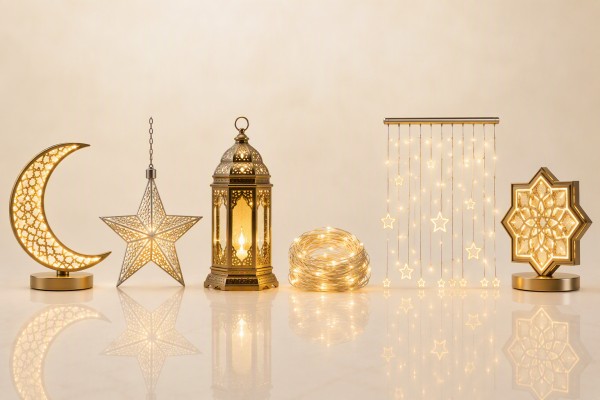
The most common Ramadan lighting visuals include crescent moons, stars, lantern shapes, warm-white LEDs, gold or silver finishes, and Arabic-inspired patterns. Buyers should use these elements as a starting point, then compare structure, brightness, material, installation method, and packaging before confirming a product.
The visual language is familiar, but the execution changes
In our communication with Saudi and Middle East buyers, I often see requests for designs that feel festive but not overly complicated. Common requests include:
- Crescent moon decorations
- Star hanging lights
- Lantern-shaped lights
- Warm-white string light arrangements
- Arabic-style line patterns
- Curtain lights for storefronts
- 2D and 3D motif light products
- Tabletop or window display items
- Larger outdoor decorative frames
These elements are not new. The difference lies in how buyers combine them into a product range. A wholesaler may need ten standard SKUs at several price points. A retailer may prefer a coordinated collection with matching packaging. An event company may choose fewer items but require larger dimensions and stronger light output.
Warm light is common, but brightness still needs control
Warm-white light is often requested because it gives a soft festive atmosphere.[^3] Still, buyers should not only say “warm white.” They should ask about:
- LED type
- LED quantity
- Color temperature range
- Power supply
- Viewing distance
- Indoor or outdoor use
- Dimming or controller requirements, if any
A small window decoration and a large outdoor crescent do not need the same brightness.[^4] If the product is too dim, it disappears in a commercial space. If it is too bright, it may look harsh in a hotel or restaurant setting.
Style comparison for different display scenes
| Display scene | Suitable visual direction | Key specification to check |
|---|---|---|
| Retail shelf | Small crescent, lantern, star, mini string light | Packaging, plug type, unit cost |
| Supermarket seasonal aisle | Coordinated series, giftable items | Display carton, barcode, carton size |
| Hotel lobby | Warm motifs, elegant lanterns, soft outlines | Finish, cable hiding, brightness |
| Mall atrium | Large crescent or 3D lantern | Frame strength, installation points |
| Street decoration | Outdoor motif light and crossing designs | IP rating, structure, fixing method |
| Event stage | High-impact shapes and backdrop lights | Brightness, speed of installation |
Why I do not recommend choosing by shape alone
A crescent design can look good in a photo but fail in use. I have seen buyers become interested in an item because the picture looked impressive. Then, after discussing the application, we realized the requested size was too small for the venue or too expensive for the retail price target.
A better way is to match the visual element with the commercial purpose:
- For quick retail turnover: simple, affordable, easy-to-understand designs.
- For wholesale distribution: stable SKUs with flexible quantity planning.
- For event decoration: larger pieces with stronger visual effect.
- For public decoration: durable motif light structures with reliable installation details.
Visual trends are the front door. Product engineering, packaging, and logistics decide whether the order works.
What Product Specifications Separate Shelf-Ready Ramadan Lighting from Project Lighting?
Many procurement problems happen when a buyer treats retail lighting and project lighting as the same category. A product that works on a supermarket shelf may not work on a hotel facade. A public-space decoration may be too bulky, costly, or complex for retail distribution.
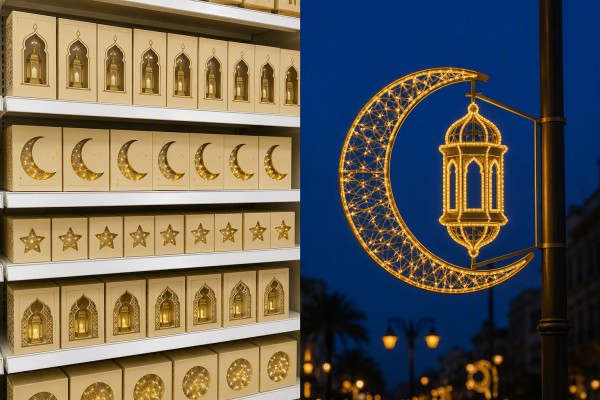
Shelf-ready Ramadan lighting focuses on packaging, unit price, safety documents, and fast display.[^5] Project lighting focuses on size, structure, brightness, weather resistance, installation, and lead time.[^6] Buyers should separate these two categories early because they require different specifications, quotations, and quality control plans.
Retail products need repeatability and shelf appeal
Retail products must sell quickly and move efficiently through warehouses. For these items, buyers usually care about:
- Unit price
- Attractive retail packaging
- Compact carton design
- Barcode and labeling
- Plug or battery options
- Instruction sheet
- Consistent color and finish
- Low damage rate in transport
- Simple customer use
A retail string light, for example, may be evaluated by length, LED count, wire color, packaging size, and plug type. A mini lantern light may be judged by how it looks in a display box and whether the packaging explains the product clearly.
Project lighting needs structure and installation planning
Project lighting is more demanding. A motif light for a street, mall, or public area must be evaluated with practical installation in mind. Buyers should ask:
- What is the frame material?
- What is the product size and weight?
- How will the item be fixed or suspended?
- Is the product designed for indoor or outdoor use?
- What power supply and wiring layout are required?
- How many spare parts should be prepared?
- How will the goods be packed to prevent deformation?
- Can the supplier provide drawings before production?
For outdoor products, buyers should verify relevant test reports, product documents, and local compliance requirements with qualified professionals.[^7] A supplier can provide documents, but the buyer should confirm whether they match the application and destination market.
Specification comparison
| Specification | Retail Ramadan light | Project Ramadan light |
|---|---|---|
| Typical size | Small to medium | Medium to very large |
| Main concern | Shelf sale and price | Visual impact and durability |
| Packaging | Color box, display box | Protective carton, wooden case if needed |
| Installation | Consumer-friendly | Contractor-installed |
| Customization | Color, packaging, small design changes | Pattern, frame, size, mounting points |
| QC focus | Appearance, function, packing | Structure, wiring, lighting test, packing |
| Lead time risk | SKU variety and packaging approval | Drawing, sample, production, shipping |
The role of quality control
As a China-based integrated manufacturer and trading supplier, I treat quality control as a procurement conversation, not only a factory slogan. Our company has ISO9001 and BSCI certification, and buyers should always verify such documents during supplier evaluation. However, certification alone does not replace product-specific checks.[^8]
For Ramadan lighting orders, I would usually suggest checking:
- Pre-production sample approval
- Material confirmation
- LED color consistency
- Frame and welding appearance for motif light
- Cable and connector details
- Packaging drop or transport considerations
- Carton markings
- Quantity and spare parts
- Final lighting test before shipment
Project buyers should also involve qualified installers or engineers when public safety, electrical load, or outdoor mounting is involved. I can support product information, drawings, and production details, but application-specific decisions should be reviewed by the responsible professional team.
Why Does Customization Shape Ramadan Lighting Trends in Saudi Arabia?
Customization creates opportunity, but it also creates risk. A buyer may want a unique crescent, special Arabic pattern, branded packaging, or a full Ramadan series. If the customization process is unclear, the sample may miss the target, and the final shipment may miss the sales window.
Customization shapes Ramadan Lighting Trends in Saudi Arabia because many buyers need products that fit their channel, brand, display space, or project theme. The most common customization areas are pattern, color, size, material, LED color, packaging, carton marks, and series-based product planning.
Customization is not only logo printing
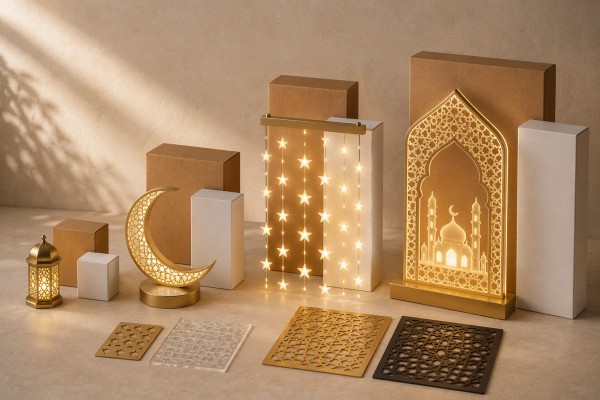
Some buyers think customization means placing a logo on a box. That is only one small part. In Ramadan lighting sourcing, customization can include:
- Design pattern: crescent, star, lantern, mosque-inspired outline, Arabic-style motif
- Dimensions: tabletop size, wall size, street size, facade size
- Color: gold, silver, white, black, green, or custom finish
- LED color: warm white, cool white, mixed color, single-color series
- Wire color: transparent, white, green, black, copper tone
- Material: PVC, metal frame, acrylic, fabric, plastic, aluminum structure
- Installation method: hanging, standing, wall-mounted, pole-mounted
- Packaging: color box, neutral box, retail display, branded carton
- Product series: matching items across different price levels
A common request we see is a buyer asking for one custom motif first. After discussion, the buyer may realize they need a full coordinated series. That series may include a small retail item, a medium window item, and a larger commercial decoration using the same visual language.
Series planning helps reduce inventory risk
A series-based approach can be safer than betting on one dramatic design. For example, an importer could build a Ramadan product family like this:
| Product level | Example item | Purpose |
|---|---|---|
| Entry level | Mini LED lantern or short string light | High-volume retail sale |
| Mid level | Crescent window light or star curtain light | Seasonal home decoration |
| Display level | Medium motif light | Storefront or event display |
| Project level | Large outdoor crescent and lantern frame | Mall, hotel, or public installation |
This structure gives buyers more flexibility. If one item sells faster, the buyer can reorder within the same design theme. If one channel slows down, the product range still supports other channels.
Customization needs a disciplined process
I usually recommend a clear process before starting custom Ramadan lighting:
- Confirm the usage scene
- Share reference images or drawings
- Define target size and budget
- Confirm material and light color
- Check MOQ and tooling needs
- Prepare quotation and production timeline
- Make sample or digital drawing
- Approve packaging artwork
- Confirm mass production details
- Inspect before shipment
The buyer should also decide what is truly necessary. Full customization can increase cost and lead time. Sometimes a semi-custom solution is better. For example, a standard lantern shape with customized packaging may be more practical than a fully new mold. For project buyers, a modified motif light frame may be enough if the visual effect fits the venue.
The best customization decisions balance originality with production reality. That balance matters even more when Ramadan delivery dates are fixed.
How Can Buyers Reduce Sampling, MOQ, and Delivery Risk Before Ramadan?
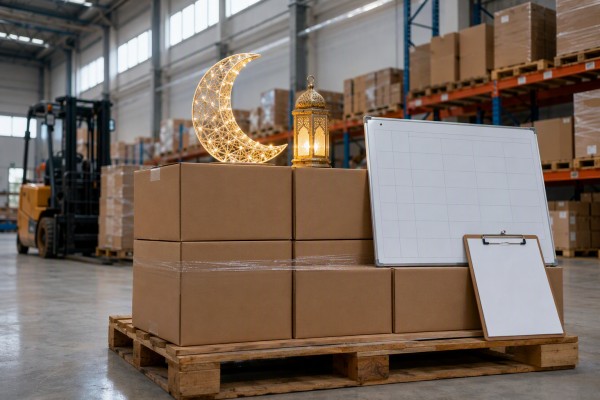
Ramadan lighting has a seasonal deadline.[^9] If sampling, artwork approval, production, or shipping runs late, the buyer cannot simply sell the goods two months later with the same effect. The risk is not only product quality. The risk is timing.
Buyers can reduce Ramadan lighting risk by starting early, separating standard and custom items, confirming MOQ before sampling, approving packaging quickly, reserving production capacity, and checking shipment schedules. They should also align samples, quotations, inspection standards, and delivery dates before placing a final order.[^10]
Sampling should answer a clear question
A sample should not be requested only because the buyer is curious. It should answer a procurement question, such as:
- Does the product brightness fit the display?
- Does the size match the shelf or installation space?
- Is the finish acceptable for the price point?
- Does the packaging support retail sale?
- Is the structure strong enough for the intended use?
- Can the buyer’s team install it easily?
- Does the product match the approved design direction?
For a standard string light or small lantern, sampling may focus on appearance, function, and packaging. For a large motif light, sampling may involve drawings, material confirmation, frame details, and installation discussion.
MOQ should match the channel strategy
MOQ is not only a supplier rule. It affects inventory risk. A buyer should not accept a high MOQ for too many untested SKUs. At the same time, very low quantities may increase unit cost and reduce production efficiency.
A practical MOQ strategy could be:
| Product type | Suggested planning logic |
|---|---|
| Standard retail item | Test several SKUs with balanced quantities |
| Customized packaging item | Confirm artwork early and combine cartons efficiently |
| Custom motif light | Start with key designs and avoid too many variants |
| Project decoration | Order by site plan, with spare parts included |
| Wholesale assortment | Build price tiers and repeatable carton packs |
Buyers should also ask whether the supplier can mix products in one shipment. This can help importers and wholesalers build a broader range without overcommitting to one item.
Delivery planning should start before peak pressure
In my experience, Ramadan inquiries often become urgent when the buyer has already lost valuable planning time. That creates pressure on sampling, quotation, packaging artwork, production, and shipping.
A safer planning checklist includes:
- Confirm the product range early
- Separate standard items from custom items
- Approve samples before peak production
- Lock packaging artwork
- Confirm plug, voltage, label, and carton marks
- Reserve production schedule
- Plan inspection timing
- Check sea freight or air freight options
- Prepare documents required by the importer
- Keep buffer time for customs and inland delivery
Supplier communication should be specific
A clear inquiry saves both sides time. Instead of saying, “Please send Ramadan lighting trends,” a buyer can send:
“We are sourcing Ramadan lighting for Saudi retail distribution. We need small and medium items for supermarket shelves, warm-white LEDs, retail packaging, and shipment before our seasonal deadline. Please recommend standard and semi-custom options with MOQ, sample time, carton details, and lead time.”
This message gives the supplier enough context to recommend suitable products. It also avoids a random catalog dump.
The same logic applies to buyers who usually purchase christmas light products and now want Ramadan items. The production experience may overlap, but the design theme, packaging, sales timing, and display scene are different. A buyer should not assume that a christmas light assortment automatically works as a festivel light collection for Ramadan. The better approach is to build a focused Ramadan range with the right sizes, motifs, packaging, and delivery plan.
Frequently Asked Questions
What are the most common Ramadan lighting products for Saudi buyers?
Common products include crescent moon lights, star lights, lantern lights, warm-white string light sets, curtain lights, window decorations, and larger motif light structures. However, the right choice depends on the buyer’s channel, display space, price target, and delivery schedule.
How early should buyers start sourcing Ramadan lighting?
Buyers should start as early as possible, especially for custom designs, branded packaging, or project decorations. Standard items may move faster, but sampling, artwork approval, production, inspection, shipping, and customs clearance still require planning time before the Ramadan peak season.[^11]
Should I choose standard Ramadan lights or custom designs?
Standard products are usually better for faster delivery, lower risk, and smaller test orders. Custom designs are better when buyers need brand differentiation, project-specific sizes, or a coordinated product series. Many buyers use a mixed strategy with standard items plus selected customized products.
What information should I send when requesting a Ramadan lighting quotation?
You should share the sales channel, usage scene, product type, size, LED color, quantity, packaging request, target price level, destination market, and delivery deadline. If you need customization, you should also provide reference images, drawings, logos, or display requirements.
Are supplier certifications enough for Ramadan lighting procurement?
Certifications help buyers evaluate supplier systems, but they are not enough by themselves. Buyers should verify documents, check product-specific test reports where required, approve samples, confirm inspection standards, and consult qualified professionals for application-specific installation or compliance decisions.
Conclusion
Ramadan Lighting Trends in Saudi Arabia are not about finding one “hot” crescent, star, or lantern. They are about building the right product mix for the buyer’s channel, display scene, customization needs, and delivery window. In our communication with Saudi and Middle East buyers, the strongest projects usually begin with clear questions and careful specification review. If you are sourcing Ramadan decorative lighting, I can help you compare standard items, custom motif light options, packaging plans, MOQ, samples, and production schedules before you commit.
[^1]: "Development of an Assortment-Planning Model for", https://vtechworks.lib.vt.edu/bitstreams/020a17b3-782d-483e-98c5-ced810db5efd/download. Retail assortment-planning literature supports treating product selection as an operational decision involving demand, inventory, and channel constraints; this evidence is contextual rather than specific to Ramadan lighting in Saudi Arabia. Evidence role: general_support; source type: paper. Supports: Research on retail assortment planning links product selection to channel demand, inventory exposure, and operational constraints.. Scope note: The support is based on general retail and supply-chain research, not a Ramadan-lighting-specific study.
[^2]: "Crescent moon and star lantern for Ramadan", https://www.facebook.com/groups/cricutfamilymiddleeast/posts/4048845098728094/. Reference accounts of Ramadan and Islamic visual culture describe the use of crescent imagery and lantern-style decorations in festive contexts, supporting the cultural relevance of these motifs while not proving their current market ranking in Saudi Arabia. Evidence role: historical_context; source type: encyclopedia. Supports: Reference sources should establish that crescents, lanterns, and related motifs are commonly associated with Ramadan or Islamic festive decoration.. Scope note: The source would support cultural association, not sales demand or popularity by product category.
[^3]: "Effect of warm/cool white lights on visual perception and mood ...", https://pmc.ncbi.nlm.nih.gov/articles/PMC8481791/. Studies of lighting color temperature indicate that warmer white light is commonly associated with perceptions of warmth, comfort, or relaxed ambience; this supports the atmospheric rationale but does not show that Saudi buyers specifically request it. Evidence role: mechanism; source type: paper. Supports: Lighting research should support the relationship between warmer color temperatures and perceptions such as comfort, warmth, or relaxed ambience.. Scope note: The evidence is about human perception of lighting, not direct buyer-demand data.
[^4]: "[PDF] Chapter 11 - Street Lighting", https://www.intrans.iastate.edu/wp-content/uploads/sites/15/2020/03/Chapter_11.pdf. Lighting-design guidance from professional bodies explains that required light output depends on the visual task, viewing conditions, distance, and surrounding environment, supporting the distinction between small indoor decorations and large outdoor displays. Evidence role: mechanism; source type: institution. Supports: Lighting-design guidance should show that illuminance, luminance, viewing distance, and environment affect required brightness.. Scope note: The support is based on general lighting-design principles rather than Ramadan-specific product testing.
[^5]: "An Exploratory Study on Shelf Ready Packaging Design ...", https://www.academia.edu/117688592/An_Exploratory_Study_on_Shelf_Ready_Packaging_Design_Solutions. Research on shelf-ready and retail-ready packaging links packaging design to merchandising efficiency, replenishment, and in-store presentation, providing contextual support for emphasizing packaging and fast display in retail Ramadan lighting. Evidence role: general_support; source type: research. Supports: Retail and packaging research should support the role of shelf-ready packaging in merchandising, handling, and store replenishment.. Scope note: The evidence addresses retail packaging generally and may not mention lighting products or Ramadan.
[^6]: "IP Ratings Explained: Understanding IP54, IP64, IP65, and ...", https://www.ledlightexpert.com/waterproof-ip-rating?srsltid=AfmBOorre8hz3OI9K_uZBh9fpdTJhkvWkk6VWPme6yiTMctYF8tYn5pw. Technical standards for outdoor electrical equipment, including ingress-protection classifications, support the need to evaluate weather exposure, installation conditions, and structural suitability for project lighting; this is contextual support rather than a specification for any single Ramadan product. Evidence role: general_support; source type: institution. Supports: Standards and technical guidance should support that outdoor lighting equipment is evaluated for environmental protection, installation conditions, and electrical safety.. Scope note: The source would support general outdoor-lighting requirements, not a complete project-engineering plan.
[^7]: "SASO certificate - LED street light (AC or Solar) and flood ...", https://www.zgsm-china.com/blog/saso-certificate-led-street-light-ac-or-solar-and-flood-light.html. Saudi conformity-assessment guidance for regulated products indicates that importers must document compliance with applicable technical requirements, supporting the need to verify test reports and product documents before shipment. Evidence role: expert_consensus; source type: government. Supports: Saudi conformity-assessment information should support the need to verify documentation and compliance for imported electrical or lighting products.. Scope note: The exact requirements depend on product classification, voltage, use case, and current Saudi regulations.
[^8]: "ISO 9001:2015 - Quality management systems", https://www.iso.org/standard/62085.html. ISO guidance describes ISO 9001 as a quality-management-system standard rather than a product certification, supporting the point that certified systems do not replace product-specific inspection, testing, or conformity checks. Evidence role: definition; source type: institution. Supports: ISO or accreditation sources should clarify that ISO 9001 certifies a quality management system rather than individual product compliance..
[^9]: "Islamic calendar - Wikipedia", https://en.wikipedia.org/wiki/Islamic_calendar. Encyclopedic sources describe Ramadan as an annual month of observance in the Islamic lunar calendar, supporting the claim that related decorative products face a defined seasonal sales window. Evidence role: historical_context; source type: encyclopedia. Supports: A reference source should establish that Ramadan is an annual Islamic lunar month with a defined observance period.. Scope note: This supports the timing constraint, not the commercial magnitude of the lighting market.
[^10]: "The Fundamentals of Supplier Quality Management (SQM)", https://www.kodiakhub.com/blog/supplier-quality-management. Supplier-quality and procurement research emphasizes early agreement on specifications, inspection criteria, and delivery expectations as a way to reduce transaction and quality risks; this provides general support for aligning samples, quotations, inspections, and delivery dates before ordering. Evidence role: general_support; source type: research. Supports: Procurement and supplier-quality literature should support early alignment of specifications, samples, inspection criteria, and delivery expectations.. Scope note: The support is general procurement evidence, not a controlled study of Ramadan lighting purchases.
[^11]: "Lead time to import, median case (days) - Glossary | DataBank", https://databank.worldbank.org/metadataglossary/world-development-indicators/series/LP.IMP.DURS.MD. International logistics and trade-facilitation sources describe transport, documentation, border clearance, and related procedures as contributors to total supply-chain lead time, supporting the need to plan these steps before a seasonal sales peak. Evidence role: general_support; source type: institution. Supports: International logistics sources should support that shipping and customs procedures contribute to total lead time and require planning.. Scope note: The source would support logistics timing generally and may not provide lead-time estimates for Saudi Ramadan lighting imports.
Table of Contents
- Ramadan Lighting Trends in Saudi Arabia: What Else Are Buyers Looking For?
- How Should Buyers Read Ramadan Lighting Trends in Saudi Arabia as a Sourcing Decision?
- Which Visual Elements Still Matter in Ramadan Lighting Trends in Saudi Arabia?
- What Product Specifications Separate Shelf-Ready Ramadan Lighting from Project Lighting?
- Why Does Customization Shape Ramadan Lighting Trends in Saudi Arabia?
- How Can Buyers Reduce Sampling, MOQ, and Delivery Risk Before Ramadan?
-
Frequently Asked Questions
- What are the most common Ramadan lighting products for Saudi buyers?
- How early should buyers start sourcing Ramadan lighting?
- Should I choose standard Ramadan lights or custom designs?
- What information should I send when requesting a Ramadan lighting quotation?
- Are supplier certifications enough for Ramadan lighting procurement?
- Conclusion