 EN
EN

Beyond the Duty Rate: The Hidden Realities of Importing Christmas Lights into the EU
Struggling with unexpected costs when importing Christmas lights into the EU? Focusing only on the duty rate can hide bigger problems, leading to customs delays and surprise fees.
The real landed cost for Christmas lights in the EU goes far beyond the import duty. It includes VAT, customs handling, and compliance risks. A reliable supplier helps you prepare all necessary documents and labeling, preventing costly delays and ensuring a smooth import process.
I understand why the import duty rate is often the first question we get from our EU partners. It’s a clear, calculable expense. However, over many years of exporting holiday lighting, I've seen that this single number is just one small piece of a much larger puzzle. The most successful importers we work with have learned to look beyond the duty and focus on the total process. Let's break down what that really means for your business.
Expert Insight: In 2025, container demurrage and detention fees at major EU hubs like Rotterdam and Hamburg have risen significantly, often ranging from €130 to €260 per day per container once free days expire (Source: FreightAmigo 2025 Shipping Guide). A single week's delay due to paperwork can easily wipe out your profit margins.
How Do HS Codes Affect Your Import Duties and Risks?
You see an HS code and a duty rate, thinking it's straightforward. But the wrong code can lead to customs disputes, re-classification, and unexpected fees.
HS codes directly determine the duty rate. For example, LED lighting strings for Christmas trees typically fall under HS Code 94053100. An incorrect code can cause customs to re-evaluate your shipment, leading to higher duties and significant delays at the port.

The Harmonized System (HS) code is the key, but Christmas lights are not one-size-fits-all. A simple string of LED lights (9405.31) might have a different duty structure than large outdoor motif displays or battery-operated sets. In our experience, we provide detailed descriptions on the commercial invoice to ensure your customs broker assigns the most accurate code. An inexperienced supplier might use a generic code, which is a major red flag for customs officials and can trigger a physical inspection.
What Key Documents Are Needed for a Smooth EU Customs Clearance?
A missing or incorrect document can hold your entire container at the port, racking up expensive storage fees daily.
For smooth clearance, you need at least three key documents: the Commercial Invoice, the Packing List, and the Bill of Lading (B/L). Each must be 100% consistent.
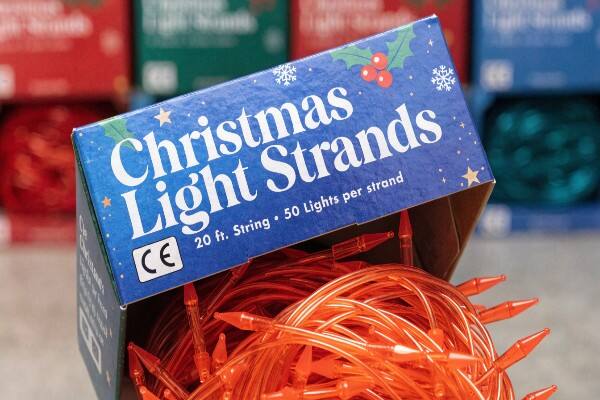
Think of these as a passport. The Commercial Invoice must list Incoterms, country of origin, and detailed descriptions. The Packing List must align perfectly—if customs finds a mismatch during an inspection, it can trigger an "Amber" or "Red" lane delay. We always send draft versions to our clients for their broker’s review before the vessel departs to catch small typos that become big issues.
Why Is Product Compliance More Than Just a CE Certificate?
Your supplier sent you a CE certificate, and you think you're covered. But market surveillance authorities can still pull your product if the labeling is incorrect.
A CE certificate is only one piece of the puzzle. Under Regulation (EU) 2019/1020, true compliance requires a valid Declaration of Conformity (DoC), a Technical File, and an authorized EU-based representative.
Many believe a test report is a "golden ticket." However, the Declaration of Conformity (DoC) is the official legal document where we, the manufacturer, take responsibility. Furthermore, as of 2025, EU Market Surveillance has intensified.
Data Fact: In 2025, the EU "Safety Gate" (formerly RAPEX) recorded a record 4,671 safety alerts, with electrical appliances and lighting being among the most frequently reported categories for non-compliance (Source: European Commission 2025 Safety Gate Report).
| Compliance Element | What It Is | Why It Matters |
|---|---|---|
| CE Certificate | Lab test proof. | Necessary evidence of testing. |
| DoC | Legal statement. | Required to prove the supplier stands behind the product. |
| Technical File | Design/Safety dossier. | Must be available for 10 years for authority inspection. |
| EU Representative | On-product address. | Mandatory for non-EU manufacturers; without it, goods can be seized at the border. |
How Can You Choose a Supplier Who Truly Understands EU Compliance?
Choosing the wrong supplier means you are left to handle all the compliance risks and documentation headaches yourself.
Choose a supplier by asking about their process, not just their price. A reliable partner will proactively discuss EU labeling requirements and provide draft documents for review.

A low price often means cut corners. A truly experienced supplier acts as a partner, ensuring your goods aren't just shipped, but successfully cleared. Ask them: "Can you provide a sample DoC?" or "Do you have experience with the WEEE directive?" A partner who answers confidently is one who helps you lower your total landed cost, not just your purchase price.
Conclusion
Importing Christmas lights into the EU is about managing your total risk. A strong supplier partnership is your best tool for a smooth, compliant process.
Table of Contents
- Beyond the Duty Rate: The Hidden Realities of Importing Christmas Lights into the EU
- How Do HS Codes Affect Your Import Duties and Risks?
- What Key Documents Are Needed for a Smooth EU Customs Clearance?
- Why Is Product Compliance More Than Just a CE Certificate?
- How Can You Choose a Supplier Who Truly Understands EU Compliance?
- Conclusion