 EN
EN

Are You Picking the Right Cables for Cold Northern Europe: Rubber or PVC for Festive Lights?
leading paragraph: Imagine your beautiful festive lighting display failing in freezing temperatures. Cables crack, installations suffer, and project costs skyrocket. Choosing the right cable for cold climates isn't just a material decision; it's about protecting your investment and reputation.
snippet paragraph: Selecting between rubber and PVC cables for Northern European festive lighting depends on balancing project budget, installation conditions, and long-term performance. Rubber often excels in harsh, dynamic environments, offering superior flexibility and damage resistance.[^1] PVC can be a cost-effective choice for static, less demanding applications when carefully matched to the product design.
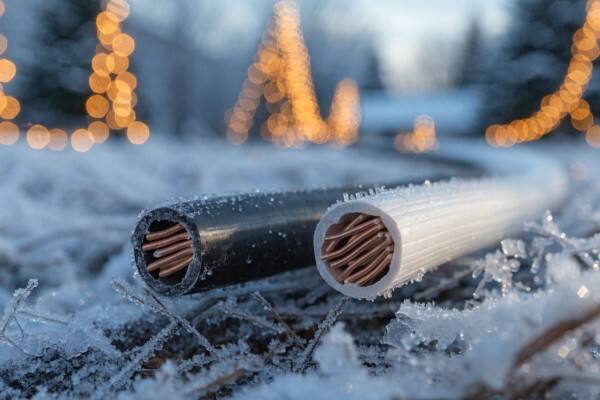
Transition Paragraph: In my years of manufacturing festive decorative lighting, working directly with importers and contractors, I've seen firsthand how crucial cable choice is. It's not a simple case of one material being universally better. We need to look deeper into the specific needs of each project, especially when dealing with the challenging cold of Northern Europe.
Why is Cable Material So Critical for Cold-Weather Festive Lighting Projects?
leading paragraph: Cold weather can turn a simple lighting installation into a nightmare. Brittle cables snap, electrical integrity fails, and your project faces delays and costly repairs.[^2] The cable material directly impacts your operational success and client satisfaction.
snippet paragraph: The right cable material is critical for cold-weather festive lighting because it ensures flexibility, prevents damage during installation and use, and maintains electrical safety. Cables must withstand extreme temperatures without cracking or losing performance, directly affecting project longevity and reliability.[^3]
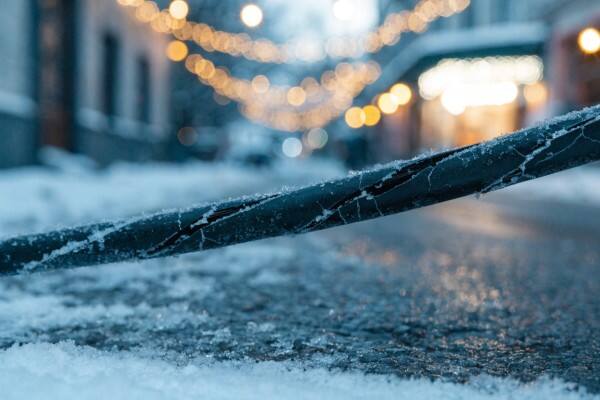
Dive deeper Paragraph: From my perspective as a manufacturer, I've seen countless orders for Northern European projects. The climate there, with its low temperatures, strong winds, and sometimes ice, puts extreme stress on all outdoor materials.[^4] For festive lighting, cables are often the most exposed and vulnerable component. If a cable becomes stiff or brittle when cold, it can easily crack when bent, pulled, or even just unrolled. This leads to immediate problems like short circuits, exposed wires, or complete light failure. Fixing these issues in freezing weather is not just difficult; it's often expensive and dangerous. We work hard to ensure our products perform, and the cable is a big part of that. A seemingly small saving on cable material can quickly disappear in repair costs and lost time. The cable needs to support the entire lighting structure and deliver power reliably, even when conditions are far from ideal. My experience shows that understanding these basic stresses is the first step in making a smart cable choice for any cold-weather job.
The Impact of Cold on Cable Performance
- Brittleness: Materials like some PVC compounds lose flexibility and become hard, making them prone to cracking.[^5]
- Installation Difficulty: Stiff cables are harder to unroll, lay out, and connect, increasing labor time and potential for damage.
- Safety Risks: Cracked insulation exposes conductors, leading to electrical hazards and short circuits.[^6]
When Does Rubber Cable Truly Shine in Cold Northern European Projects?
leading paragraph: Are you constantly dealing with cables that stiffen and crack during cold-weather installations? This common issue can slow down your project and compromise safety. Choosing the right material can prevent these headaches.
snippet paragraph: Rubber cables truly shine in cold Northern European projects where frequent bending, pulling, and movement are expected, or when installations occur in very low temperatures. Its inherent flexibility and resistance to impact at sub-zero temperatures significantly reduce the risk of damage, making it ideal for dynamic, high-exposure displays.
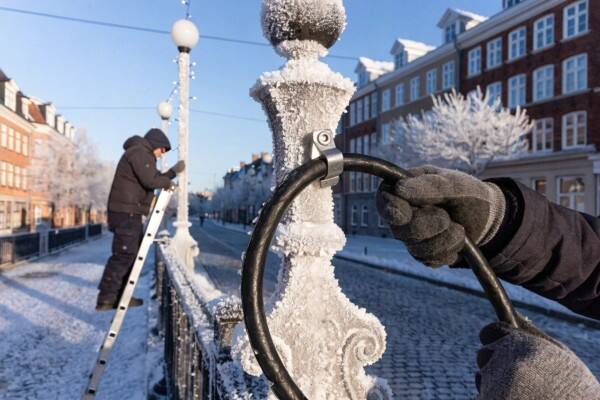
Dive deeper Paragraph: My team and I often discuss with customers about specific project needs. For many professional outdoor festive lighting projects in Northern Europe, especially those for municipal spaces, commercial streets, or large event installations, rubber cable is often the safer choice. I've seen projects where lights are installed, then perhaps adjusted, and later dismantled and stored, only to be reinstalled next year. This cycle of handling, bending, and unrolling in cold weather makes rubber cables invaluable. The material retains its flexibility even when temperatures drop well below freezing.[^7] This means installers can work more easily without the cable fighting them, and the risk of damage from accidental impacts or sharp bends is much lower. For example, if a cable needs to be draped over a lamppost or around a structure, a rubber cable will conform without cracking. We always tell clients to think about the "lifecycle" of their lighting. If there's a lot of handling involved, rubber pays for itself by reducing labor difficulty, minimizing product damage during setup and takedown, and preventing after-sales issues like short circuits or light failures due to cracked insulation.
Key Advantages of Rubber Cables in Cold
- Superior Flexibility: Stays pliable at very low temperatures, easing installation and reducing stress.
- Impact Resistance: Better able to withstand knocks and bends without cracking, even when cold.
- Durability: Ideal for applications where cables are frequently handled, moved, or stored in varied conditions.
Can PVC Cable Still Be a Smart Choice for Cold Climates, and Under What Conditions?
leading paragraph: Is your budget tight, but you still need reliable festive lighting for cold regions? You might think PVC is off the table, but that's not always true. Smart planning can make PVC a viable option.
snippet paragraph: PVC cables can be a smart choice for cold climates if the full product design and use conditions align.[^8] They are suitable for budget-sensitive projects, static installations with minimal bending, or seasonal displays where cables are not frequently handled. Modern PVC compounds are also engineered to perform better in lower temperatures than older versions.[^9]

Dive deeper Paragraph: Many customers, especially large retail chains or smaller wholesalers, come to us with specific budget constraints. We understand that. It's wrong to think PVC is always unsuitable for cold regions. We often advise that PVC can work very well under specific conditions. For example, if the lighting product is designed for a one-time, relatively static installation – imagine lights wrapped around a building that stay in place for an entire season and are then carefully removed and stored. In such cases, if the initial installation occurs during a milder part of the season or if the cables are kept warm before installation, PVC can perform perfectly fine. The key is that the cables are not subjected to constant flexing or extreme bending once installed. Modern PVC compounds, especially those specified for lower temperature ranges, are much more resilient than the PVC of ten or twenty years ago. When we design products with PVC cables for colder regions, we make sure the overall product configuration supports this. This includes thicker insulation, specific bending radii, or even recommendations for installation practices. My experience tells me that for certain projects, PVC offers a significant cost advantage without compromising performance, provided the use case is well-defined and controlled.
Optimal Use Cases for PVC Cables
- Budget-Sensitive Projects: Provides a cost-effective solution when high flexibility isn't the top priority.
- Static Installations: Best for applications where cables are laid once and remain undisturbed throughout their use.
- Controlled Handling: Suitable when installation takes place in less extreme cold, and cables are not frequently bent or moved.
Beyond Temperature Ratings: What Other Factors Truly Determine Cable Suitability?
leading paragraph: You might think checking the minimum temperature rating is enough for cold-weather cables. But what if your cables still fail? Relying solely on one number can lead to unexpected problems and costly disappointments.
snippet paragraph: Beyond minimum temperature ratings, true cable suitability for cold climates depends on installation methods, bending frequency, storage conditions, immediate use after delivery, and display duration. Compatibility with plugs, controllers, and overall lighting structure also matters, alongside certification requirements and target market standards.
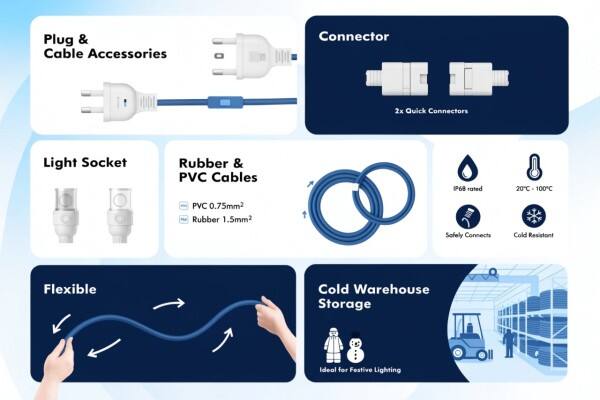
Dive deeper Paragraph: This is where my experience really comes into play, discussing projects with many different types of buyers. Just looking at a cable's stated minimum temperature rating on a datasheet is rarely enough.[^10] I always ask our customers about the real-world conditions their products will face. For instance, how will the cables be installed? Will they be pulled through conduits, draped over sharp edges, or constantly adjusted? Will they be stored in unheated warehouses during winter and then immediately unrolled and installed on a freezing day? This "thermal shock" can be much more damaging than just static cold.[^11] We also need to consider the bending frequency. A cable for a static architectural display has different needs than one for an event where lights are put up and taken down every weekend. The overall product design matters too; a plug's rigidity can put stress on a cable at the connection point in cold. Even local certifications in Northern Europe might have specific requirements beyond just temperature, affecting fire resistance or aging properties.[^12] My advice is always to think about the entire journey of the cable, from the moment it leaves our factory to its final display and beyond.
Comprehensive Cable Evaluation Factors
| Factor | Description | Impact on Selection |
|---|---|---|
| Installation Method | How cables are laid, pulled, bent, and secured. | High-flexing methods favor rubber. |
| Bending Frequency | How often cables are bent during installation, use, and dismantling. | Frequent bending strongly suggests rubber. |
| Storage Temperature | Temperature during storage before installation. | Very low storage temps increase brittleness risk. |
| Immediate Use | Are cables installed straight from a cold delivery vehicle or warmed? | Cold start increases need for robust material. |
| Display Duration | How long the lights remain installed. | Longer duration needs more durable, stable materials. |
| Component Compatibility | How the cable interacts with plugs, connectors, and light fixtures. | All parts must perform well together in the cold. |
| Certifications/Standards | Specific regional requirements (e.g., CE, local Nordic norms). | Ensures compliance and market acceptance (verify locally). |
How Does Total Project Risk Compare to Initial Cable Cost for Cold-Climate Installations?
leading paragraph: Are you tempted to choose cables based solely on the lowest unit price? This short-term saving can quickly turn into much larger, unforeseen expenses. The true cost is often hidden in potential risks.
snippet paragraph: For cold-climate installations, especially high-visibility municipal or brand-sensitive projects, comparing total project risk to initial cable cost is crucial. The total cost encompasses installation labor, potential damage from cracking, client complaints, returns, maintenance, and the significant reputational cost of product failure, far outweighing a small unit price difference.

Dive deeper Paragraph: This is a discussion I have frequently with our experienced customers – the true cost of a cable goes far beyond its price per meter. For municipal projects, for example, the lighting display is often a point of civic pride. If lights fail because of damaged cables, the complaints are not just about the product; they reflect on the city and the contractor. For large retail brands, a malfunctioning display can impact sales and damage brand image. In these situations, the cost of dealing with installation delays, repairing cracked cables, handling customer returns, or performing emergency maintenance in freezing weather can quickly become astronomical. I've heard stories where the cost of sending a crew out multiple times to fix issues due to inferior cables far exceeded the initial savings made by choosing a cheaper option. There's also the reputational cost: once trust is lost due to unreliable products, it's very hard to regain. Therefore, for projects with high visibility, critical performance needs, or strong brand associations, investing in a more resilient cable material like rubber is almost always the more economical choice in the long run. It's about protecting the entire investment, not just the component cost.
Hidden Costs of Underspecified Cables
- Increased Labor: Difficult or damaged cables increase installation and repair time.
- Product Damage: Cracking leads to failures, requiring replacement or extensive repairs.
- Customer Complaints: Unreliable displays generate dissatisfaction and damage relationships.
- Returns and Replacements: Failed products mean costly logistics and lost profit.
- Maintenance Expenses: Emergency repairs in cold weather are expensive and disruptive.
- Reputational Damage: Project failures can harm a brand's image and future business opportunities.
Conclusion
Making the right cable choice for cold Northern European festive lighting demands a balanced view beyond simple material names or temperature ratings. Consider project dynamics, budget, and the full scope of risks.
[^1]: "Tough rubber-sheathed cable - Wikipedia", https://en.wikipedia.org/wiki/Tough_rubber-sheathed_cable. Cable-engineering literature commonly characterizes rubber-sheathed flexible cables as suitable for dynamic use where flexibility, abrasion resistance, and low-temperature handling are important. Evidence role: expert_consensus; source type: research. Supports: Rubber-insulated or rubber-sheathed flexible cables are commonly specified for applications involving movement, abrasion, or low-temperature flexibility.. Scope note: The support is comparative at the material-class level; actual performance depends on the precise rubber compound, cable construction, and test rating.
[^2]: "[PDF] Correlation of Electrical Cable Failure with Mechanical Degradation.", https://www.nrc.gov/docs/ML0622/ML062260360.pdf. Materials and electrical-engineering references describe low-temperature embrittlement of polymer cable insulation as a mechanism that can lead to cracking and loss of insulation integrity. Evidence role: mechanism; source type: research. Supports: Low temperatures can reduce flexibility of cable insulation, increasing cracking risk and potential exposure of conductors.. Scope note: Such sources support the technical mechanism, but they may not quantify project delays or repair costs for festive-lighting installations specifically.
[^3]: "Thermal Aging Evaluation of XLPE Power Cable by Using ... - PMC", https://pmc.ncbi.nlm.nih.gov/articles/PMC9370757/. Cable standards and technical references treat low-temperature cracking and insulation integrity as relevant criteria for maintaining electrical performance in service. Evidence role: general_support; source type: institution. Supports: Outdoor cable performance depends on insulation remaining intact under specified temperature conditions.. Scope note: The support is contextual because general cable standards do not necessarily address decorative festive lighting as a separate product category.
[^4]: "Climate of the Nordic countries - Wikipedia", https://en.wikipedia.org/wiki/Climate_of_the_Nordic_countries. Regional climate data from European or Nordic meteorological institutions document that Northern European winters commonly involve freezing temperatures and weather exposure that can affect outdoor infrastructure. Evidence role: historical_context; source type: government. Supports: Northern European winter conditions commonly include freezing temperatures and weather exposure relevant to outdoor installations.. Scope note: Climate data establish the environmental context but do not by themselves prove failure rates for festive-lighting cables.
[^5]: "[PDF] Low Temperature Properties of Polymers", https://www.appstate.edu/~clementsjs/polymerproperties/plastics_low_temp.pdf. Polymer-science references describe PVC as formulation-dependent and note that reduced temperature can increase stiffness and brittleness, especially where low-temperature flexibility is not engineered into the compound. Evidence role: mechanism; source type: education. Supports: PVC properties depend on formulation, and some PVC materials become stiffer and more brittle at low temperatures.. Scope note: The evidence supports the behavior of PVC compounds generally; it does not establish that every PVC cable used in festive lighting will crack.
[^6]: "1910.303 - General. | Occupational Safety and Health Administration", http://www.osha.gov/laws-regs/regulations/standardnumber/1910/1910.303. Electrical-safety authorities identify damaged insulation and exposed conductors as hazards because they can permit contact with live parts and contribute to short circuits or fire risks. Evidence role: mechanism; source type: government. Supports: Damaged electrical insulation can expose live conductors and increase the risk of shock, short circuits, or fire..
[^7]: "How Do Cold Temperatures Affect Cable? - Service Wire Company", https://www.servicewire.com/ServiceWire/Resources/Customer-QA/Cold-Weather-Cable.htm. Studies and technical references on elastomeric cable materials report that suitably formulated rubber compounds can retain flexibility under sub-zero conditions, a property measured through low-temperature bending or flexibility tests. Evidence role: mechanism; source type: paper. Supports: Elastomeric materials used in cables can maintain flexibility at lower temperatures than many standard plasticized materials when appropriately formulated.. Scope note: The evidence should be read as formulation-dependent rather than proof that all rubber cables perform equally in freezing conditions.
[^8]: "PVC Cables and Wires | Mechanical & Chemical Characteristics", https://www.sab-cable.com/cables-wires-harnessing-temperature-measurement/technical-data/cables-and-wires/polyvinylchloride-pvc.html. Cable standards and technical guidance indicate that PVC-insulated cables are specified by temperature rating, construction, and installation conditions, supporting the view that suitability depends on the whole application rather than material name alone. Evidence role: general_support; source type: institution. Supports: PVC cable suitability depends on formulation, temperature rating, bending requirements, and installation conditions.. Scope note: This supports conditional suitability, not a blanket endorsement of PVC for all cold-climate decorative-lighting projects.
[^9]: "Characteristics Analysis of Plasticized Polyvinyl Chloride Gel-Based ...", https://pmc.ncbi.nlm.nih.gov/articles/PMC10413451/. Polymer references explain that PVC properties are strongly affected by additives such as plasticizers and modifiers, which can be used to improve flexibility and low-temperature performance. Evidence role: mechanism; source type: education. Supports: PVC low-temperature flexibility can be improved through formulation choices such as plasticizers and modifiers.. Scope note: The source may support improved formulation capability but may not directly compare current festive-lighting cable compounds with those from ten or twenty years ago.
[^10]: "[PDF] Forwards position paper re cable bend radius for NRC review.", https://www.nrc.gov/docs/ML1111/ML111151379.pdf. Cable-installation standards and engineering guidance treat ambient temperature as one selection factor among others, including bending radius, mechanical stress, installation method, and environmental exposure. Evidence role: expert_consensus; source type: institution. Supports: Cable selection should consider installation conditions, bending, handling, and environmental exposure in addition to temperature rating.. Scope note: The support is general to cable engineering and may not mention festive lighting specifically.
[^11]: "Cable Cold Bend Testing", https://www.elandcables.com/the-cable-lab/independent-cable-testing-and-inspection-services/cable-cold-bend-testing. Low-temperature cable test methods use conditioning followed by bending or impact to evaluate whether insulation or sheathing cracks under cold handling, indicating that dynamic cold handling is a distinct stress from static exposure. Evidence role: mechanism; source type: institution. Supports: Cable testing and guidance often assess cold bending after low-temperature conditioning because mechanical handling at low temperatures can reveal cracking risk.. Scope note: The phrase "thermal shock" may not be the terminology used in cable standards; the stronger supported concept is cold handling or cold bending after temperature conditioning.
[^12]: "[PDF] The Impact of Thermal Aging on the Flammability of Electric Cables", https://www.nrc.gov/docs/ML0625/ML062510133.pdf. EU electrical-safety legislation and harmonized cable standards require products placed on the market to satisfy relevant safety provisions, which may include tests for insulation aging, fire behavior, and mechanical performance in addition to temperature limits. Evidence role: definition; source type: government. Supports: EU electrical product compliance involves safety requirements that can include insulation integrity, fire behavior, and aging-related performance depending on the applicable standard.. Scope note: The precise requirements vary by product category, voltage, and applicable harmonized standard, so local verification remains necessary.
Table of Contents
- Are You Picking the Right Cables for Cold Northern Europe: Rubber or PVC for Festive Lights?
- Why is Cable Material So Critical for Cold-Weather Festive Lighting Projects?
- When Does Rubber Cable Truly Shine in Cold Northern European Projects?
- Can PVC Cable Still Be a Smart Choice for Cold Climates, and Under What Conditions?
- Beyond Temperature Ratings: What Other Factors Truly Determine Cable Suitability?
- How Does Total Project Risk Compare to Initial Cable Cost for Cold-Climate Installations?
- Conclusion